
 中文简体
中文简体 English
 Français
 Español
 عربى
عربى-

(86)-0571-82550327
-

info@bfseats.com
-




Warehouse Forklift Seats: A Buyer's Guide to Suspension, Fitment and Certification
Content
- 1 What Separates a Warehouse Forklift Seat From a Standard Forklift Seat
- 2 Mechanical Suspension, Semi-Suspension or Static: Match the Seat to the Floor
- 3 Matching Seats to Reach Trucks, Stackers, Counterbalance Trucks and AGVs
- 4 Certification and Safety Features to Verify Before Purchase
- 5 When to Replace Warehouse Forklift Seats, and What to Check First
- 6 Frequently Asked Questions About Warehouse Forklift Seats
A reach-truck operator in a cross-dock warehouse spends six to eight hours per shift seated, and the seat is the one component the operator never stops touching. Every dock-plate joint, every mast shudder and every transit between aisles travels through that seat before it reaches the spine. Yet most fleet purchases still treat it as a line item, which is why warehouse forklift seats should be specified like any wear-critical part: by suspension class, profile height, certification and service life.
The three numbers above frame every decision in this guide. The sections below turn them into a checklist you can carry straight into a supplier conversation.
What Separates a Warehouse Forklift Seat From a Standard Forklift Seat
Warehouse seats are engineered around three constraints that only indoor fleets face: tight installation space, long dwell time on hard floors, and operator-presence electronics. A seat that performs well on a yard truck can fail in a narrow-aisle reach truck, where cushion height and backrest angle decide whether the operator sees over the mast shoulder at all.
Definition
A warehouse forklift seat is a compact, low-profile operator seat for industrial trucks working on improved indoor floors, designed around installation depth, whole-body vibration control and compliance with EN 13490 (industrial truck seat verification) and ISO 7096 (seat vibration testing by machine class).
Materials follow the same logic. PVC and vinyl covers handle dust, moisture and industrial cleaners, which is why they dominate warehouse catalogs, while single-mold polyurethane suits multi-driver fleets that need abrasion resistance without upholstery upkeep. Add the OPS seat switch, which cuts travel and hydraulics the instant the operator stands, and the seat becomes an electrical component as much as a mechanical one.
Mechanical Suspension, Semi-Suspension or Static: Match the Seat to the Floor
Match suspension travel to transit length and floor condition. Short-cycle stacker work on smooth slabs suits a semi-suspension or static seat, while long transits over jointed or worn concrete justify a mechanical suspension unit with a 40 to 60 mm stroke and weight adjustment.
Foam and frame damping only, lowest seat height, no moving parts to service. Best for electric stackers, order pickers and trucks running short indoor cycles with constant mounting and dismounting.
A spring-and-damper stroke of roughly 40 to 60 mm with operator weight adjustment. Best for counterbalance trucks and any route that crosses dock plates, expansion joints or yard ramps for more than an hour per shift.
Seated whole-body vibration exposure across an 8-hour shift
Dashed line: EU action value of 0.5 m/s2, scale capped at the 1.15 m/s2 exposure limit. Bars are indicative, not measured data.
Damper settings, weight range and stroke length interact, so it pays to read a dedicated walkthrough of choosing the right mechanical suspension forklift seat before committing to a model.
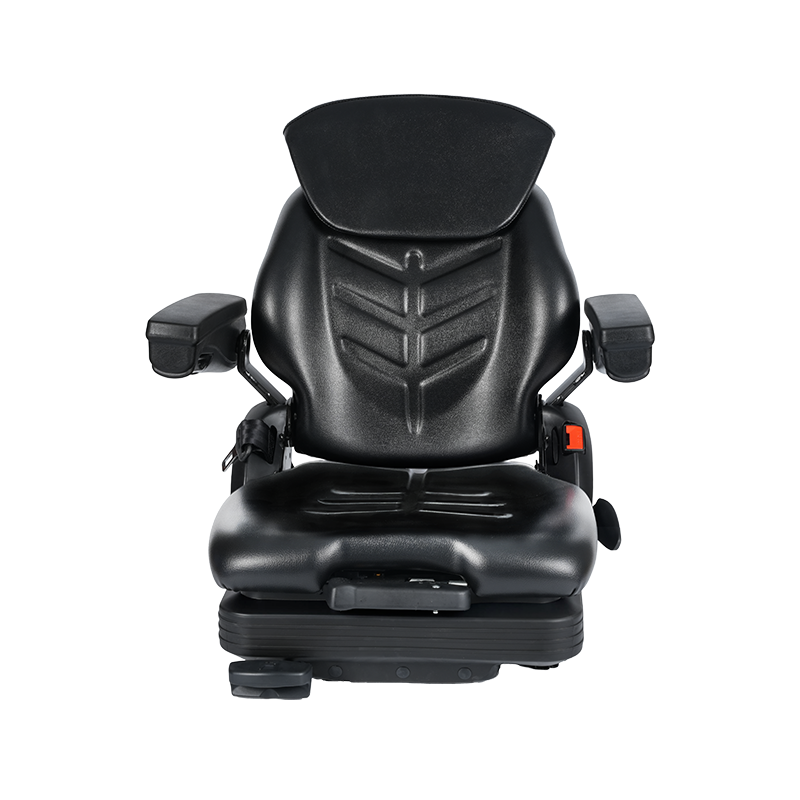
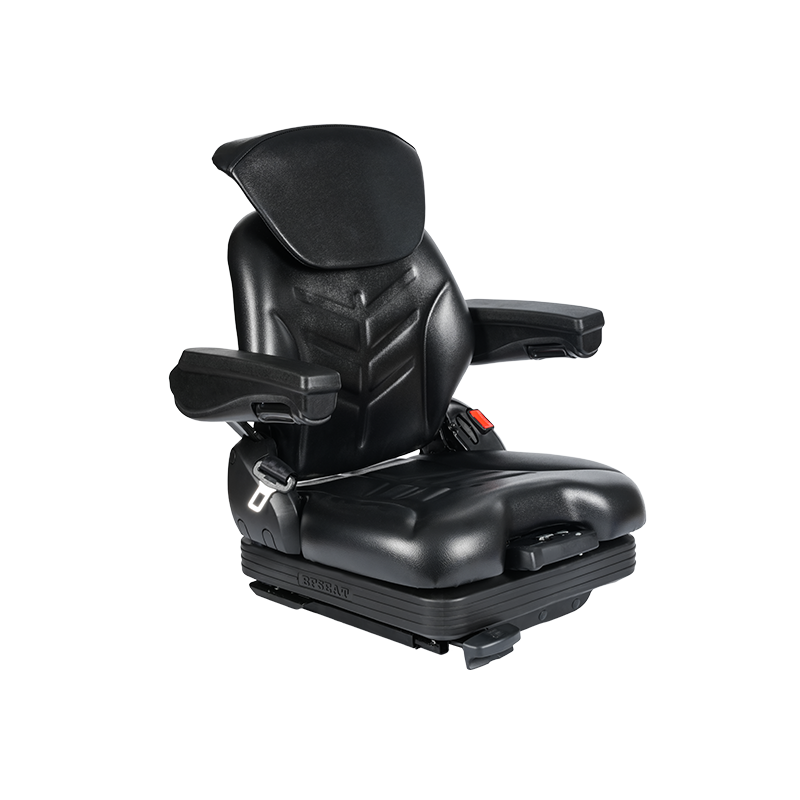 BF16MCD EN 13490 IT1+IT2 & ISO 7096 Dual-Certified Low-Profile Mechanical Suspension Seat InThe BF16M is a new benchmark for comfort in forklifts and compact construction machinery. With a seat cushion width of 510 mm, it provides a highly comfortable ride fo...View Product →
Matching Seats to Reach Trucks, Stackers, Counterbalance Trucks and AGVs
Each truck class punishes a mismatched seat differently, so specify per class rather than per facility. The matrix below reflects how seat platforms are normally configured for warehouse duty.
| Truck class | Duty pattern | Seat priority | Reference model |
| Reach truck and narrow aisle | Frequent mount and dismount, forward perch position | Low cushion height, slim side bolsters, clear belt path | BF62 |
| Counterbalance, electric or IC | Long seated transits across docks and yards | Full mechanical suspension with EN 13490 and ISO 7096 certification | BF23, BF16MCD |
| Electric stacker | Short cycles in damp or cold zones | Compact footprint, foldable backrest, waterproof cover | BF22 |
| AGV and automated trucks | Rare manual override by trained staff | OPS (Operator Presence Switch) integration and sensor-compatible wiring | BF21 |
Stackers deserve a specific mention: their seats live inside cramped battery compartments, so waterproof covers and folding backrests matter as much as cushioning. The BF22 platform, for example, pairs a waterproof black coating with four-way adjustment for exactly this reason.
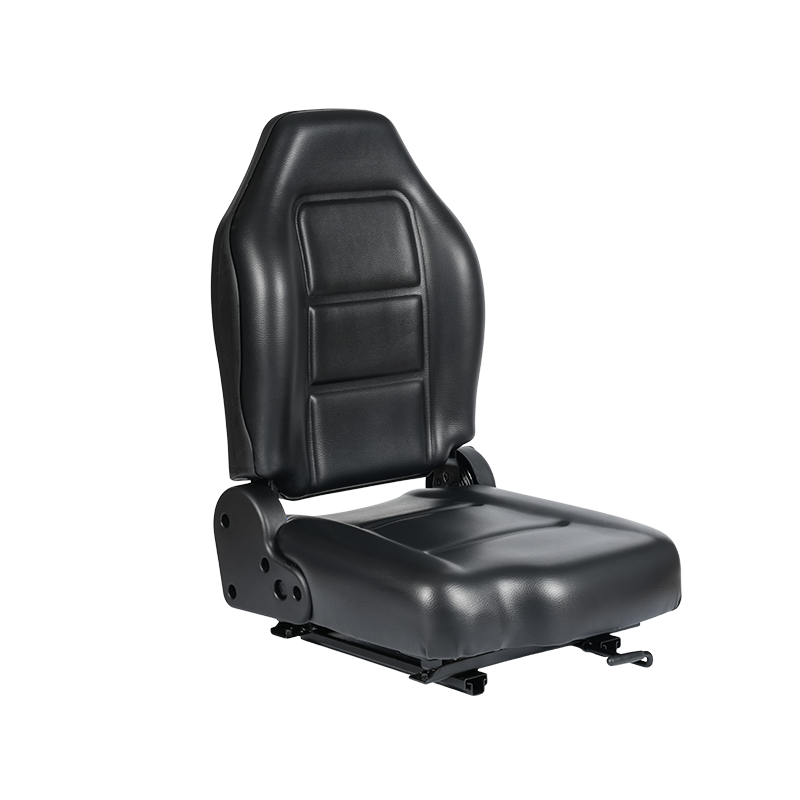 BF6-2 Cost-effective and efficient reach truck seat for narrow aisles forkliftThe BF6-2's narrow, compact seat design was developed to address space constraints in narrow aisle operations, such as those involving reach trucks. The 60° fore-and-a...View Product →
Certification and Safety Features to Verify Before Purchase
EN 13490, ISO 7096 and the OPS seat switch carry most of the compliance weight in a warehouse seat purchase. Everything else on the data sheet is comfort or convenience; these three decide whether the seat passes audit and keeps the truck legal.
- EN 13490 verification confirms seat strength, dimensions and adjustment ranges, graded IT1 or IT2 by operator mass range.
- ISO 7096 class measures the vibration actually transmitted to the operator, so match the EM class to the truck type rather than accepting a generic claim.
- OPS seat switch interrupts drive and hydraulics the moment the operator stands; test it at every inspection, because an intermittent switch can write off the whole unit.
- Retractable safety belt keeps the webbing off the floor and out of the entry path during high-frequency mounting, which decides whether operators actually buckle up.
- CE marking is the baseline for European and rental fleets that cross borders, backed by the factory quality system behind it.
Supplier depth is worth checking in the same breath. Hangzhou Benfeng Auto Seat Co., Ltd. helped draft JB/T 13693-2019, China's machinery-industry standard for industrial vehicle operator seats, and builds the BF series with CE, EN 13490 and ISO 7096 certification in a 14,000 m2 plant running at 200,000 seats per year.
When to Replace Warehouse Forklift Seats, and What to Check First
Replace the seat when the foam flattens, the suspension bottoms out or the OPS (Operator Presence Switch) turns intermittent. A torn cover alone is a retrim job, not a replacement; collapsed foam and tired dampers, by contrast, silently hand the full floor vibration back to the operator's spine.
- A cushion that stays compressed after the operator stands up
- Torn vinyl exposing yellowed or crumbling foam
- Suspension that bottoms out on dock joints even under a light operator
- Slide rails with visible play or uneven travel
- OPS (Operator Presence Switch) faults logged repeatedly by the truck controller
Before ordering, confirm three fitment points: the mounting hole pattern, the slide rail travel range and the seat switch connector. Universal replacements fail on wiring far more often than on bolt spacing, and rails, belts and cushions can usually be serviced separately before a full replacement is justified.
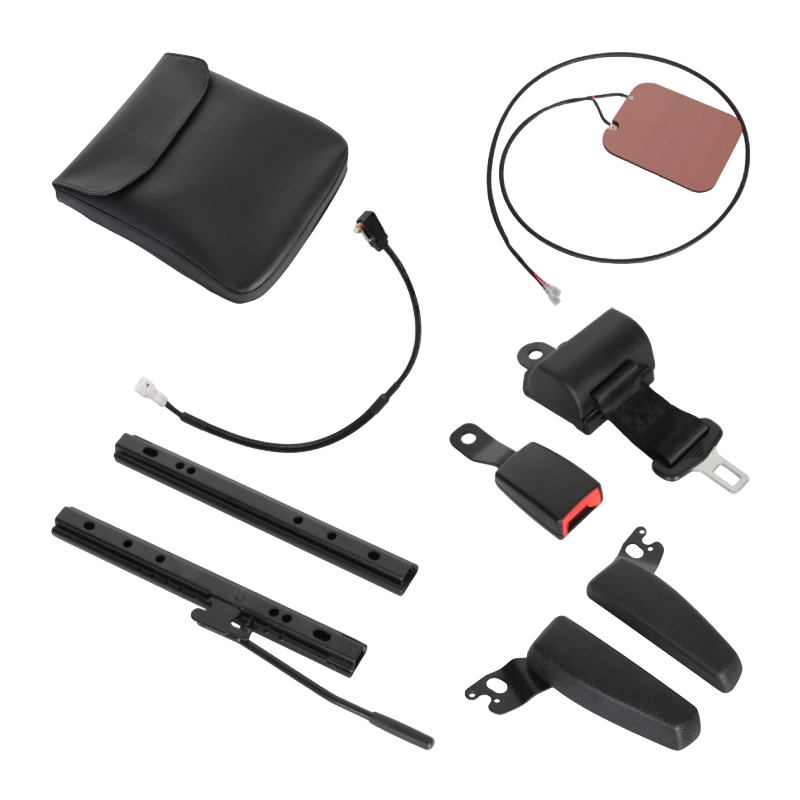 BF1-2 Cost-effective black vinyl folding backrest forklift seat for warehouse vehicle fleeDesigned with "economy and durability" in mind for the high-frequency operations of warehouse fleets, the BF1-2 is an ideal choice for warehouse forklifts, such as rea...View Product →
Treated as a specification rather than a spare part, the seat is one of the cheapest levers in a warehouse. It changes how every shift ends, how often operators swap tasks to escape discomfort, and how long a truck stays productive between cab-level repairs. Start from floor condition and shift length, verify the certifications, and the rest of the data sheet falls into place.
Frequently Asked Questions About Warehouse Forklift Seats
Are warehouse forklift seats universal?
Mounting patterns and slide rails follow common industry layouts, so many replacement seats physically fit several trucks. Electrical fitment is the real filter: seat switch connectors, belt anchor points and compartment clearance vary between models, so confirm those three before ordering.
What is the difference between EN 13490 and ISO 7096?
EN 13490 verifies the seat itself, covering strength, dimensions and adjustment ranges, and grades seats IT1 or IT2 by operator mass. ISO 7096 measures the vibration transmitted to the operator and assigns EM classes by machine type, so it tells you how well a suspension seat is matched to a specific truck.
How often should a warehouse forklift seat be replaced?
Judge by condition rather than by calendar. Flattened foam, bottomed-out suspension or repeated OPS faults mean replacement now, while a damaged cover can be retrimmed. In multi-shift warehouse duty, plan on three to five years between full replacements.
Does a reach truck need a suspension seat?
Usually not. Reach-truck duty is short-cycle with frequent mounting, so a low-profile semi-suspension or static seat with good cushioning keeps weight down and sightlines clear, while full mechanical travel is reserved for counterbalance trucks that spend hours in transit.
-
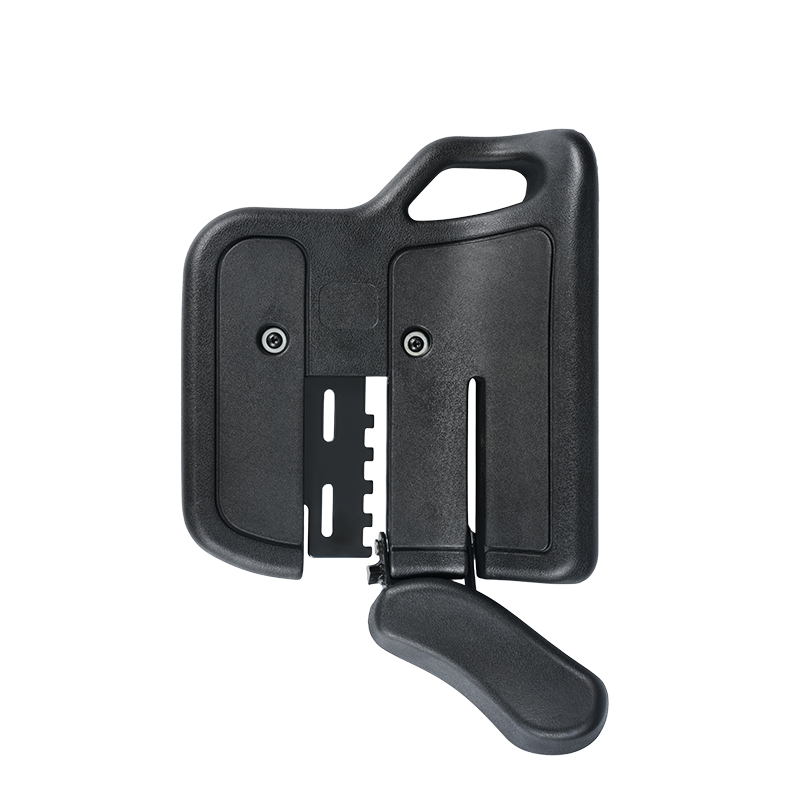
BF3 Single-Mold Polyurethane Eco-Friendly Seat with Vehicle-Contoured Design | Cost-Efficient Abrasion-Resistant Version for Stand-On Reach Forklifts
-
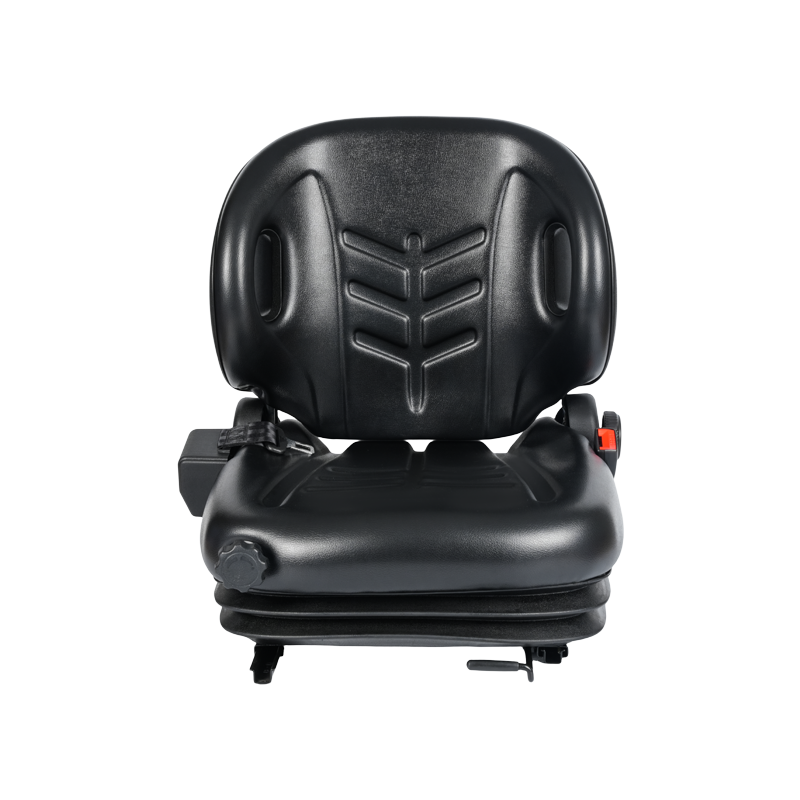
BF2-3AB EN 13490 IT1+IT2 Certified Counterbalance Forklift Seat with Mechanical Suspension OPS Switch & Universal Multi-Function Mounting System Compatible with Toyota Jungheinrich
-
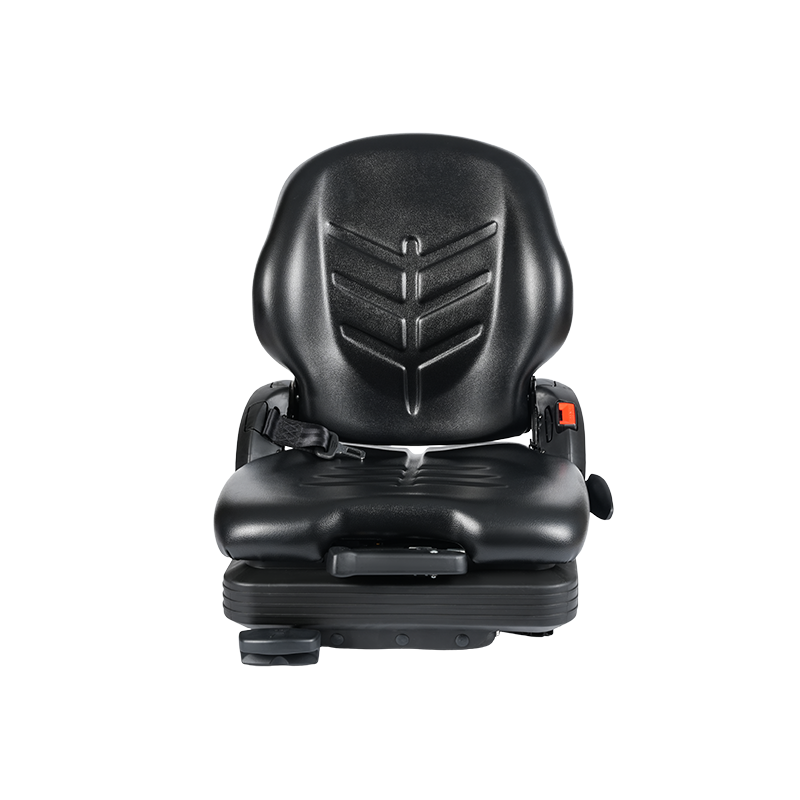
BF16 Low-Profile Vinyl Replacement Mechanical Suspension Seat for Material Handling Forklift Equipment - Black with EN 13490 IT1+IT2
-
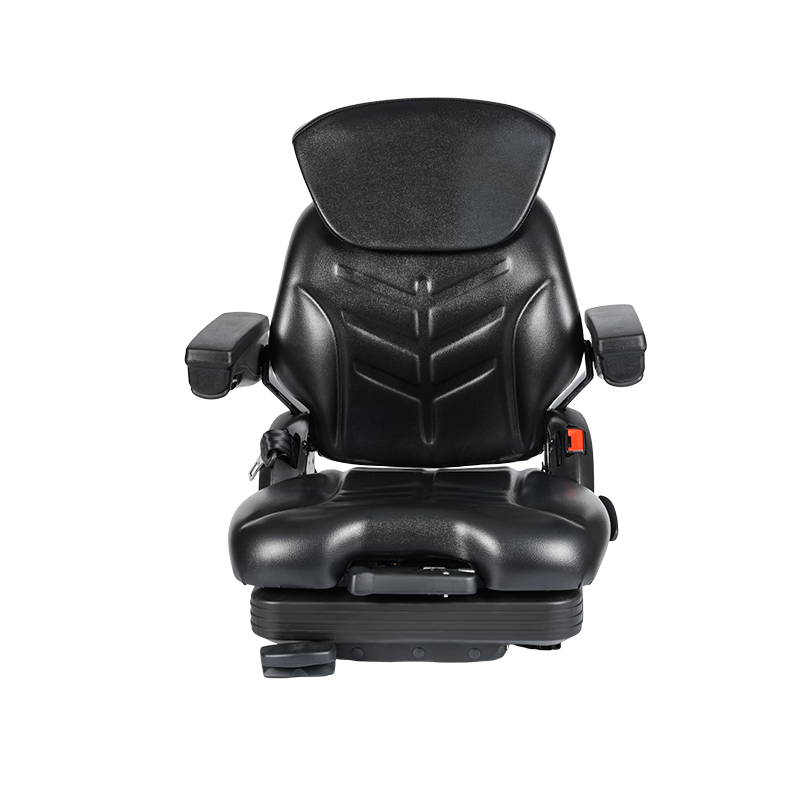
BF16MCD EN 13490 IT1+IT2 & ISO 7096 Dual-Certified Low-Profile Mechanical Suspension Seat Integrated safety belt and OPS (Operator Presence Switch)
-
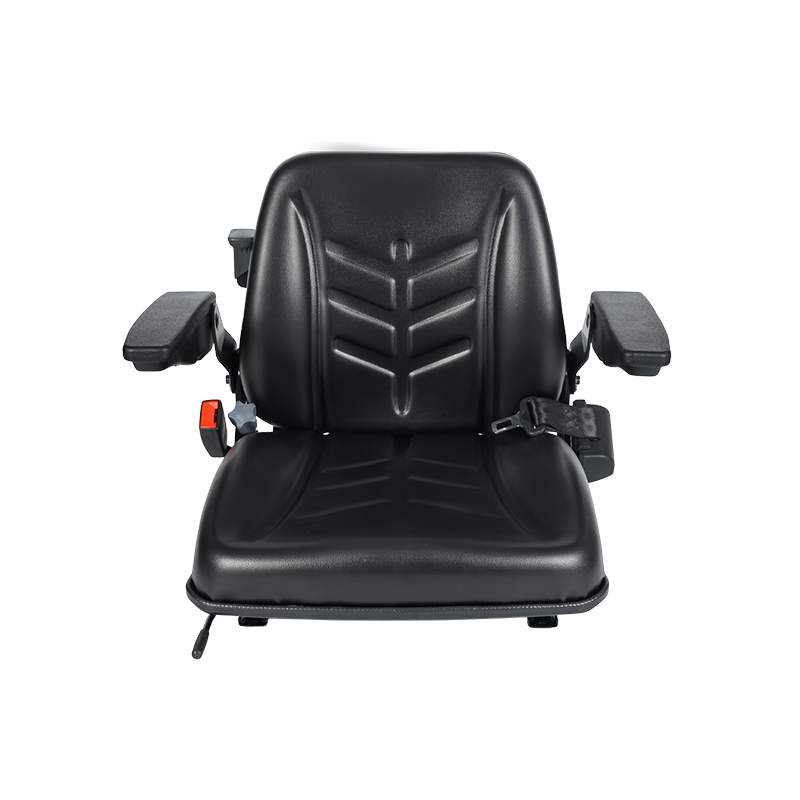
Copyright @ Hangzhou Benfeng Auto Seat Co., Ltd. All rights reserved Privacy OEM/ODM Ergonomic Industrial Seats Manufacturers
浙ICP备20022099号