
 中文简体
中文简体 English
 Français
 Español
 عربى
عربى-

(86)-0571-82550327
-

info@bfseats.com
-




Operator Seats: How to Specify, Certify and Source Seats for Industrial Vehicles
Content
- 1 What Is an Operator Seat, Exactly?
- 2 Suspension Travel Decides End-of-Shift Fatigue
- 3 Operator Seat Certifications That Filter Suppliers Fast
- 4 Matching the Operator Seat to the Machine
- 5 Seat Materials: PVC, Vinyl, and Polyurethane Compared
- 6 Universal Replacement Seats: A Four-Check Fitment Protocol
- 7 Sourcing From an OEM-Grade Seat Manufacturer
- 8 Operator Seat FAQs
A sit-down counterbalance forklift running one eight-hour shift crosses dock plates, ramp joints, and yard debris thousands of times, and every one of those impacts reaches the driver's spine through exactly one component: the operator seat. Fleets that treat the seat as commodity padding usually pay later, in vibration fatigue complaints, interlock faults, and seats replaced two years early. Hangzhou Benfeng Auto Seat Co., Ltd., a dedicated industrial vehicle seat manufacturer founded in 2007, builds its business around preventing that outcome. This guide sets out how buyers should evaluate operator seats: suspension first, certifications second, materials and fitment third.
What Is an Operator Seat, Exactly?
An operator seat is a certified driver interface, not upholstery. At purchase stage that distinction matters because three of its core functions are safety functions.
Every hour of machine time, the assembly has to do four jobs at once:
- Support the driver across the full weight adjustment range without bottoming out.
- Isolate whole-body vibration through the suspension unit, not the cushion alone.
- Hold a stable working position, so steering, levers, and pedals stay in reach via slide rails and backrest angle.
- Run safety logic: the OPS (Operator Presence Switch) cuts hydraulic function when the driver leaves the seat, and belts restrain the occupant in a tip event.
When a seat fails at any of these, the symptom shows up elsewhere: a truck fault code, end-of-shift back pain, or a failed safety audit. Buyers who grade seats by engineering data first avoid all three.
Suspension Travel Decides End-of-Shift Fatigue
Mechanical suspension travel and damping class, not cushion thickness, decide how much vibration reaches an operator's spine over a shift. A suspension unit with a defined stroke, from 40 mm on compact platform truck seats upward, absorbs repeated vertical shocks, while damping controls how quickly the seat settles after each impact. ISO 7096 classifies machines into EM classes by mass and vibration signature, and Benfeng seats carry EM1 and EM7 certification, covering light electric trucks through heavy outdoor equipment. Before comparing quotes, it pays to read a plain-language explanation of how a suspension seat works, because the physics decides which seat survives a full shift.
Operator Seat Certifications That Filter Suppliers Fast
Three certifications do most of the filtering: EN 13490 for industrial trucks, ISO 7096 for vibration, and CE marking as the market baseline. Adding ISO 3834 on the welding side narrows the field further, because frame fatigue starts at the welds.
| Standard | What it covers | Why it matters at purchase |
| EN 13490 | Industrial truck seat testing, with IT1 and IT2 severity classes | Confirms validation for industrial truck duty in Europe |
| ISO 7096 | Whole-body vibration evaluation, with EM classes by machine mass | Matches damping performance to the machine class it is fitted to |
| CE marking | EU health and safety baseline for the finished product | Entry requirement for European Union markets |
| ISO 3834 | Welding quality management for the metal frame | Predicts frame fatigue life and crack resistance |
| JB/T 13693-2019 | Chinese mechanical industry standard for industrial vehicle driver seats | Signals a role in drafting the standard, not just compliance |
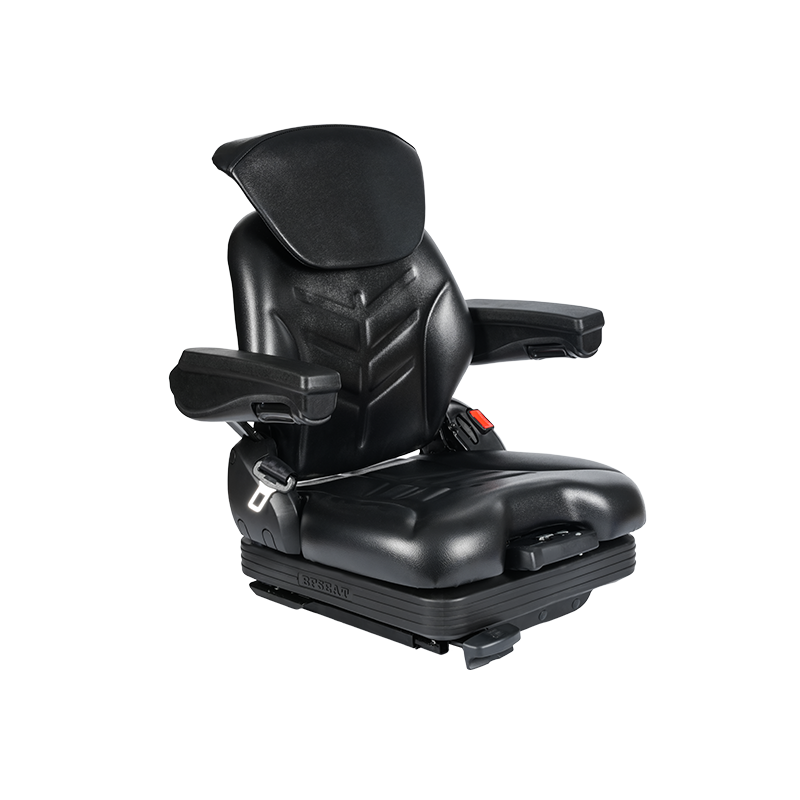 BF16M Dual-Certified Low-Profile Mechanical Suspension Seat with Belt and OPSThis low-profile mechanical suspension seat carries EN 13490 IT1+IT2 and ISO 7096 EM1+EM7 certifications, matching the certification filtering guidance, and its 60/80 mm stroke fits the suspension-first selection step that follows.View Product →
Matching the Operator Seat to the Machine
The right seat follows the machine's vibration profile, cab geometry, and duty cycle, never the other way around. Start with suspension stroke, because cab headroom and machine class set the physical ceiling:
Then match configuration to application. Four pairings cover most fleets:
- Counterbalance and warehouse forklifts: dual-certified suspension seats for dock work, low-profile seats for reach trucks and narrow aisles.
- Agricultural machinery: abrasion-resistant PVC covers, mechanical suspension, and foldable backs for balers, transplanters, and harvesters.
- Construction equipment: heavy-duty suspension for truck cranes and excavators, with lumbar support for rough terrain.
- Cleaning and airport vehicles: wipe-clean PVC, two-point belts, and compact or fold-flat frames for tight operator stations.
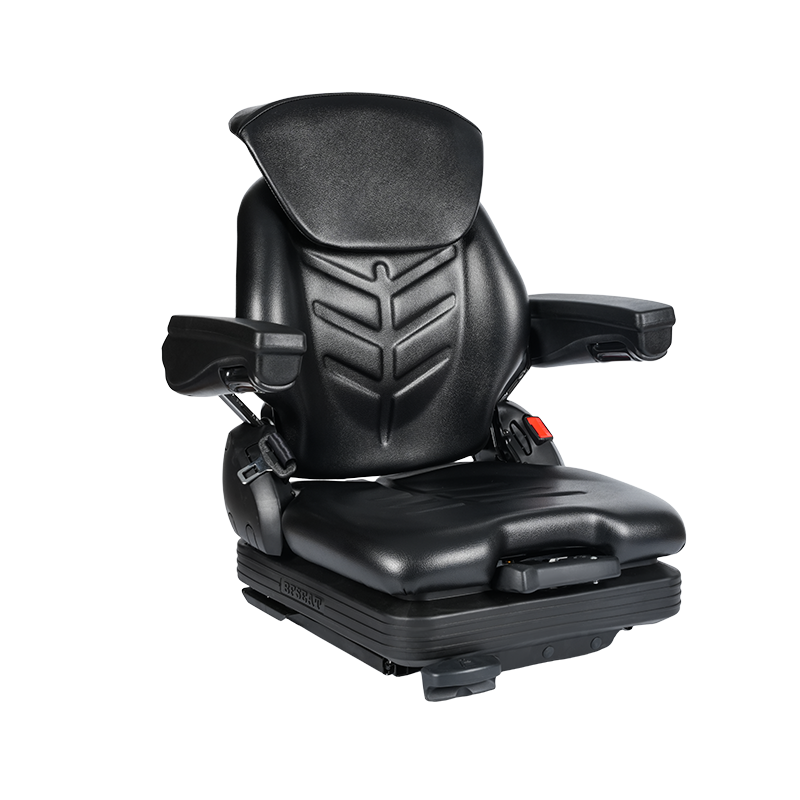 BF16 Premium Ergonomic Suspension Tractor Seat with CE CertificationA tractor-specific suspension seat with 80° backrest adjustment, 60/80 mm travel, and up to 170 kg capacity, illustrating one of the application-based configurations buyers can match to their fleet before consolidating on shared platforms.View Product →
One platform, many trims: seat families such as the BF series share frames and adjusters across categories, changing cover material, suspension, and safety hardware per application. For buyers running mixed fleets, that shortens lead times and simplifies spare parts.
Seat Materials: PVC, Vinyl, and Polyurethane Compared
Cover material decides how a seat survives the shift; foam decides how it feels. Specify both separately.
- High-density PVC and vinyl: the workhorse for forklift and sweeper duty, abrasion resistant, wipe-clean, and cost-efficient in high-traffic fleets.
- Single-mold polyurethane: one contoured piece with no staple line to fail, environmentally friendlier production, and strong abrasion resistance; the BF3 platform is built this way.
- Dual-tone PVC: used on ride-on sweepers where the seat must look clean and hide scuffing between washes.
Universal Replacement Seats: A Four-Check Fitment Protocol
Most replacement seat complaints trace back to mounting and wiring mistakes, not product defects. Run this protocol before ordering:
- Measure the mounting pattern and slide rail travel on the old seat, and compare both against the replacement base plate.
- Check the seat switch or OPS wiring connector against the truck interlock circuit, so the truck recognizes the new seat.
- Confirm the weight adjustment range covers your actual crews, including the lightest and heaviest regular operators.
- Match certification class to machine type: EN 13490 IT class for industrial trucks, ISO 7096 EM class where vibration is regulated.
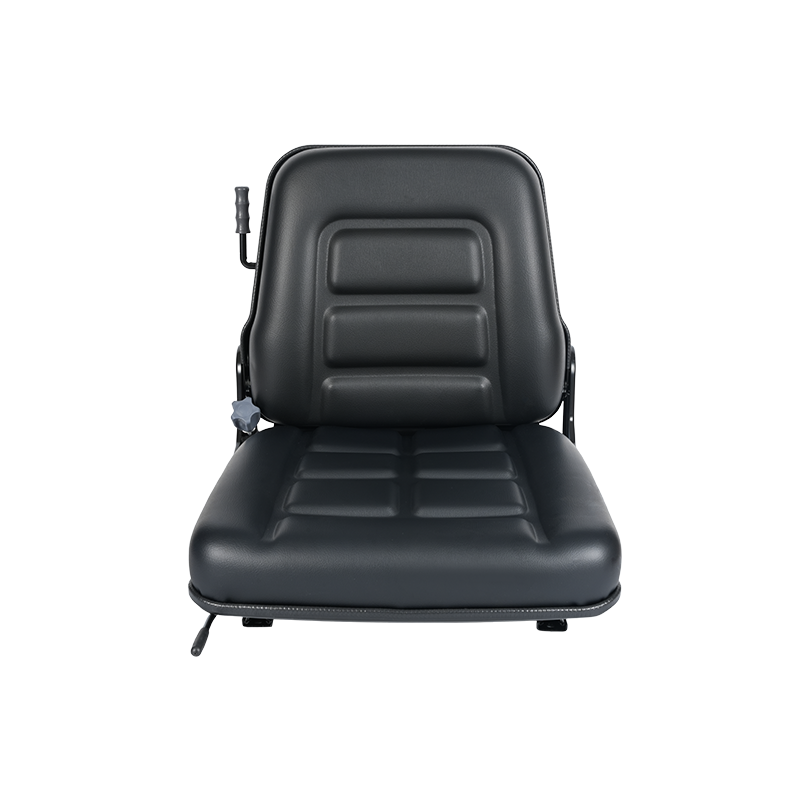
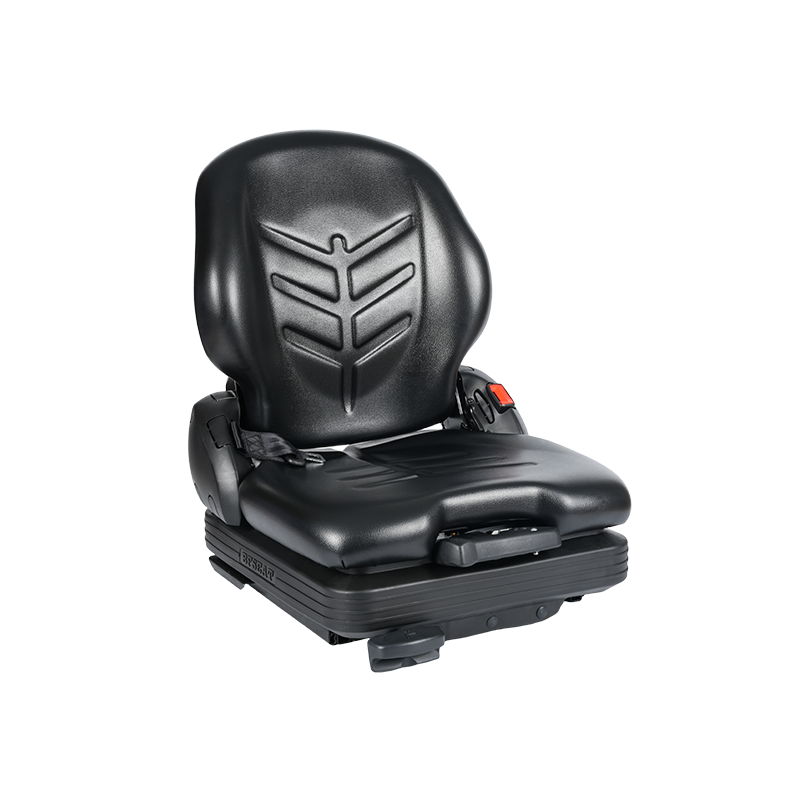 BF16 Low-Profile Vinyl Replacement Suspension Seat for ForkliftsA compact replacement seat with modular, interchangeable cushions and standard 328x285 mm mounting, useful for the installation protocol discussed here and for servicing installed seats with separately orderable accessories.View Product →
Accessories matter at this stage too: adjustable armrests, slide rails, cushions, and shock absorbers are usually orderable separately, so a service team can refresh an installed seat instead of scrapping it.
Sourcing From an OEM-Grade Seat Manufacturer
OEM-fitment capability shows up in tooling, testing, and volume, so ask for evidence of all three. A supplier that co-drafted the JB/T 13693-2019 industry standard, runs its own stamping, welding, foaming, and assembly shops, and operates an in-house testing room can hold tolerances across a production run, not just on the sample.
For fleets and distributors, the practical test is a pilot: request a sample seat, fit it to one machine, and run it with your heaviest-use operator for a month before committing to volume. Hangzhou Benfeng Auto Seat Co., Ltd. supplies operator seats to material handling, agricultural, construction, and specialty vehicle manufacturers across multiple export markets, so ask which references sit closest to your duty cycle.
Operator Seat FAQs
What is the difference between mechanical suspension and semi-suspension operator seats?
Mechanical suspension adds a sprung unit with defined travel and weight-adjustable damping; semi-suspension relies on cushion and frame elasticity with little or no stroke. Long shifts on rough surfaces justify full mechanical suspension, while short indoor duty cycles often do not.
Which certifications should a forklift operator seat carry for the European market?
Treat CE marking as the baseline, EN 13490 (IT1/IT2) as the seat-level test for industrial trucks, and ISO 7096 (EM classes) as the vibration benchmark. ISO 3834 on the supplier's welding process is a useful fourth signal of frame quality.
Can one replacement seat really fit several machines?
Yes, if it is genuinely a universal-fit model and you verify bolt pattern, slide travel, interlock wiring, weight range, and certification class first. The four-check protocol above exists because most fitment problems are found at exactly those points.
How often should operator seats be inspected or replaced?
Inspect belts, the OPS (Operator Presence Switch), and suspension travel at every scheduled machine service, and replace the seat when travel feels bottomed out, foam collapses, or the interlock fails intermittently. Multi-shift fleets shorten every one of those intervals.
-
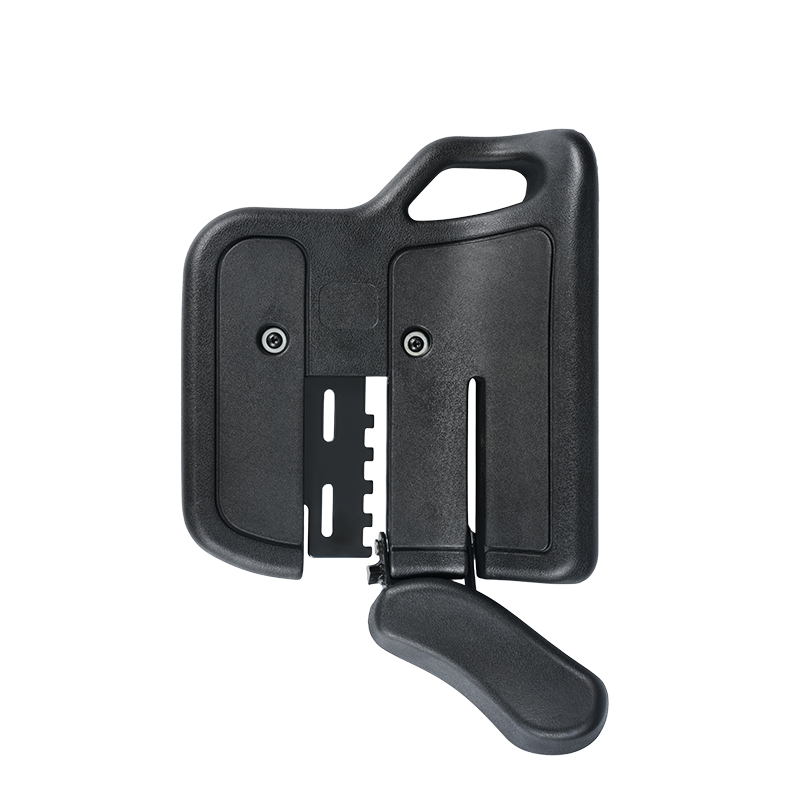
BF3 Single-Mold Polyurethane Eco-Friendly Seat with Vehicle-Contoured Design | Cost-Efficient Abrasion-Resistant Version for Stand-On Reach Forklifts
-
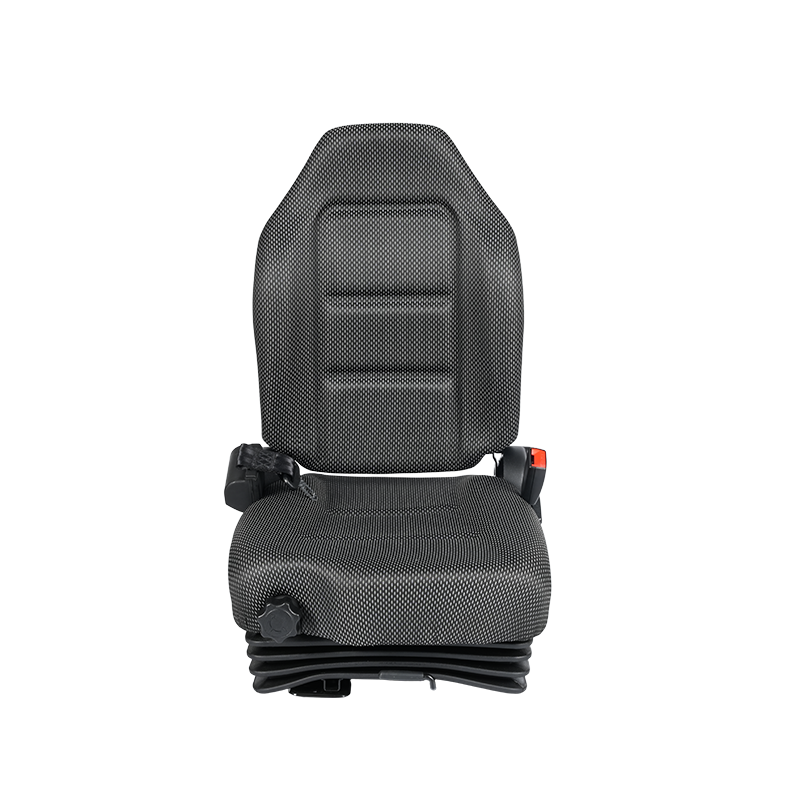
BF6-3 EN 13490 IT1 certified reach truck seat with retractable safety belt & shock absorption&OPS (Operator Presence Switch) for lithium battery forklifts Compatible with Hyster,Jungheinrich
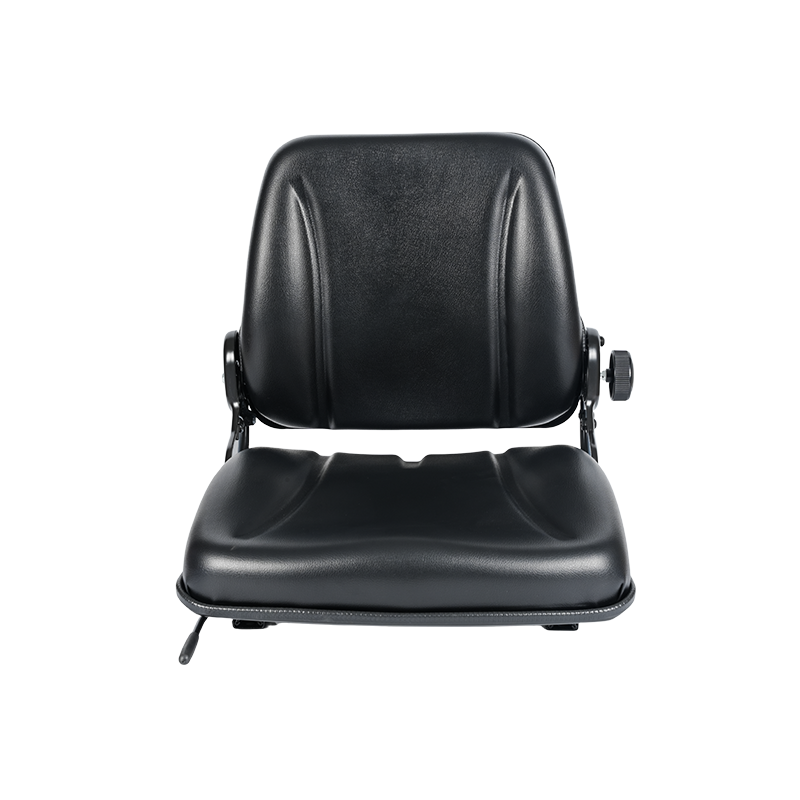
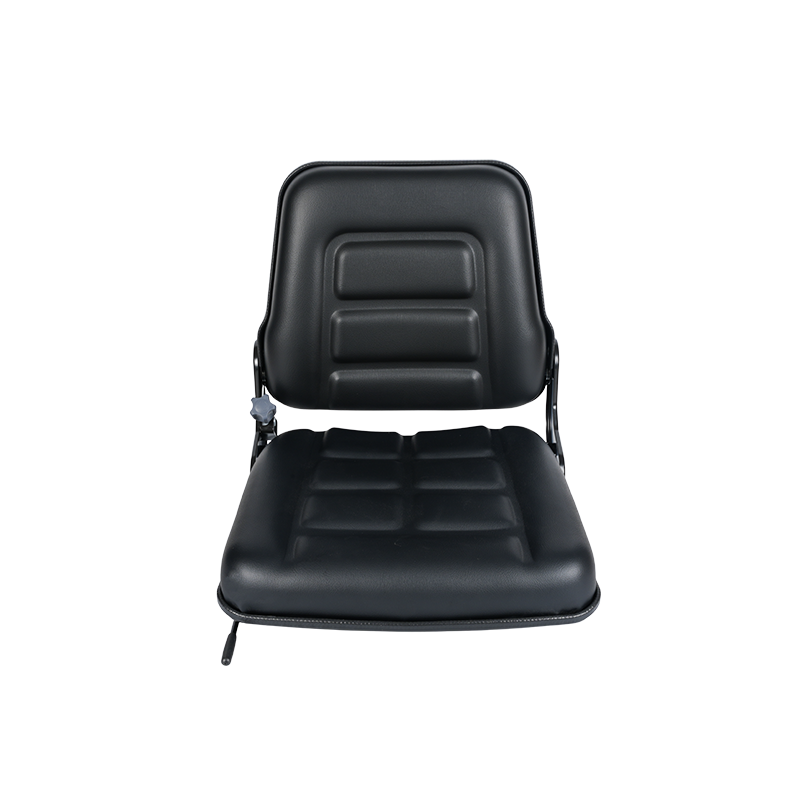
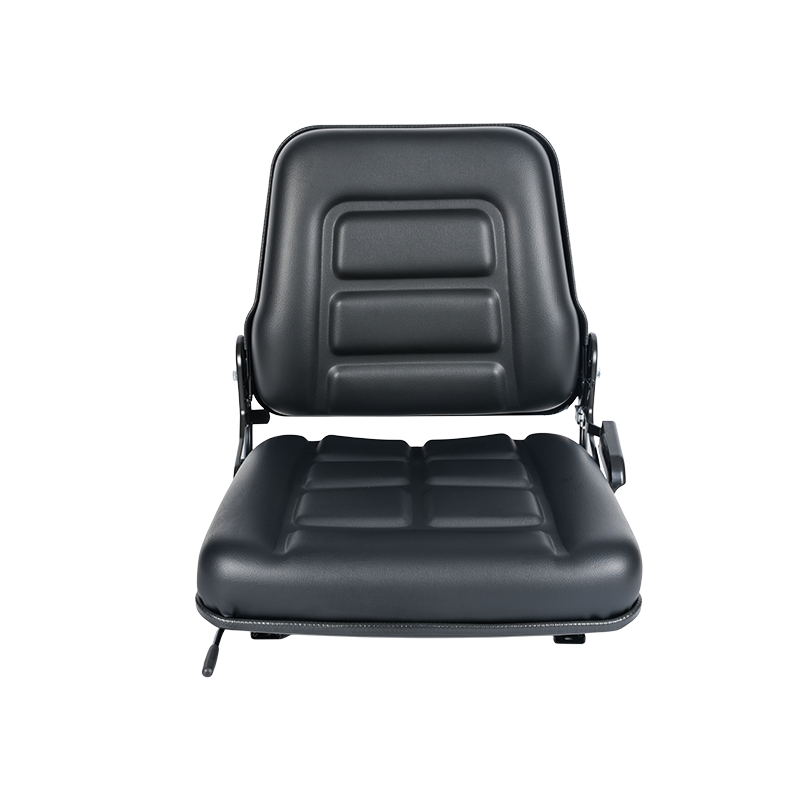
Copyright @ Hangzhou Benfeng Auto Seat Co., Ltd. All rights reserved Privacy OEM/ODM Ergonomic Industrial Seats Manufacturers
浙ICP备20022099号