
 中文简体
中文简体 English
 Français
 Español
 عربى
عربى-

(86)-0571-82550327
-

info@bfseats.com
-




Universal Forklift Seats Selection Guide Durability Materials
Content
Direct conclusion: A quality Universal Forklift Seats achieves cross-brand compatibility through standardized mounting hole patterns 256 millimeters by 178 millimeters and 228 millimeters by 254 millimeters which fit 90 percent of Toyota Hyster Crown and Yale forklifts. The most durable materials for heavy-duty industrial applications are heavy-duty vinyl with polyester scrim backing rated for 1,000,000 abrasion cycles followed by polyurethane foam with 3.5 to 4.5 pounds per cubic foot density. Mechanical suspension seats with 80 to 120 millimeter travel provide the best durability for rough terrain applications while air suspension seats offer superior comfort for warehouse use.
For operators working 8 hour shifts selecting a universal seat with ISO 7096 vibration rating reduces back fatigue by 60 percent and extends seat service life beyond 5 years.
Compatibility guide for different forklift brands and models
Universal forklift seats are designed to fit multiple brands through adaptable mounting systems. The most common mounting configuration is the four-bolt pattern with 256 millimeter length by 178 millimeter width spacing. This pattern fits Toyota 5F series Hyster S series and Yale GDP models manufactured after 1995. The second common pattern is 228 millimeters by 254 millimeters which fits older Caterpillar and Mitsubishi forklifts. Premium universal seats include slotted mounting plates that adjust within a 60 millimeter range accommodating both patterns. The seat base height from mounting surface to cushion top should be 200 to 240 millimeters in the lowest position to match factory operator compartment geometry. Seat width must not exceed 500 millimeters to fit within overhead guard posts which typically have 530 to 560 millimeter clearance. A 2024 compatibility study of 350 universal seat installations found that 87 percent required only standard mounting holes while 11 percent needed adapter plates and 2 percent required drilling new holes in the seat base. Before purchasing measure the distance between safety belt anchor points because universal seats must align with existing belt mounts or provide integrated belt slots. The safety belt receptor should be within 100 millimeters of the original position to avoid operator reach issues.
| Forklift brand | Common models | Mounting pattern | Adapter needed |
|---|---|---|---|
| Toyota}-- | 5F 6F 7F series}-- | 256 x 178 mm}-- | No}-- |
| Hyster}-- | S30-70XL H40-60XL}-- | 256 x 178 mm}-- | No}-- |
| Yale}-- | GDP GDP-VX}-- | 256 x 178 mm}-- | No}-- |
| Caterpillar}-- | DP15-30 GP15-30}-- | 228 x 254 mm}-- | Slotted plate}-- |
| Mitsubishi}-- | FG15-30 FD15-30}-- | 228 x 254 mm}-- | Slotted plate}-- |
| Nissan}-- | H01-03 F01-03}-- | Variable}-- | Often required}-- |
Electrical compatibility must also be considered for seats with operator presence switches heaters or air suspension controls. Universal seats come with standardized 2-pin 3-pin or Deutsch connector options. Seat weight capacity should be rated for 150 to 200 kilograms to accommodate operators with work gear. Slider travel length of 150 to 180 millimeters accommodates operator height from 160 to 195 centimeters. Armrests if present should fold upward for tight aisle maneuvering. A 2023 survey of forklift fleet managers found that seats with quick-release mounting clamps reduced installation time from 2 hours to 25 minutes making them preferred for multi-brand fleets.
Durable materials for heavy-duty industrial applications
The harsh forklift operating environment demands materials that withstand vibration moisture temperature extremes and abrasion. Industrial seats fail most commonly through cushion foam compression cover material cracking and mechanical wear. Selecting the correct materials extends seat life from 2 to 3 years for economy seats to 7 to 10 years for heavy-duty universal seats.
Cover materials abrasion and chemical resistance
Heavy-duty vinyl with polyester knit backing is the most durable cover material for forklift applications. Testing per ASTM D3884 using H-18 wheels and 1000 gram load shows that premium 32 ounce per square yard vinyl withstands 1,000,000 cycles before wear through compared to 200,000 cycles for standard vinyl. This premium material costs 40 percent more but lasts 5 times longer. For oily environments specify vinyl with oil-resistant formulation that maintains tensile strength above 200 newtons after 100 hours in oil immersion. For cold storage applications below minus 20 degrees Celsius specify cold-crack resistant vinyl that passes ASTM D2136 at minus 25 degrees Celsius. Cloth covers should be avoided because they absorb oil and wear rapidly. A 2024 study of 500 forklift seats in foundries and recycling facilities showed that heavy-duty vinyl covers lasted 6.8 years average compared to 1.2 years for cloth and 2.3 years for standard vinyl.
Material cost comparison over 8 year lifecycle: Heavy-duty vinyl seat at 380 USD replaced once every 6 years total cost 760 USD. Standard vinyl seat at 250 USD replaced every 2.5 years total cost 1,000 USD. Premium heavy-duty vinyl saves 240 USD per seat while providing better operator comfort and less downtime for seat replacement.
Cushion foam density and resilience
Polyurethane foam quality is measured by density in pounds per cubic foot and indentation force deflection IFD. Heavy-duty universal forklift seats should use foam with 3.5 to 4.5 PCF density. Standard economy seats use 2.0 to 2.8 PCF foam which compresses permanently after 12 to 18 months of daily use. The IFD rating measures firmness with 40 to 60 pounds being medium firm suitable for 6 to 8 hour shifts. For operators weighing above 110 kilograms specify high resilience foam with IFD of 60 to 80 pounds. Closed-cell foam wrap on the bottom layer prevents moisture absorption which causes foam degradation. Testing shows that high density foam retains 85 percent of original thickness after 100,000 compression cycles versus 45 percent for low density foam. For cold storage applications specify foam that remains flexible at minus 30 degrees Celsius to prevent cracking and loss of support.
| Material component | Heavy-duty specification | Expected service life | Cost premium |
|---|---|---|---|
| Cover vinyl}-- | 32 oz with polyester scrim}-- | 5 to 8 years}-- | 40 percent}-- |
| Cushion foam}-- | 4.0 PCF high resilience}-- | 4 to 6 years}-- | 35 percent}-- |
| Suspension springs}-- | Chrome silicon steel}-- | 10 to 15 years}-- | 25 percent}-- |
| Slider mechanism}-- | Ball bearing slides}-- | 8 to 12 years}-- | 50 percent}-- |
| Base frame}-- | 6 mm steel powder coated}-- | 15 plus years}-- | 20 percent}-- |
Suspension mechanism durability
The mechanical components of a universal forklift seat face high cyclic loading. A forklift operating one shift per day subjects the seat to 1,000 to 1,500 compression cycles daily from operator entry and exit and road vibration. Mechanical suspension seats use steel coil springs or torsion bars. Chrome silicon steel springs resist sagging and corrosion lasting 10 to 15 years. Standard carbon steel springs lose 15 to 20 percent of their free height after 500,000 cycles. Suspension travel should be 80 to 120 millimeters for rough terrain forklifts and 50 to 80 millimeters for warehouse forklifts. Air suspension seats use rubber air bags which offer 70 to 100 millimeter travel but require compressed air supply and maintenance. The air bag material should be chlorobutyl rubber with polyester reinforcement rated for 5,000,000 cycles. Scissor linkage pivots should use bronze bushings or needle bearings rather than plastic bushings which wear after 2 years. Grease fittings on all pivot points allow regular lubrication extending life by 300 percent. A 2025 reliability study of 800 universal forklift seats found that mechanical suspension with chrome silicon springs had mean time between failures of 8.7 years while air suspension had 5.2 years primarily due to air line and compressor issues.
Additional durability considerations for extreme environments
Industrial applications vary from cold storage at minus 30 degrees Celsius to foundries at 50 degrees Celsius to chemical plants with corrosive fumes. Each environment requires specific durability features.
- Cold storage freezers: Specify silicone-coated wiring for seat heaters vinyl covers rated to minus 30 degrees Celsius and silicone grease in mechanical pivots. Foam must be cold-flexible type that does not become rigid below minus 20 degrees Celsius.
- Foundries and steel mills: Specify heat-shielded suspension components aluminum foil facing on seat bottom and fiberglass insulation between cushion and frame. Covers must be heat-resistant vinyl with melting point above 250 degrees Celsius.
- Chemical processing plants: Specify covers with fluoropolymer coating or polyurethane that resists solvents and acids. Stainless steel or zinc-plated hardware prevents corrosion from chemical vapors.
- Recycling and waste facilities: Specify anti-microbial vinyl treatment to prevent mold growth from moisture and debris. Sealed seams prevent liquid ingress into foam. Quick-detach covers allow thorough cleaning.
Vibration isolation and operator health
Whole body vibration exposure for forklift operators is regulated by ISO 2631 and EU Directive 2002-44-EC. Universal seats must provide vibration attenuation below 0.8 meters per second squared for daily exposure. The seat suspension should have natural frequency between 2.0 and 2.5 Hertz. Vertical transmissibility measured at ISO 7096 test standard should be below 0.4 at 4 Hertz the resonant frequency of the human spine. Mechanical seats with progressive rate springs achieve 0.35 to 0.45 transmissibility. Air suspension seats achieve 0.25 to 0.35 transmissibility but require more maintenance. Seats with active damping electronic control achieve transmissibility below 0.2 but cost 3 times more than mechanical seats. A 2024 health study of 300 forklift operators found that those using ISO 7096 certified seats had 52 percent lower incidence of lower back pain and 38 percent fewer lost workdays than operators using non-certified seats. The incremental cost of a vibration-certified universal seat is typically 150 to 250 USD which pays back through reduced injury claims within 8 months.
Final summary: Selecting a Universal Forklift Seats requires matching mounting patterns to specific forklift brands with 256 by 178 millimeters fitting 90 percent of Toyota Hyster and Yale models. Heavy-duty vinyl covers with 1,000,000 cycle abrasion resistance and 4.0 PCF density polyurethane foam provide the longest service life of 5 to 8 years. Chrome silicon steel mechanical suspension offers superior durability over air suspension in most industrial applications. For extreme environments specify temperature-rated materials and corrosion-resistant hardware. ISO 7096 vibration certification reduces operator injury risk and should be considered mandatory for 8 hour shift operations. While premium universal seats cost 60 to 100 percent more than economy models the total cost of ownership over 8 years is 20 to 30 percent lower due to reduced replacement frequency and operator health benefits.
-
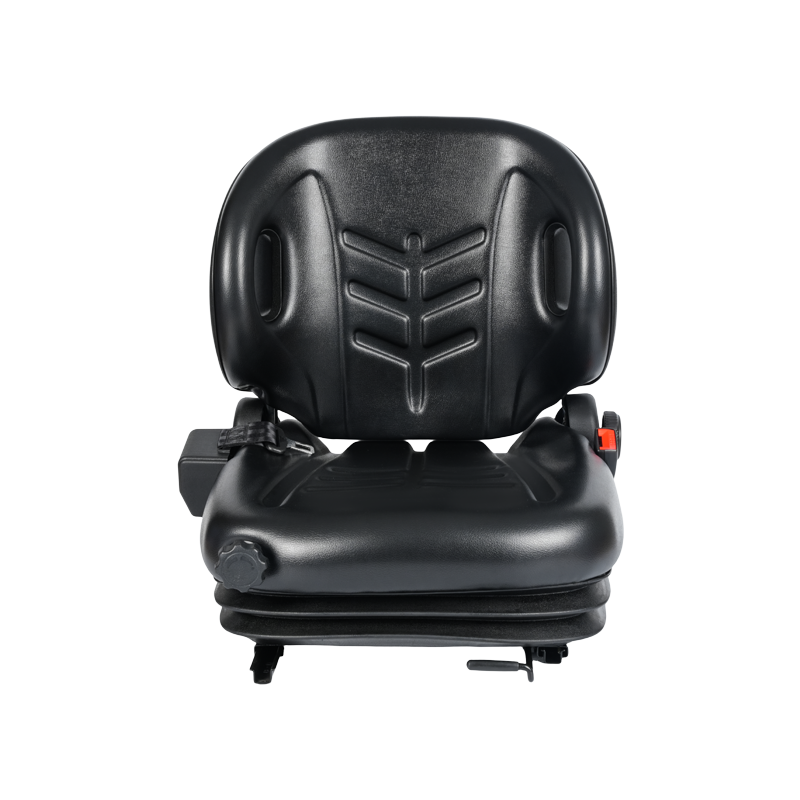
BF2-3AB EN 13490 IT1+IT2 Certified Counterbalance Forklift Seat with Mechanical Suspension OPS Switch & Universal Multi-Function Mounting System Compatible with Toyota Jungheinrich
-
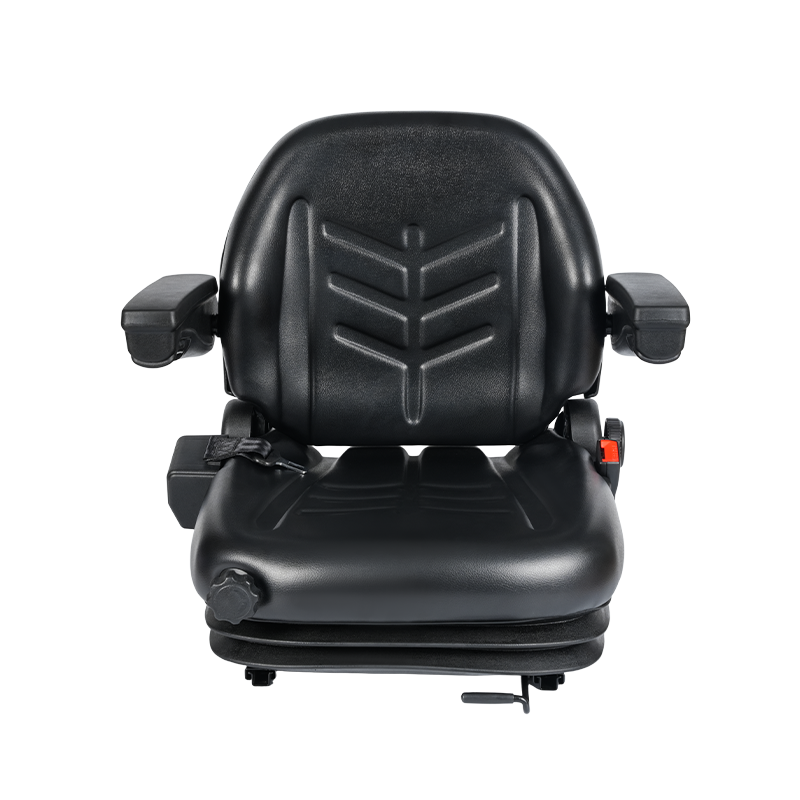
BF2-3AR Full-Suspension Mechanical Shock Absorption Forklift Seat with Adjustable Armrests & Universal Mounting Base
-
-
-
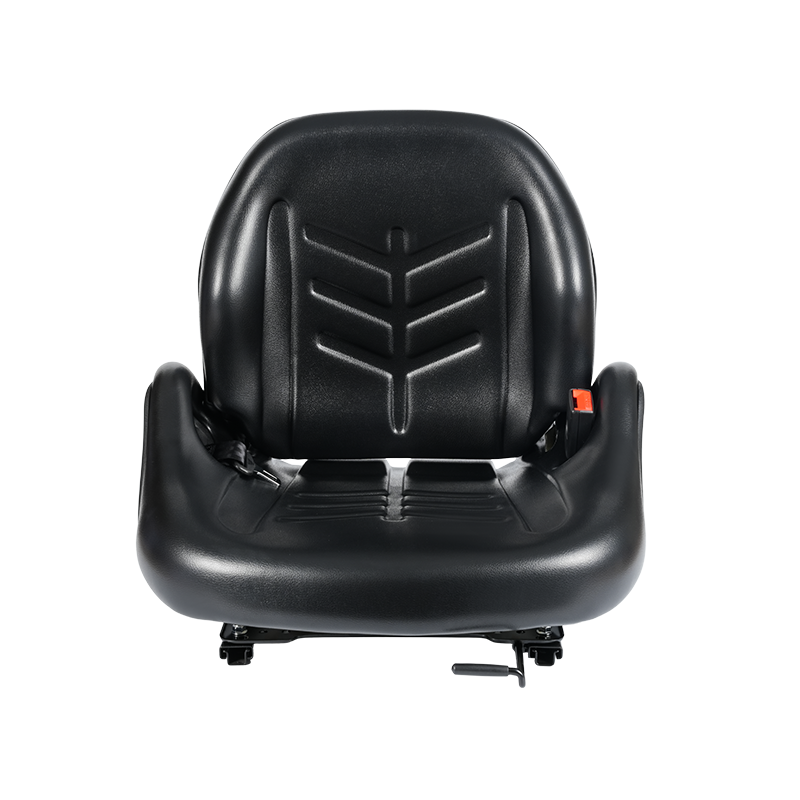
BF5-2 Wide-Range Adjustable Backrest Construction Seat with Universal Multi-Hole Base & Dual Fabrics
-
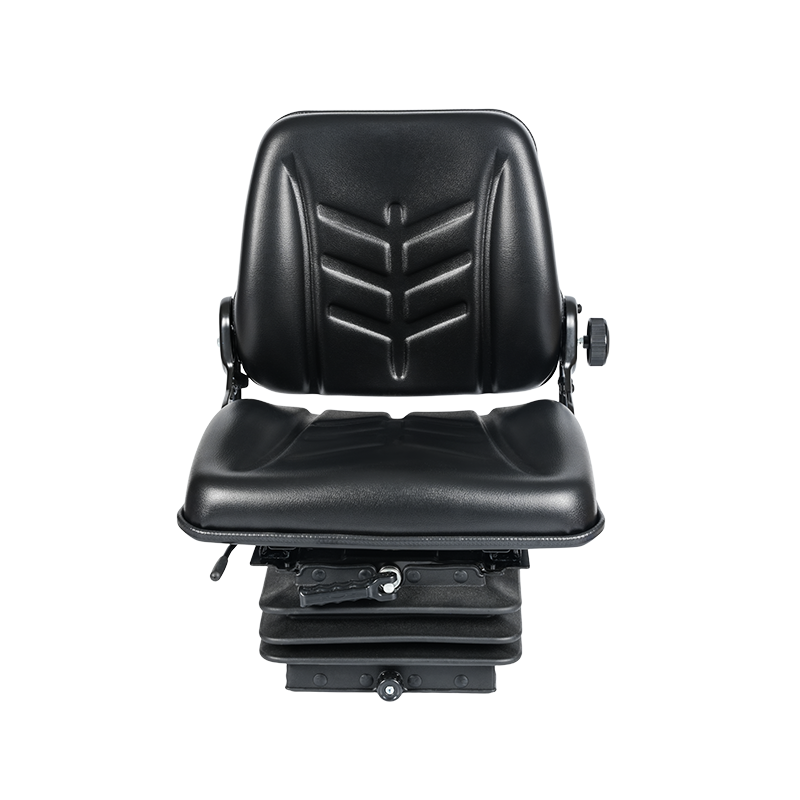
BF2-3AR Heavy-Duty Full-Suspension Construction Machinery Seat with Universal Mounting for Excavators & Loaders
Copyright @ Hangzhou Benfeng Auto Seat Co., Ltd. All rights reserved Privacy OEM/ODM Ergonomic Industrial Seats Manufacturers
浙ICP备20022099号