
 中文简体
中文简体 English
 Français
 Español
 عربى
عربى-

(86)-0571-82550327
-

info@bfseats.com
-




Commercial Vehicle Seats: Specifying Industrial Seats That Last a Decade
Content
- 1 What Counts as a Commercial Vehicle Seat in Industrial Equipment
- 2 Five Specifications That Decide Whether Commercial Vehicle Seats Last 10,000 Hours
- 3 Suspension Type Is the Biggest Single Lever on Whole-Body Vibration
- 4 PVC, Vinyl or Single-Mold Polyurethane: Matching Upholstery to the Environment
- 5 What EN13490, ISO7096 and JB/T13693-2019 Actually Verify
- 6 Matching Commercial Vehicle Seats to Vehicle Classes
- 7 Replacement Seats: A Six-Point Compatibility Check
- 8 Sourcing, Tooling and Lead-Time Risk in Seat Programs
- 9 Common Questions About Commercial Vehicle Seats
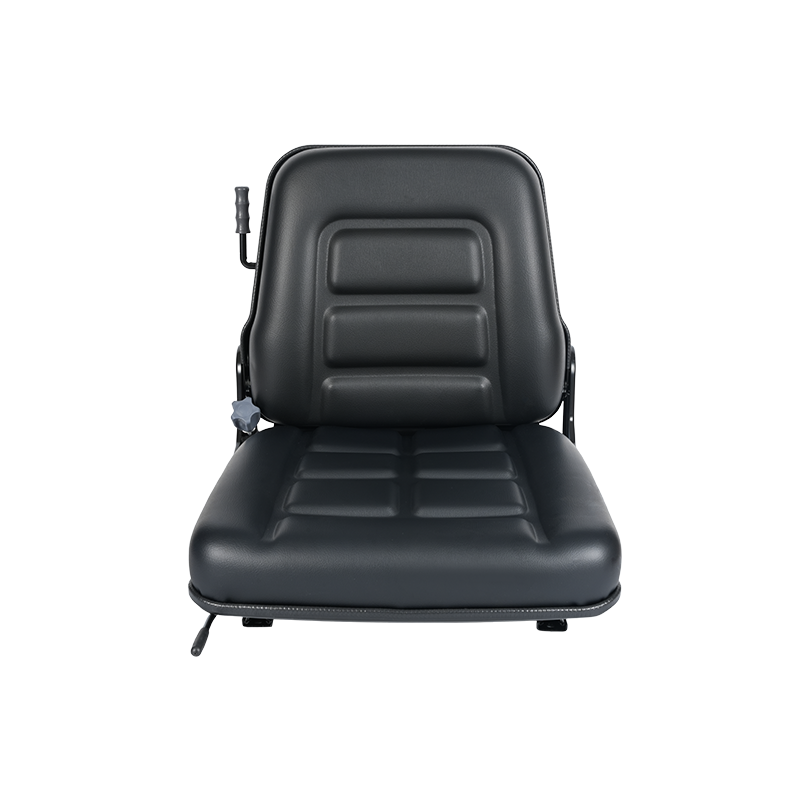
A counterbalance truck operator who works 2,000 hours a year will spend six to eight thousand hours on the same foam, upholstery and suspension before the machine is retired. The seat is a low single-digit share of the vehicle's purchase price, yet it decides whether fatigue complaints, vibration exposure assessments and warranty claims land on your desk. That mismatch is why commercial vehicle seats get specified with the same discipline as hydraulics or brakes in serious fleet and OEM programs.
What Counts as a Commercial Vehicle Seat in Industrial Equipment
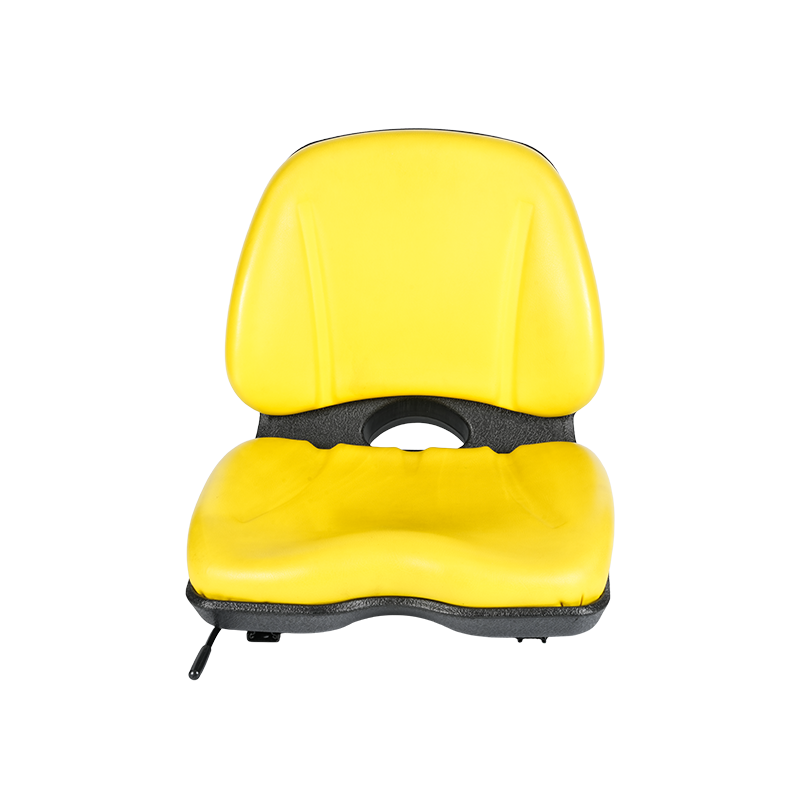
The category stretches well beyond road trucks. In off-highway and logistics equipment, commercial vehicle seats are fitted to forklifts, tractors, earthmoving machines, sweepers and airport ground support vehicles, and they are bought both as OEM components and as aftermarket replacements with a matching part number.
- Counterbalance, reach, narrow-aisle and AGV forklifts
- Agricultural tractors, seeders, balers, combine harvesters and handlers
- Excavators, truck cranes and other construction machinery
- Ride-on sweepers and scrubbers
- Airport ground support vehicles, tow tractors, platform trucks and stackers
Hangzhou Benfeng Auto Seat Co., Ltd., trading as Benfeng Seats, has built this class of seating since 2007 and took part in drafting JB/T13693-2019, the Chinese machinery-industry standard for industrial truck driver seats. The practical test for buyers is blunt: if a seat carries a restraint, is verified against a machinery seat standard and can be ordered as a spare part, it belongs in this category.
Five Specifications That Decide Whether Commercial Vehicle Seats Last 10,000 Hours
Frame strength, suspension type, foam process, upholstery material and adjustment hardware decide seat life far more than the model number printed on the side plate.
| Specification | What to verify | Failure mode when under-specified |
| Frame and mounting plate | Welded steel frame, welding controlled to ISO 3834, hole pattern matched to the machine deck | Fatigue cracks at the mounting plate after 3,000 to 5,000 hours |
| Suspension | Weight-adjustable mechanical suspension with 40 to 100 mm of stroke for rough ground | The seat bottoms out and shock loads pass straight to the operator's spine |
| Foam | Vacuum-foamed or single-mold polyurethane with controlled density | Foam collapses onto the frame within 18 months |
| Upholstery | HD PVC or vinyl with welded seams and no open stitching over the bolsters | Seam cracking and moisture reaching the foam core |
| Adjustment hardware | Slide rails with positive locks and a recline mechanism rated for shift-length use | Rail play, creeping seat position, loosened backrest |
Suspension Type Is the Biggest Single Lever on Whole-Body Vibration
On any machine that crosses concrete joints, yard ruts or ploughed ground, the suspension changes measured operator exposure more than any other single component.
EU Directive 2002/44/EC sets a daily whole-body vibration exposure action value of 0.5 m/s2 A(8) and a limit value of 1.15 m/s2 A(8). Unsuspended seating in rough yard work is commonly reported in the 1.0 to 1.5 m/s2 range over a full shift, which means a suspension seat is not a comfort upgrade - it is the engineering control.
- Fixed seat: lowest cost, acceptable only on smooth concrete and short shift patterns
- Shock-absorbing seat: a spring or damper under the cushion, cuts peak inputs but has limited stroke
- Semi-suspension: part of the travel is absorbed in the cushion and frame, common on stackers and platform trucks
- Weight-adjustable mechanical suspension: 40 to 100 mm of stroke tuned to the operator's weight, the default for counterbalance, reach and agricultural work
PVC, Vinyl or Single-Mold Polyurethane: Matching Upholstery to the Environment
High-density PVC and vinyl win in dusty, oily, wipe-clean environments; single-mold polyurethane wins where abrasion resistance and weight matter more than field repairability.
High-density PVC and vinyl
- Wipe-clean surface resists oil, dust and water
- Welded seams keep moisture out of the foam
- Covers can be replaced in the field
- Standard choice for forklifts, sweepers and yard equipment
Single-mold polyurethane
- One-piece skin with no stitching to fail
- Higher abrasion resistance at entry and exit points
- Lighter than a covered foam cushion
- Suits wash-down areas and automation-heavy fleets
The most common upholstery failure is not the material grade but the seam. Stitching placed across the entry bolster takes the full load of every mount and dismount, so seam position matters as much as fabric thickness.
What EN13490, ISO7096 and JB/T13693-2019 Actually Verify
These standards test the seat as a system rather than the fabric: EN13490 covers forklift seat strength, dimensions and restraint requirements, ISO7096 covers whole-body vibration attenuation and defines the EM classes, and JB/T13693-2019 sets the Chinese machinery-industry requirements for industrial truck driver seats.
- CE marking for the seat assembly
- EN13490 IT1 and IT2 approval where the machine class requires it
- ISO7096 EM1 and EM7 vibration testing
- ISO9001 quality, ISO3834 welding, ISO14001 and ISO45001 site certification
- A factory testing room used for production verification, not only type approval
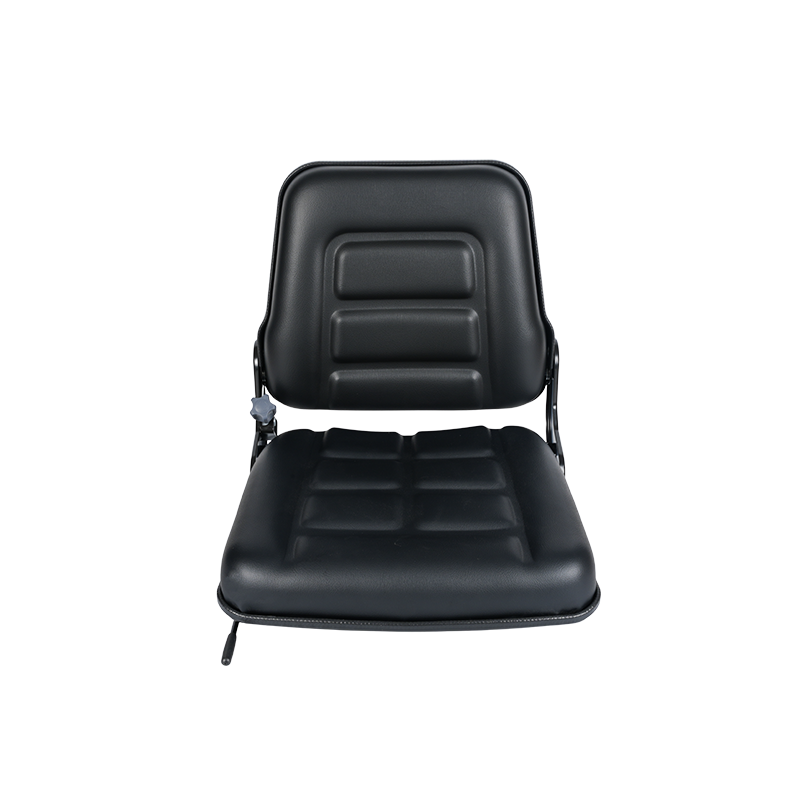
A dual-certified example is the BF16MCD, a low-profile mechanical suspension seat approved to both EN13490 IT1/IT2 and ISO7096.
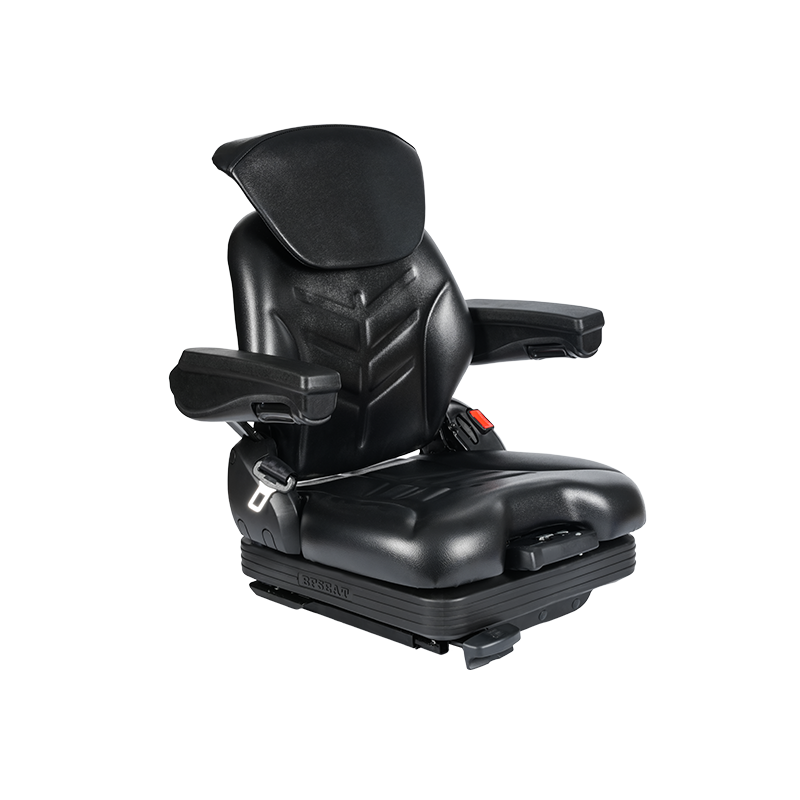 BF16MCD EN 13490 IT1+IT2 & ISO 7096 Dual-Certified Low-Profile Mechanical Suspension Seat The BF16MCD is a new benchmark for comfort in forklifts and compact construction machinery. With a seat cushion width of 510 mm, it provides a highly comfortable ride ...View Product →
Matching Commercial Vehicle Seats to Vehicle Classes
One frame platform usually serves several machines, with material, suspension and safety options changed instead of a new seat designed for every model.
| Vehicle class | Configuration that works | What drives the choice |
| Internal combustion forklift | Mechanical suspension, HD PVC cover, retractable belt | Long shifts on mixed indoor and outdoor surfaces |
| Reach truck, narrow aisle | Low-profile cushion, low or foldable backrest | Cab clearance and tight exit paths |
| AGV and automated trucks | Low-profile base with sensor and OPS integration | No manual adjustment, remote monitoring |
| Agricultural tractor | Suspension with 40 to 100 mm stroke, dust-resistant cover | Field vibration and airborne dust |
| Combine harvester, baler | Heavy-duty suspension, longer cushion, folding backrest | Twelve-hour harvest shifts |
| Ride-on sweeper | Dual-tone PVC, wipe-clean, folding backrest | Visibility zones and daily wash-down |
| Airport GSE and tow tractor | Compact fixed or semi-suspension seats | Short trips and frequent entry and exit |
| Stacker, platform truck | Semi-suspension with about 40 mm of stroke | Confined operator position |
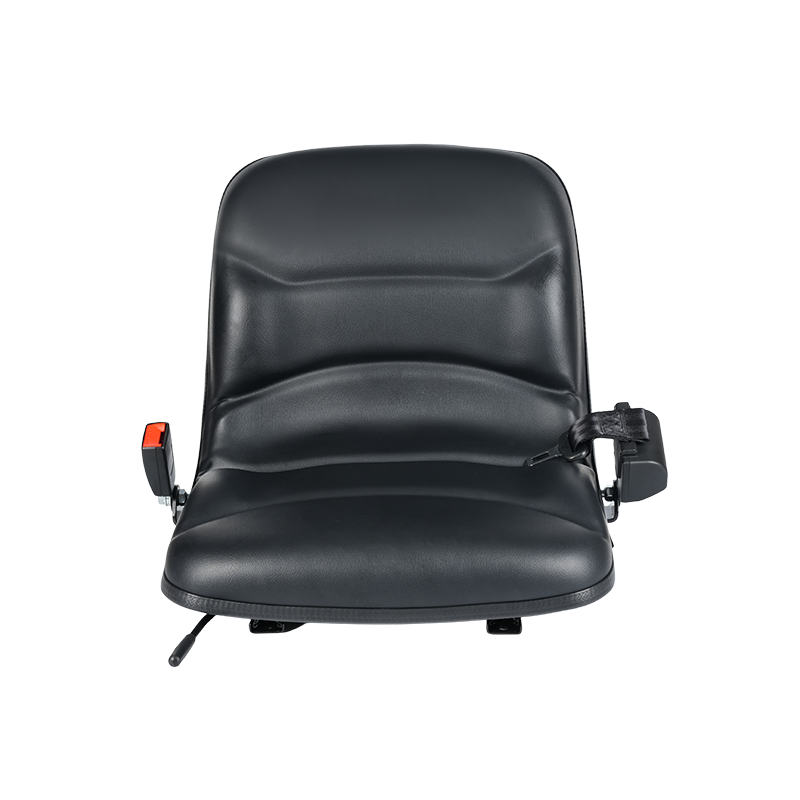
Harvest machinery shows the logic clearly: the BF53 combine harvester seat shares platform architecture with the rest of the agricultural range but is specified with heavy-duty suspension and a longer cushion for long shifts.
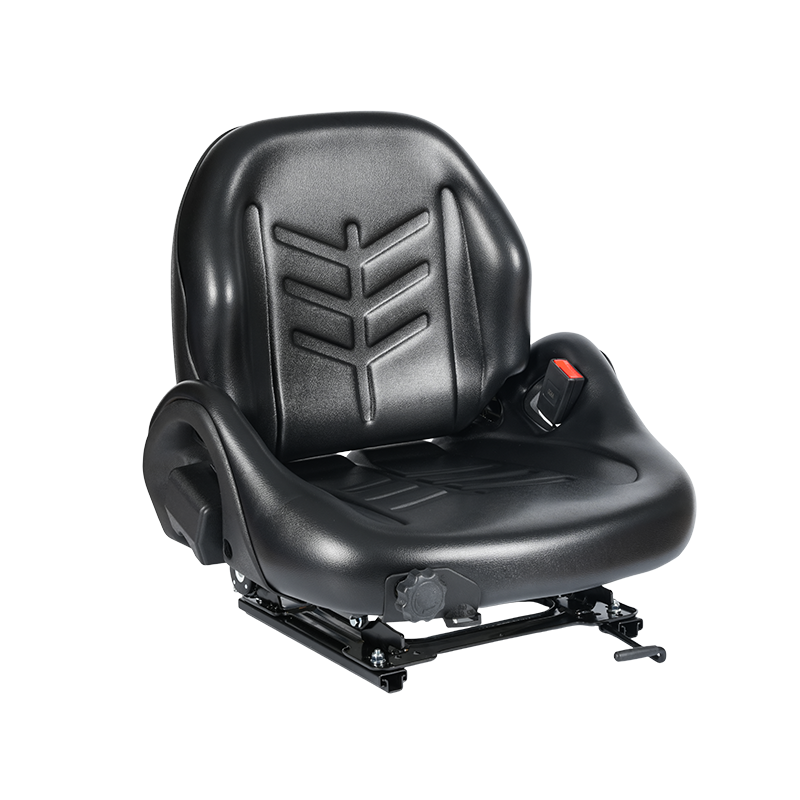 BF5-3 Comfortable Heavy-Duty Adjustable Agricultural Seat for Combine Harvesters with EN 1Designed specifically for continuous combine operation, this hopper features a 40mm damping stroke and a 45-120kg weight-adaptive system, certified to EN 13490. Its 8-...View Product →
Replacement Seats: A Six-Point Compatibility Check
Most replacement seat complaints are installation problems rather than product problems.
Mounting pattern
Bolt spacing, hole diameter and plate angle against the existing deck.
Overall height
Cushion height and backrest height measured against cab clearance.
Electrical interface
OPS switch, seat occupancy sensor and heater connector pin-out.
Restraint anchoring
Belt anchorage points built into the seat frame, not the cab shell.
Weight setting
Suspension spring range matched to the actual operator weight band.
Travel and reach
Slide rail range checked against pedal and lever reach at both extremes.
Where a machine deck has been modified, a universal-fit seat with an adjustable slide rail is usually safer than a bolt-pattern-specific unit; the universal replacement seat compatibility guide walks through the measurement sequence step by step.
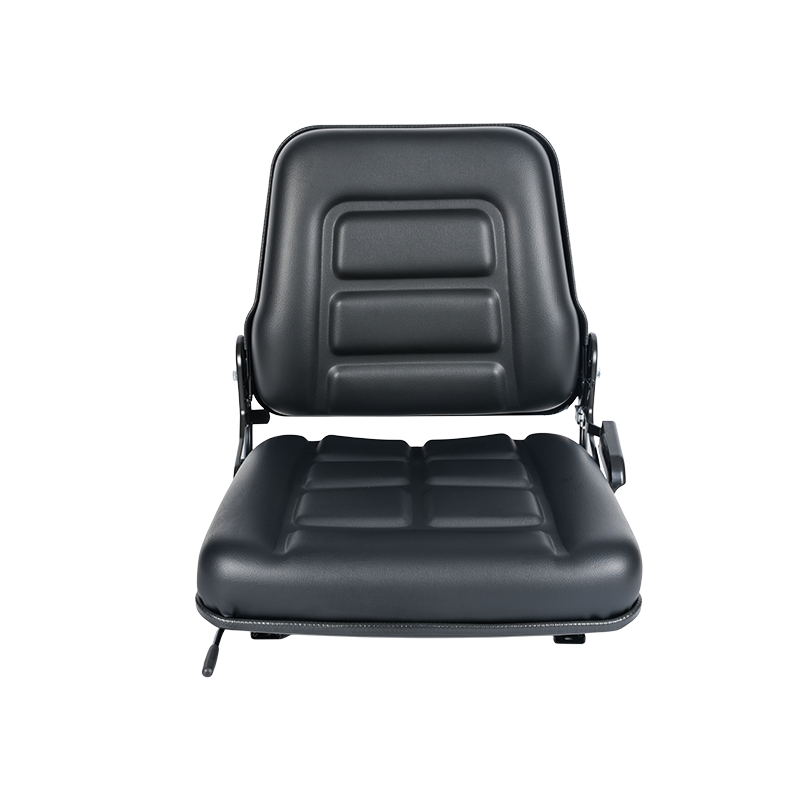
For material handling fleets, a low-profile vinyl replacement mechanical suspension seat such as the BF16 is built to drop into an existing bolt pattern without re-drilling the deck. universal replacement seat compatibility guide
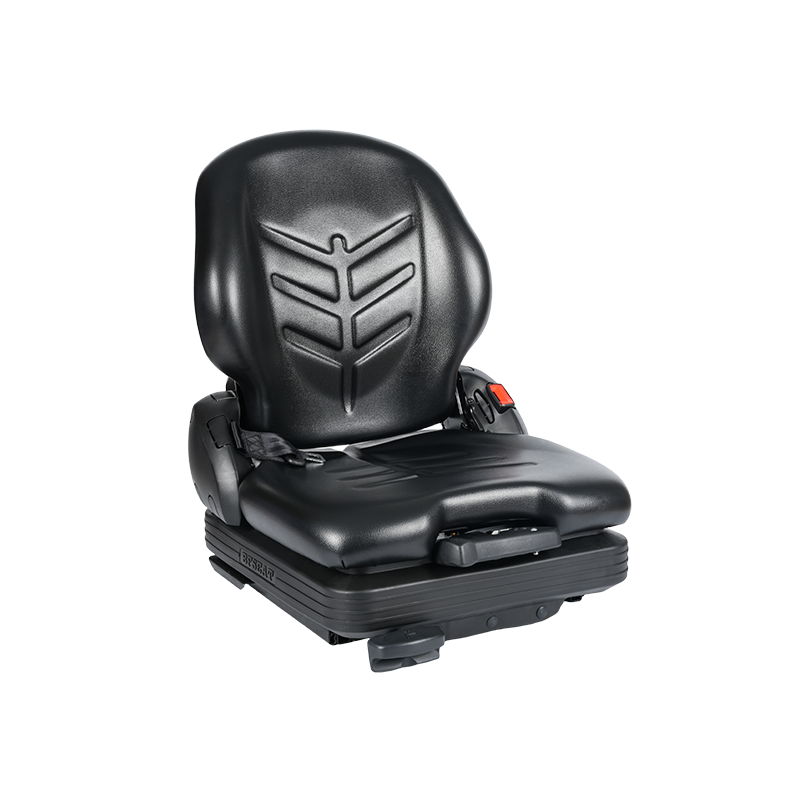 BF16 Low-Profile Vinyl Replacement Mechanical Suspension Seat for Material Handling ForkliThe best-in-class mechanical low-profile shock-absorbing seats combine excellent shock absorption, durability, and a smooth ride. Core features: Mechanical suspension ...View Product →
Sourcing, Tooling and Lead-Time Risk in Seat Programs
The long-lead items in any seat program are foam tooling and upholstery patterns, not the steel frame.
- Tooling: foam moulds and cover patterns are cut per variant, so a new colour or cover shape carries tooling cost and a minimum order quantity
- Vertical integration: in-house stamping, welding and foaming shortens the change cycle when a machine deck is redesigned
- Certification: any variant that changes the frame, suspension or restraint must be re-verified against the relevant standard
- Spares strategy: covers, cushions and shock absorbers should be held as stock, because upholstery is the first component to wear out
Common Questions About Commercial Vehicle Seats
Are commercial vehicle seats universal?
No. Bolt patterns, deck angles and cab clearances differ between machine families, and a seat that fits one forklift deck will not necessarily fit another. Universal-fit seats exist for the aftermarket, but the mounting plate, overall height and suspension weight setting still have to be checked before installation.
How long should an industrial vehicle seat last?
With a welded steel frame and a vacuum-foamed cushion, eight to ten years of two-shift operation is realistic for the structure, while the cover and foam are wear items. In dusty or wash-down environments, plan for a cover replacement well before the frame becomes an issue.
Does a suspension seat keep whole-body vibration below the EU limit?
It is the most effective single measure available. A weight-adjustable mechanical suspension with 40 to 100 mm of stroke, set to the operator's weight, is normally enough to move full-shift exposure from the 1.0 to 1.5 m/s2 range toward the 0.5 m/s2 action value.
What is the difference between EN13490 and ISO7096?
EN13490 is a European standard for the strength, dimensions and restraint performance of industrial truck seats. ISO7096 measures how much whole-body vibration a seat transmits and sorts seats into EM classes. A seat can hold one approval without the other, which is why dual-certified models are worth specifying.
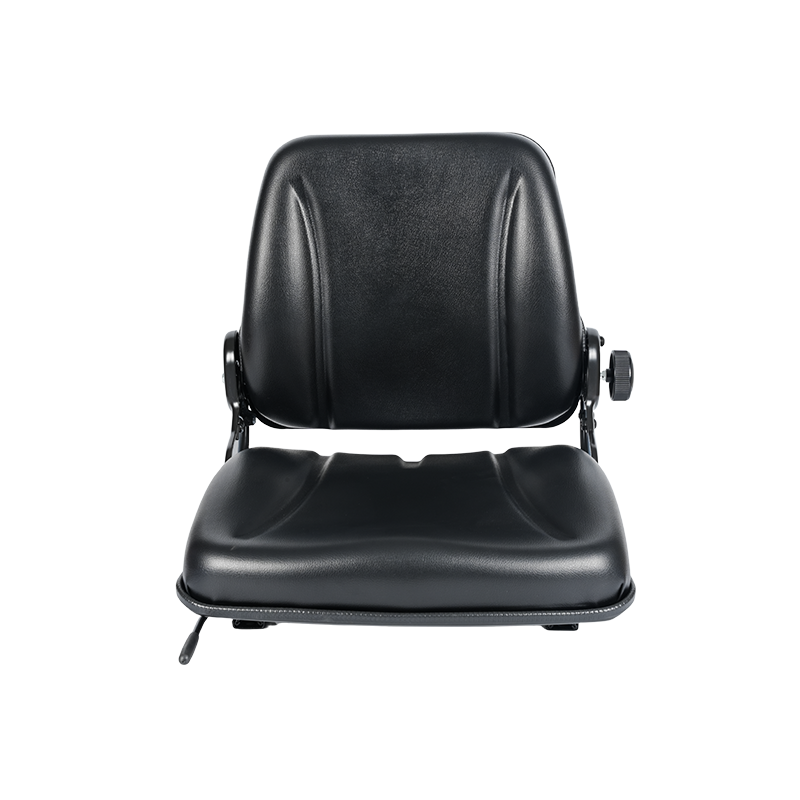
Copyright @ Hangzhou Benfeng Auto Seat Co., Ltd. All rights reserved Privacy OEM/ODM Ergonomic Industrial Seats Manufacturers
浙ICP备20022099号