
 中文简体
 English
 Français
 Español
 عربى
-

(86)-0571-82550327
-

info@bfseats.com
-




Forklift Seat Cushion Guide: Foam Density, Cover Material and Fit Checks
Content
- 1 What a Forklift Seat Cushion Does Between Operator and Frame
- 2 Cover Material: PVC, Vinyl or Molded Polyurethane
- 3 Thickness and Density: Match the Cushion to the Shift
- 4 Replacement Cushion or Complete Seat: Which One Fixes the Problem
- 5 Four Measurements That Decide Whether a Cushion Fits
- 6 Inspection Interval and the Point Where a Cushion Must Go
- 7 Practical Questions Buyers Ask About Forklift Seat Cushions
A forklift seat cushion is the first part of a driver seat to fail, and the part operators notice first. Foam collapses long before the cover splits, so a truck that still looks clean in photographs can already be delivering a harder ride than the one it left the factory with. This guide covers what the cushion actually does, which cover material survives which yard, and the four measurements that decide whether a replacement cushion will bolt straight in.
What a Forklift Seat Cushion Does Between Operator and Frame
A forklift seat cushion is a foam pad of 60 mm to 120 mm bonded to a steel or composite pan and covered in PVC, vinyl or molded polyurethane; it bolts into the seat frame between the operator and the suspension unit.
The suspension unit absorbs the low-frequency whole-body vibration that travels up through the chassis, roughly the 1 Hz to 4 Hz band a spring and damper can control. The cushion handles everything above that: the higher-frequency buzz from the counterweight, the floor joints in a warehouse aisle, and the pressure concentration under the ischial tuberosities, the two bones an operator actually sits on. A 100 kg operator on a flat pan generates peak interface pressure well above the 60 mmHg capillary closing threshold at those two points, which is why worn vinyl over a collapsed pad becomes uncomfortable inside an hour.
Industrial truck seating in China is now covered by JB/T 13693-2019, the machinery industry standard for industrial truck driver seats. Hangzhou Benfeng Auto Seat Co., Ltd., founded in 2007 with a 14,000 square metre plant and 200,000 seats per year of capacity, is listed among the drafting units of that standard. That matters when buying a cushion: foam density, cover adhesion and pan fixing points become specified values rather than a supplier's private judgement.
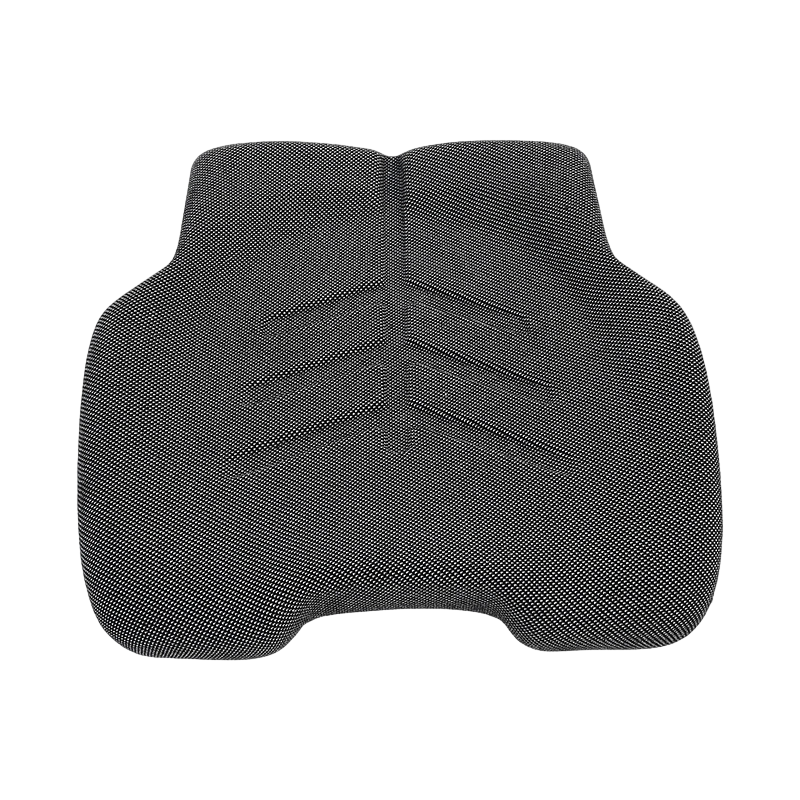
 Replaceable Seat Cushion for Construction Machinery and ForkliftsA durable replacement cushion for excavator, loader and forklift seats, combining an abrasion-resistant cover, shock-absorbing foam and a sturdy base.View Product →
Cover Material: PVC, Vinyl or Molded Polyurethane
PVC-coated fabric is the default cover for internal combustion forklifts because it resists hydraulic oil and wipes clean; molded polyurethane wins wherever the machine is hosed down at the end of a shift.
Cover choice decides cleaning time and water ingress, not comfort on day one. Two seats built on the same 55 kg/m3 foam feel identical in the showroom and completely different after 4,000 hours, because one cover let oil soak into the foam core and the other did not. Oil-soaked foam loses resilience and turns a 60 mm cushion into a 50 mm one without any visible damage.
| Cover | Surface | Oil and water | Typical failure mode | Where it fits |
| HD PVC coated fabric | Firm, lightly textured | Wipes clean, resists hydraulic oil | Split along the front edge seam | IC forklifts, foundry, general warehouse |
| Black vinyl | Smooth, stiffens below 0 C | Waterproof, slippery on wet steel | Cracks at the flex points | Cold stores, outdoor yards |
| Single-mold polyurethane | Uniform, seamless | Sealed, hoseable | Abrasion at the hip contact patch | Food, pharmaceutical, washdown |
| Woven fabric | Soft, high grip | Absorbs oil, stains permanently | Tears where grit embeds in the weave | Indoor electric fleets |
Where the pan and suspension are still sound but the cover and foam are past saving, a complete certified seat is often cheaper than rebuilding a tired one. A seat such as the BF11 for internal combustion forklifts carries a durable PVC cover and a certified frame, which resets both the cushion and the structure in one swap.
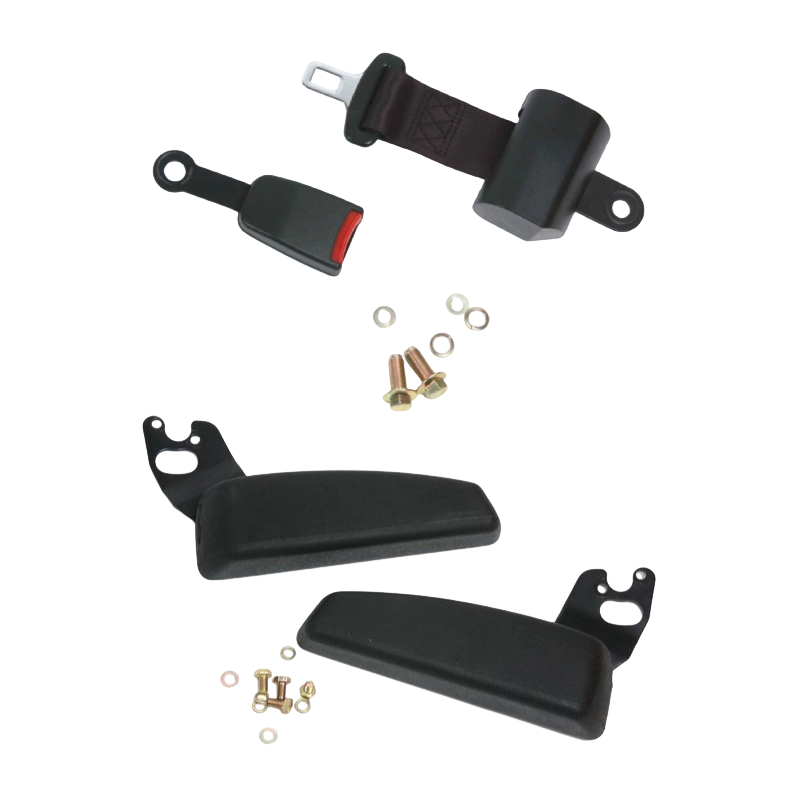 BF1-1 Ergonomic Forklift Seat for Internal Combustion TrucksDurable seat for diesel, gasoline, LPG or dual-fuel forklifts, with 8° backrest, slide rails, PVC upholstery and optional armrests, belt and OPS.View Product →
Thickness and Density: Match the Cushion to the Shift
A 60 mm to 80 mm cushion suits low-profile warehouse trucks, while 100 mm to 120 mm cushions belong on counterbalance and construction machines where the operator stays seated for a full shift.
Directive 2002/44/EC sets an eight-hour exposure action value of 0.5 m/s2 and a limit value of 1.15 m/s2, measured to ISO 2631-1. On a counterbalance truck with a mechanical suspension seat, the cushion is the last filter between the pan and the operator, so density matters as much as thickness. Molded polyurethane at 45 kg/m3 to 60 kg/m3 holds its shape through thousands of load cycles; cut foam at 25 kg/m3 to 30 kg/m3 is cheaper and collapses into a hip-shaped depression within a single season.
Thickness ranges above are design guidance for seat specification, not measured test data. The compliance reference is the seat's own vibration declaration: EN 13490 class IT1 and IT2 for industrial trucks, and ISO 7096 class EM1 to EM8 for earth-moving machinery. A cushion that changes the hip point by 15 mm changes the geometry the seat was certified against.
Replacement Cushion or Complete Seat: Which One Fixes the Problem
A replacement cushion is the correct call when the pan, the suspension and the belt anchors are all sound; if the suspension shows free play or the webbing is frayed, a complete seat is cheaper than two separate repairs.
- Lowest parts cost and shortest downtime, typically under one hour with four to six fixings
- Keeps the original pan, belt anchors and OPS switch geometry untouched
- Works only if the suspension still strokes freely and returns to its rest height
- Wrong choice when the frame is cracked or the belt webbing is worn
- Resets foam, cover, suspension and belt in one certified assembly
- Restores the original hip point the truck was designed around
- Relevant when the seat is more than eight years old and the cover has already been patched twice
- Higher parts cost, but one labor event instead of three
For fleets that standardize on one platform, the full forklift seat range is organized by truck type, so a cushion swap and a seat swap can be planned against the same mounting pattern. A low-profile replacement unit such as the BF16 keeps the hip point close to the floor on material handling equipment where cab height is fixed.
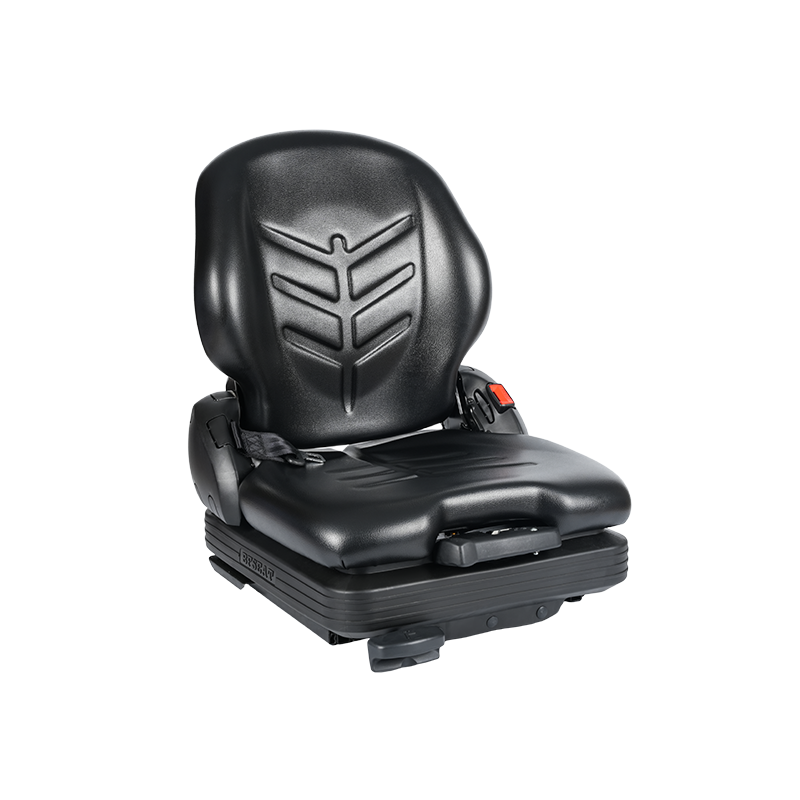 BF16 Low-Profile Mechanical Suspension Seat for ForkliftsLow-profile vinyl seat for counterbalanced forklifts, with mechanical suspension, reclining backrest, adjustable lumbar support, OPS and two-point safety belt.View Product →
Four Measurements That Decide Whether a Cushion Fits
Cushion fit comes down to four numbers: bolt-hole spacing, pan width, backrest hinge position and belt anchor points. Get one wrong and the cushion sits proud, rocks, or leaves the OPS switch out of reach.
Measure center to center in both directions, not edge to edge. Spacings that differ by 5 mm will still bolt up, but the pan will sit under load and the cushion will rock.
Record the steel pan dimensions rather than the old cushion, because a compressed cushion measures smaller than the pan it covers.
On folding-backrest seats, the hinge center line and its height above the pan decide whether a replacement cushion can be used with the existing backrest.
Check where the retractable belt and the operator presence switch mount. Moving the cushion 10 mm forward can put the switch actuator out of contact.
Universal cushions exist, but universal means the fixing slots cover several patterns, not that one part fits every truck. Before ordering, confirm the platform against the mounting drawing; the same question is covered in more detail in this note on whether forklift seats are universal.
Inspection Interval and the Point Where a Cushion Must Go
Inspect the cushion every 250 operating hours and replace it once it has lost more than 20 percent of its original thickness or the cover has exposed foam.
- Measure compressed thickness at the hip contact point against the new specification
- Press the foam with a thumb: a dent that does not recover within 10 seconds is compression set
- Check the front edge seam and the cover at the hip bones for splits and exposed foam
- Confirm the cushion still sits flat on the pan with no lateral movement under hand pressure
Practical Questions Buyers Ask About Forklift Seat Cushions
How thick should a forklift seat cushion be?
Use 60 mm to 80 mm on low-profile warehouse and reach trucks, 80 mm to 100 mm on counterbalance forklifts, and 100 mm to 120 mm on construction and heavy plant. The upper figure applies to seats with a mechanical suspension; without suspension, extra thickness only delays the point where foam bottoms out.
Can a comfort pad fix a worn forklift seat cushion?
No. An add-on pad of 25 mm to 40 mm raises the hip point, changes the reach to pedals and levers, and can hold an operator presence switch in the wrong position. It is a short-term measure for a rental truck, not a repair, and it does nothing for foam that has already lost 20 percent of its thickness.
How long does a forklift seat cushion last?
Replace on measurement rather than calendar. A cushion that has lost more than 20 percent of its original thickness, shows compression set under thumb pressure, or has exposed foam at the hip contact patch is finished regardless of its age.
Does replacing a cushion affect EN 13490 certification?
Yes, if the foam density or thickness changes. EN 13490 class IT1 and IT2 declarations describe the whole seat assembly, including the cushion, so a different foam grade alters the vibration transmissibility the seat was tested with and invalidates the declaration for that configuration.
-
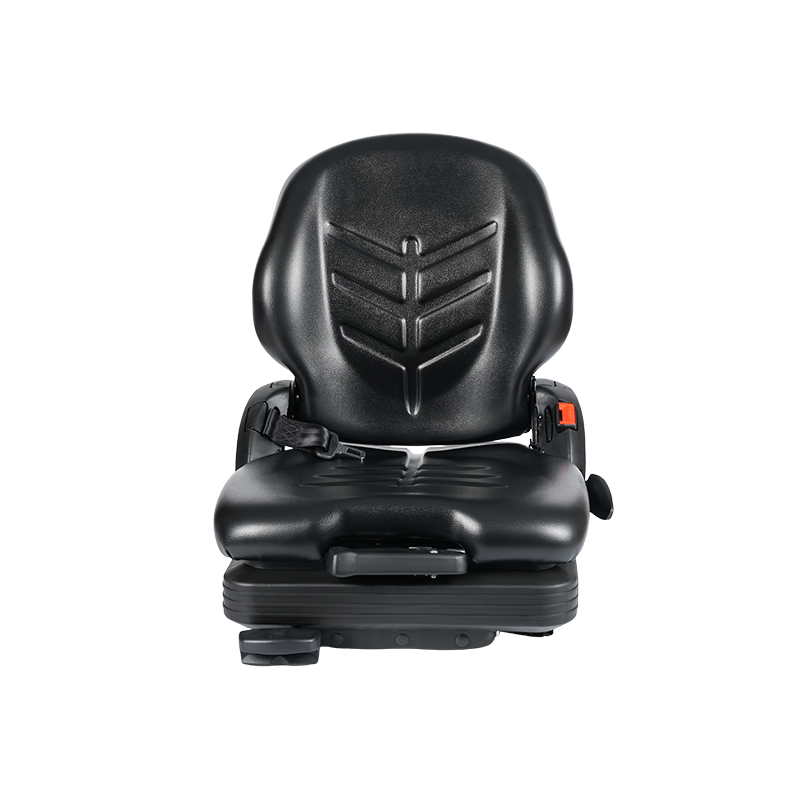
BF16 Low-Profile Vinyl Replacement Mechanical Suspension Seat for Material Handling Forklift Equipment - Black with EN 13490 IT1+IT2
-
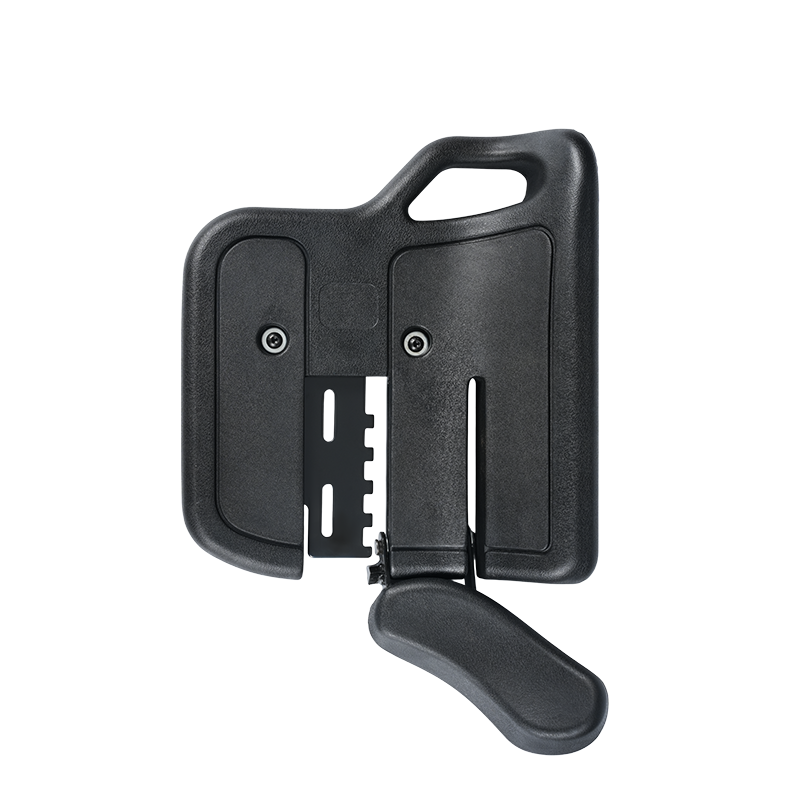
BF3 Single-Mold Polyurethane Eco-Friendly Seat with Vehicle-Contoured Design | Cost-Efficient Abrasion-Resistant Version for Stand-On Reach Forklifts
-
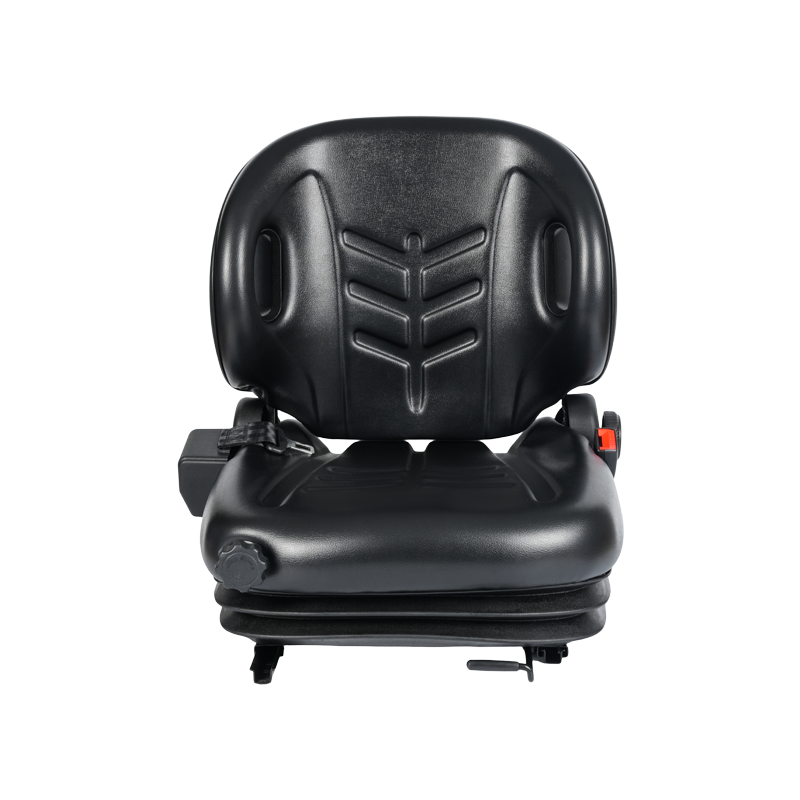
BF2-3AB EN 13490 IT1+IT2 Certified Counterbalance Forklift Seat with Mechanical Suspension OPS Switch & Universal Multi-Function Mounting System Compatible with Toyota Jungheinrich
-
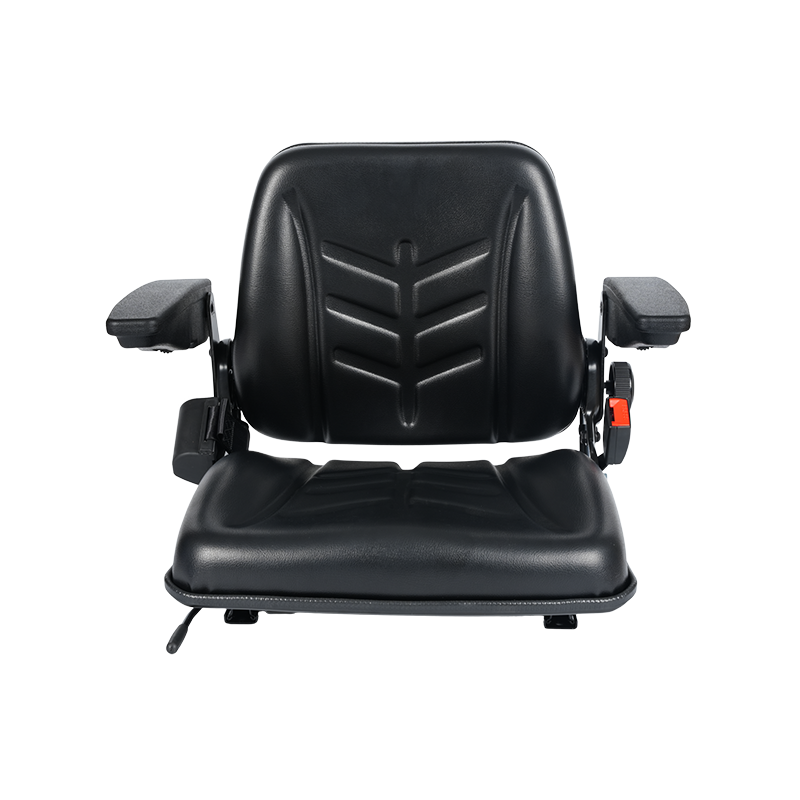
BF8-2ABCD Comfortable Safety Economical Forklift Seat for Internal combustion forklifts with Seat Belt
-
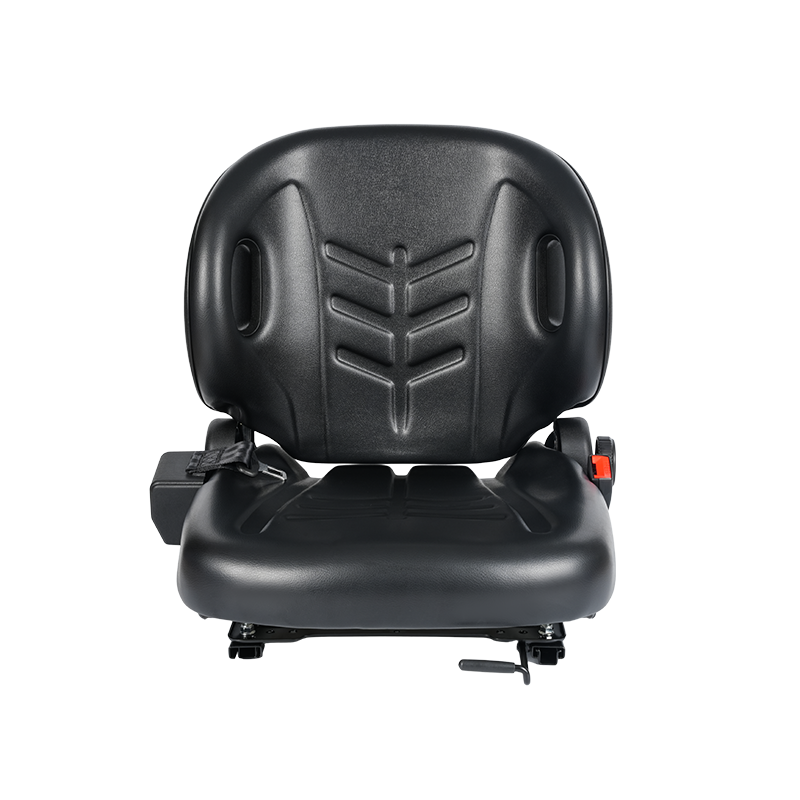
BF2-2 Universal Fit Flatbed Seat for Airport Tractors with 60° Recline, Retractable Seatbelt & Doc Box
Copyright @ Hangzhou Benfeng Auto Seat Co., Ltd. All rights reserved Privacy OEM/ODM Ergonomic Industrial Seats Manufacturers
浙ICP备20022099号