
 中文简体
 English
 Français
 Español
 عربى
-

(86)-0571-82550327
-

info@bfseats.com
-




air ride seats for semi: Applications, Selection Criteria, and Practical Guidance
Content
- 1 What an Air Ride Seat Actually Does
- 2 Vibration Dose, Not Cushion Softness, Decides Fatigue
- 3 Pneumatic Versus Mechanical Suspension: Where the Money Goes
- 4 Matching the Seat to the Duty Cycle
- 5 Fitment: Bolt Pattern, Air Supply and Belt Anchorage
- 6 Damper and Bellows: The Two Service Items That Decide Ride Quality
- 7 Commissioning a New Air Ride Seat in Four Steps
- 8 Questions Fleets Ask Before Ordering
Two air ride seats can share the same bolt pattern, the same vinyl and the same 500 mm cushion width, and still sit 1,500 dollars apart on a fleet purchase order. The gap is not trim. It is bellows volume, leveling valve quality, damper curve and usable weight-adjustment range: the four parts that decide how much road vibration reaches a driver's spine across a ten-hour shift.
What an Air Ride Seat Actually Does
An air ride seat is a suspension seat that carries the driver's weight on a pressurised air bellows, holds ride height constant through a leveling valve, and controls suspension movement with a hydraulic damper. The bellows carries load. The damper controls motion. Those are separate jobs, and they fail in different ways.
Five parts do the work, and all five belong on the specification sheet:
- Air bellows. A rolling-lobe or convoluted rubber spring, often doubled on heavy-duty seats. Volume sets spring rate.
- Leveling valve. Holds a set ride height as driver weight changes. A tired valve drifts, and the seat tops out or bottoms out.
- Hydraulic damper. Controls rebound after an impact, and is usually the first part to degrade.
- Fore-aft isolator. Lets the upper seat float horizontally, cutting shock that a vertical bellows cannot address.
- Weight and height adjustment. Defines the working band of the suspension, typically 45 kg to 135 kg on linehaul seats.
The spring rate, damping ratio and natural frequency relationships behind these parts are identical whether the spring is air or steel, and they are set out in this explanation of how a suspension seat works.
Vibration Dose, Not Cushion Softness, Decides Fatigue
European Directive 2002/44/EC sets a daily whole-body vibration exposure action value of 0.5 m/s2 A(8) and an exposure limit value of 1.15 m/s2 A(8). A seat is the control measure that keeps a driver under those figures, which is why seat performance is specified as a vibration measurement rather than a comfort description.
ISO 2631-1 places the boundary of "not uncomfortable" at 0.315 m/s2 for a seated exposure. A linehaul driver spends eight to eleven hours in the seat, so the daily A(8) figure is the one that counts, not the peak reading over a single bump.
Amplitude is only half the story. Whole-body vibration is frequency weighted, and the seated body is most sensitive between roughly 4 Hz and 8 Hz in the vertical axis. A seat that damps well at 1 Hz but amplifies at 6 Hz measures worse than its cushion suggests, which is why type testing uses defined input spectra instead of one sine sweep or one test-track lap.
Pneumatic Versus Mechanical Suspension: Where the Money Goes
A pneumatic seat earns its premium above roughly four hours of daily seat time. Below that threshold, a mechanical suspension seat with a matched damper covers most of the same exposure, needs no air supply, and costs less to buy and to service.
- Daily seat time runs past four hours
- Several drivers share one cab and each needs a set height
- The tractor already has a regulated air circuit
- Ride height must hold as fuel and load change
- Work is yard, terminal or intermittent
- No regulated air line exists in the cab
- Service access is limited and downtime is costly
- Purchase price dominates the specification
| Specification | Pneumatic air ride | Mechanical spring |
| Spring element | Air bellows, pressure regulated | Coil or torsion spring, fixed rate |
| Ride height | Held constant by leveling valve | Varies with driver weight and preload |
| Weight adjustment | Continuous, by air pressure | Stepped, by preload notches |
| Vertical travel | 75 to 100 mm typical | 40 to 80 mm typical |
| Damping | Damper tuned to bellows volume | Damper, usually smaller |
| Air supply | Regulated line with protection valve | None |
| Service items | Damper, bellows, leveling valve | Damper, spring, bushings |
| Best fit | Linehaul and long shifts | Short haul, yard, vocational |
Matching the Seat to the Duty Cycle
A suspension seat must hold its set height across the full rated weight range. Outside that band the driver rides at the end of the travel and loses isolation, and on most linehaul air seats the usable band runs from about 45 kg to 135 kg.
Linehaul and long haul
Priority order runs damper quality, weight-adjustment range, fore-aft isolator, then upholstery. A lumbar adjuster that holds position matters more in hour six than a leather facing.
Regional and multi-drop
Entry and exit cycles dominate. Folding armrests, a low-profile base and a seat height that lets a driver step out without twisting outperform deep travel here.
Vocational and terminal equipment
Crane carriers, terminal tractors and yard trucks run short, high-shock cycles. A heavier mechanical suspension platform with a large damper often serves better than a light air seat, because the shock arrives through the chassis rather than the road surface.
Fitment: Bolt Pattern, Air Supply and Belt Anchorage
Three checks decide whether an air ride seat fits a cab: mounting bolt pattern and riser height, a regulated air supply, and whether the belt anchors to the seat frame or to the cab floor.
Bolt patterns are not standardised across cabs. Most installations use a four-bolt base on an adapter plate or riser box, and riser height sets the eye level the rest of the interior was designed around. Measure the existing pedestal before ordering.
Air seats need regulated supply. Feed the seat through a pressure protection valve and a regulator, never directly from the wet tank, because the bellows will not survive full system pressure and a failed line drains a circuit that also feeds the brakes.
Belt anchorage blocks more swaps than anything else. In the United States, FMVSS 207 governs seat anchorage strength and FMVSS 208 covers occupant protection; in Europe, ECE R14 covers belt anchorages and R16 covers the belts. When the belt is bolted to the seat frame, seat and belt are tested as one assembly.
Off-highway and vocational machines follow the same logic with different hardware. Hangzhou Benfeng Auto Seat Co., Ltd., a supplier of seats for forklifts, agricultural machinery and construction equipment, builds heavy-duty platforms for chassis-level shock. One example is the BF20, a heavy-duty adjustable seat specified for truck cranes.
 BF20 Heavy-Duty Adjustable Seat for Truck CranesFeatures 170° backrest adjustment, 100 mm suspension travel and 50–130 kg weight adaptation, with compact mounting for truck crane cockpits.View Product →
Damper and Bellows: The Two Service Items That Decide Ride Quality
The damper is the first wear item on an air ride seat, and replacing it early costs a fraction of replacing the seat. Four symptoms point at the suspension rather than the cushion.
- Bounce after a bump. More than one rebound cycle means the damper has lost oil or gas charge.
- Height drift. The seat sinks under load or rises when the driver steps out: leveling valve or a leaking line.
- Bottoming out on a normal road. Lost bellows volume, or a weight setting outside the driver's band.
- Sideways rock. Worn linkage bushings and rollers, not the air spring.
Replacement hardware is easy to source, and the seat accessories range covers dampers, slides and belt sets for exactly this kind of repair.
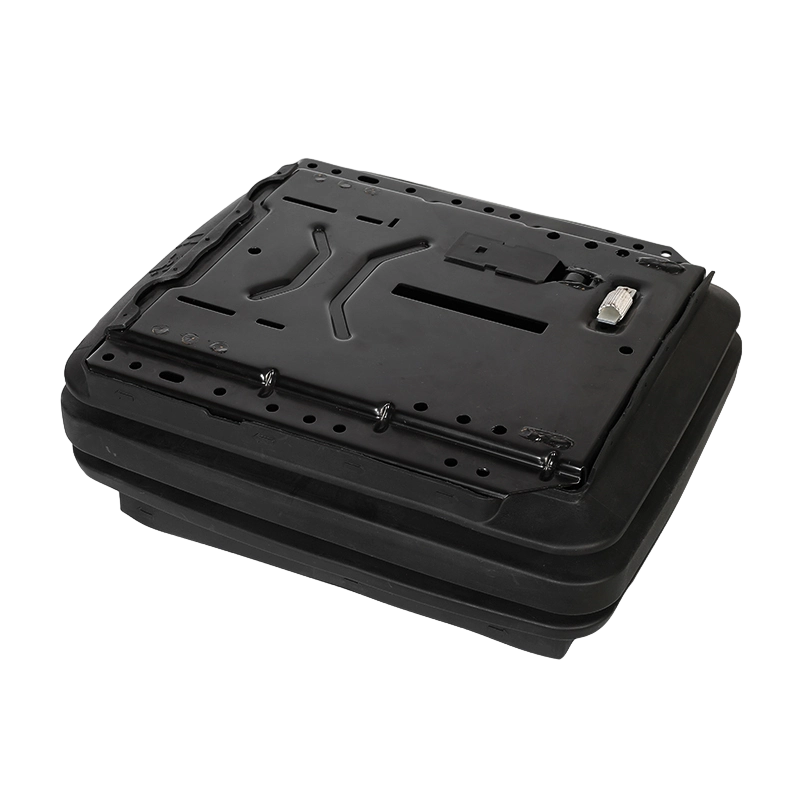 Active Shock Absorber for Machinery Seat BackrestsReplacement shock-absorbing component for excavator, bulldozer and mining truck seat backrests, helping isolate high-frequency vibration and severe impacts.View Product →
Keep the air line dry. Moisture accelerates rubber cracking at the bellows fold, and a seat that sits unused for weeks on a wet circuit is the usual candidate for premature failure.
Commissioning a New Air Ride Seat in Four Steps
Commissioning takes four checks and about thirty minutes: ride height with the driver seated, weight adjustment across its range, damper condition, and belt anchorage torque.
- Connect the air line through the regulator and set supply pressure with the engine running, so the leveling valve sees working pressure rather than static pressure.
- Seat the driver, or ballast equal to the driver's weight, and set ride height to the midpoint of suspension travel, not the top, which leaves no rebound travel.
- Sweep the weight adjustment through its full range and confirm the seat returns to the set height at both ends of the band.
- Torque the belt anchorages and base bolts to the seat maker's figures, then re-check after the first week in service.
Questions Fleets Ask Before Ordering
How long should an air ride seat last?
The frame and cushion typically outlast two damper replacements. In linehaul service, plan on a damper every two to three years, a leveling valve at the first sign of height drift, and bellows when cracking appears at the fold. Seats type-tested to EN 13490 IT1 or IT2 and to ISO 7096 were validated against defined input spectra, which is the soundest basis for comparing service-life claims between suppliers.
Can an air ride seat go into a truck with no air supply?
No. A pneumatic seat needs a regulated line protected by a pressure protection valve, and tapping an unregulated circuit risks both the bellows and the brake system. Where no air circuit exists, a mechanical suspension seat is the correct specification.
Does a seat-mounted belt meet crash standards?
Only when seat and belt are tested as one assembly. FMVSS 207 and 208 in the United States, and ECE R14 and R16 in Europe, define the requirements; a compliant belt on an untested seat frame satisfies none of them.
Is air ride worth it across a forty-truck fleet?
Compare A(8) figures, not invoices. A seat that lands at 0.6 m/s2 A(8) exceeds the 0.5 m/s2 action value under Directive 2002/44/EC and triggers exposure controls; one landing at 0.45 m/s2 keeps the shift inside the action value with margin. Across forty tractors and three shifts, that gap is the entire business case.
Specify the suspension first and the upholstery last, and ask for the vibration data behind any claim. A seat is a machine part, and it deserves to be bought the way the rest of the driveline is bought.
-
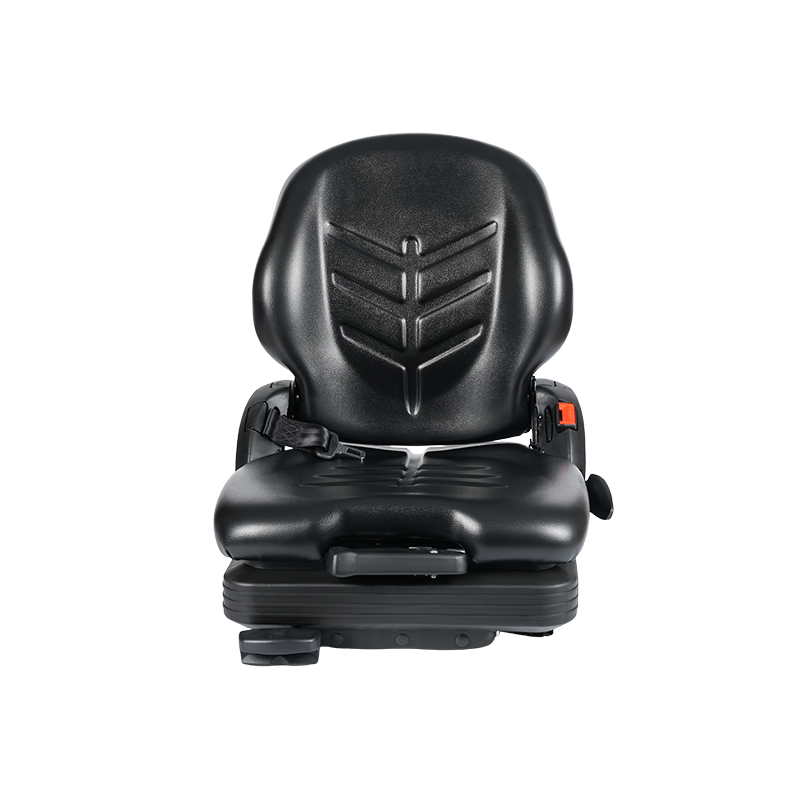
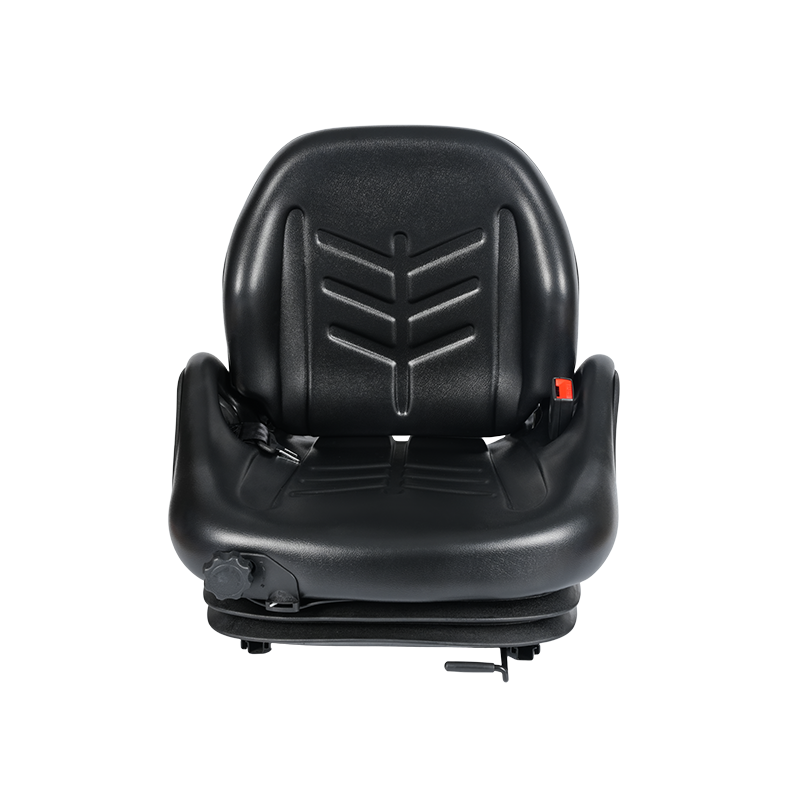
BF16 Low-Profile Vinyl Replacement Mechanical Suspension Seat for Material Handling Forklift Equipment - Black with EN 13490 IT1+IT2
-
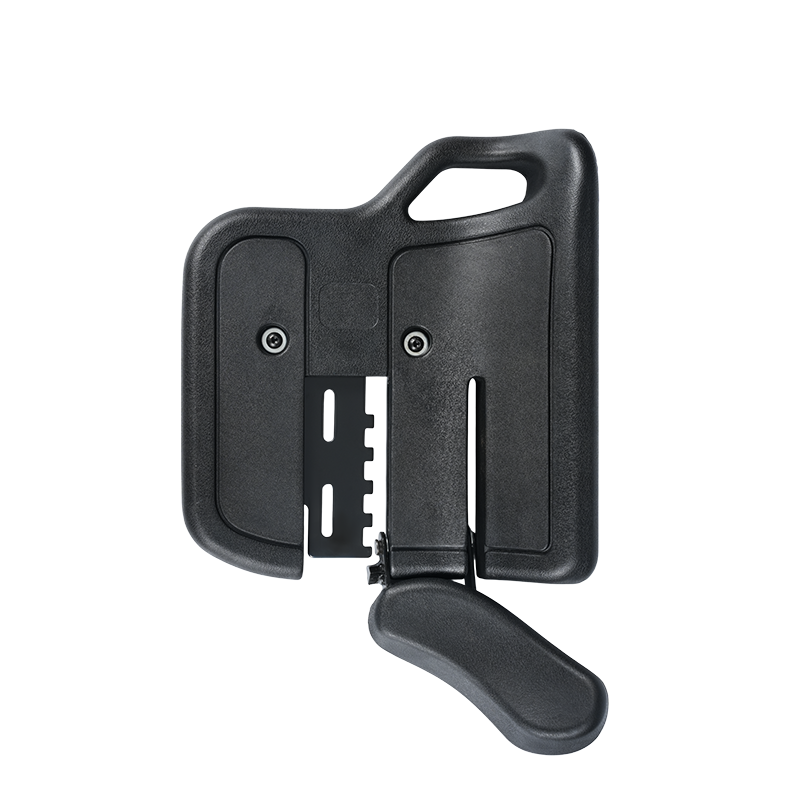
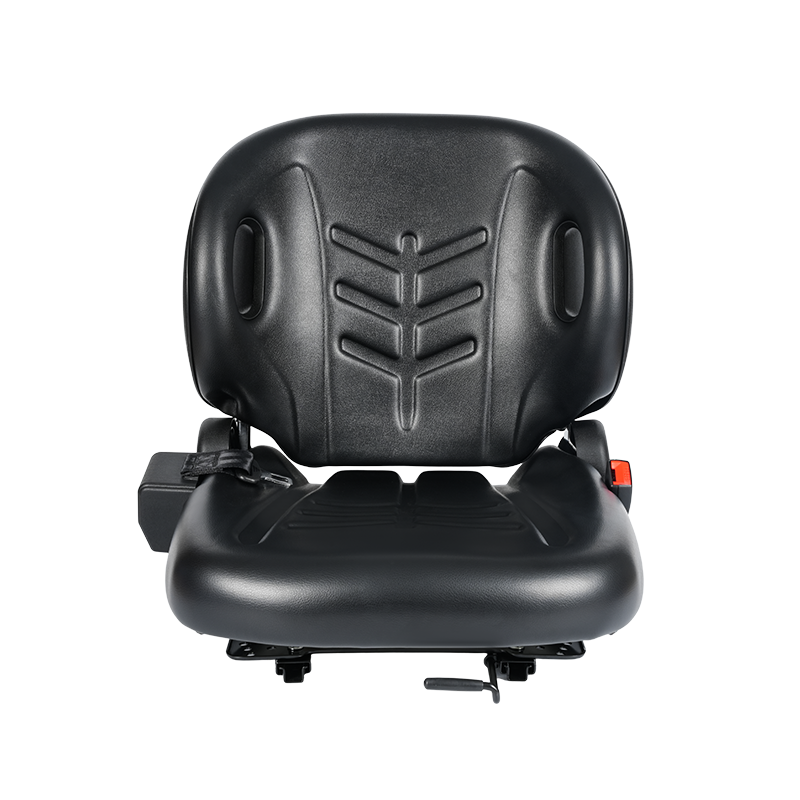
BF3 Single-Mold Polyurethane Eco-Friendly Seat with Vehicle-Contoured Design | Cost-Efficient Abrasion-Resistant Version for Stand-On Reach Forklifts

Copyright @ Hangzhou Benfeng Auto Seat Co., Ltd. All rights reserved Privacy OEM/ODM Ergonomic Industrial Seats Manufacturers
浙ICP备20022099号