
 中文简体
中文简体 English
 Français
 Español
 عربى
عربى-

(86)-0571-82550327
-

info@bfseats.com
-




Ergonomic Industrial Seats: A Practical Buying Guide for Operator Comfort
Content
- 1 Why Ergonomic Industrial Seats Are a Specification, Not an Upgrade
- 2 What Makes an Industrial Seat Ergonomic
- 3 The Standards Behind Ergonomic Claims
- 4 Where Ergonomic Industrial Seats Deliver the Most Value
- 5 How to Choose an Ergonomic Industrial Seat
- 6 Why the Seat Manufacturer’s Engineering Depth Matters
Why Ergonomic Industrial Seats Are a Specification, Not an Upgrade
An operator on an internal combustion forklift can spend six to eight hours a day in a cab that transmits engine vibration, floor impacts, and rough-surface bounce directly to the spine. Over weeks and months, a seat without proper lumbar support, suspension, or adjustment range creates more than discomfort; it creates physical stress, fatigue, and slower reaction times. Ergonomic industrial seats should therefore be treated as a functional component of the machine, not an interior trim item.
Seat design directly influences how vibration travels from the chassis to the operator. A well-designed ergonomic seat uses a shaped cushion, a supportive backrest, and some form of damping to reduce whole-body vibration. This is why serious industrial seat manufacturers design seats around operator anthropometrics, mounting dimensions, and certification requirements rather than simply covering a steel frame with foam and vinyl.
What Makes an Industrial Seat Ergonomic
Seat Cushion and Backrest Contour
Ergonomics starts with pressure distribution. The seat cushion should support the pelvis without creating high-pressure zones under the thighs, and the backrest should follow the natural curve of the spine. In practice, this means high-quality foam and contours shaped to keep the operator stable in dynamic conditions. Some seats use single-mold polyurethane construction, which avoids cover wrinkling and provides firm, durable support. Others use contoured vinyl cushions that are easier to clean and more resistant to oil and dust.
Suspension and Damping
Industrial vehicles operate on surfaces that generate vibration and shock loads. A mechanical suspension seat uses springs and a damper to isolate the operator from that motion. Suspension systems should be evaluated by stroke length and weight adjustment range. The important point is that the seat must be tunable to the operator's weight so the suspension moves through its stroke rather than bottoming out. This is particularly relevant for forklifts and construction machines, where vibration exposure is measured against standards such as ISO 7096 and EN 13490.
Adjustability and Range of Movement
Operators should not have to adapt to the seat; the seat should adapt to them. Key adjustments include fore-and-aft slide, seat height, backrest angle, and sometimes lumbar position. In compact industrial vehicles, a foldable backrest or a low-profile design helps access and can matter when the operator must dismount frequently. Seats with a wide backrest angle range and sliding rails also make it easier to match the machine's controls and pedals.
Materials and Maintenance
Material choice is part of ergonomics because it affects surface temperature, durability, and cleaning effort. PVC and vinyl are common in industrial seats because they resist oil, dust, and moisture. HD PVC is often selected for high-traffic applications because it holds up under constant use and is easy to wipe down. For vehicles exposed to vibration and dirt, a seat that can be cleaned quickly is not just a maintenance convenience; it supports a safer working environment.
The Standards Behind Ergonomic Claims
Ergonomics is not only about how a seat feels when someone sits on it for a minute. Industrial seats need to be verified against vibration and safety standards. The most relevant references for forklift and earth-moving equipment seats are EN 13490 and ISO 7096. CE certification and the ISO 9001 quality system also indicate that a manufacturer has processes in place to keep production consistent.
| Standard | Scope | Why It Matters |
|---|---|---|
| EN 13490 | Vibration testing for forklift truck seats | Sets acceptance levels for operator vibration during industrial truck use |
| ISO 7096 | Laboratory evaluation of seat vibration transmission | Determines whether the seat effectively reduces vibration from earth-moving machinery |
| CE | Essential safety and health requirements | Confirms compliance with applicable European directives |
| ISO 9001 | Quality management systems | Indicates consistent manufacturing and traceability processes |
When a seat is marked with ISO 7096 EM1 or EM7, or EN 13490 IT1 or IT2, it has been tested under defined input spectra. That matters because not every seat can deliver the same level of protection on every machine.
Where Ergonomic Industrial Seats Deliver the Most Value
Ergonomic requirements differ by machine type. A seat used on a forklift needs low-profile geometry and adjustable suspension to fit inside a compact operator compartment. A seat used on an excavator must tolerate severe shock loads while giving the operator stable lateral support. A seat used on a ride-on sweeper needs easy maintenance and cleanable upholstery. The same underlying seat platform can be configured to meet these different needs through changes to cushion shape, suspension, and materials.
Forklifts and Warehouse Equipment
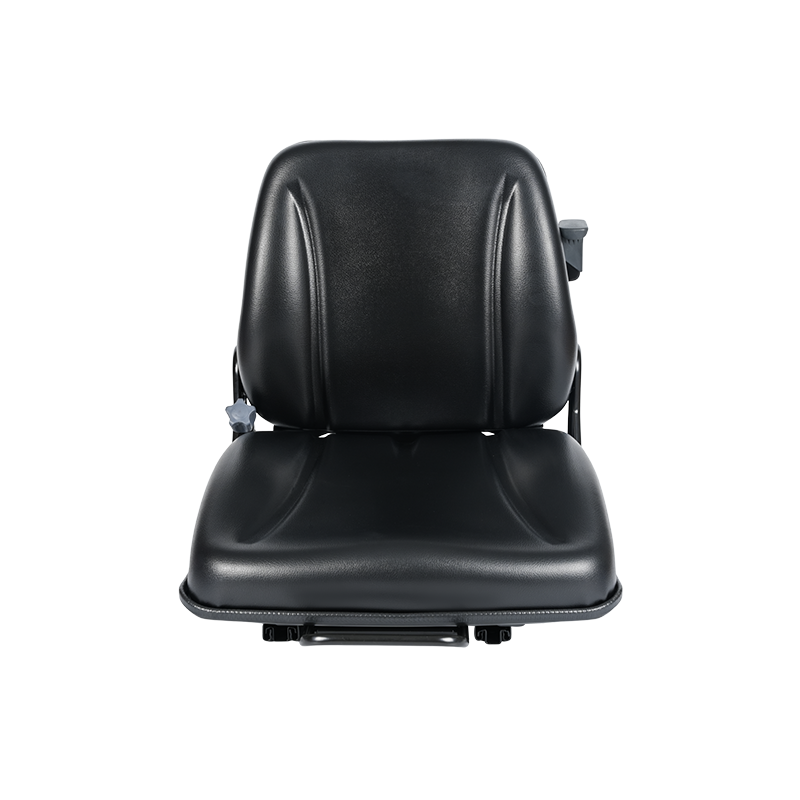
Forklifts are perhaps the most demanding application for ergonomic seats because the operator frequently moves between forward and reverse operation and must control a heavy machine in a confined space. A low-profile seat with mechanical suspension helps keep the operator centered and reduces jolts from uneven floors. For counterbalance forklifts, the dual-certified low-profile BF16MCD seat is a practical reference point. It combines a compact design with EN 13490 and ISO 7096 classification, which gives buyers a verifiable starting point for operator vibration protection.
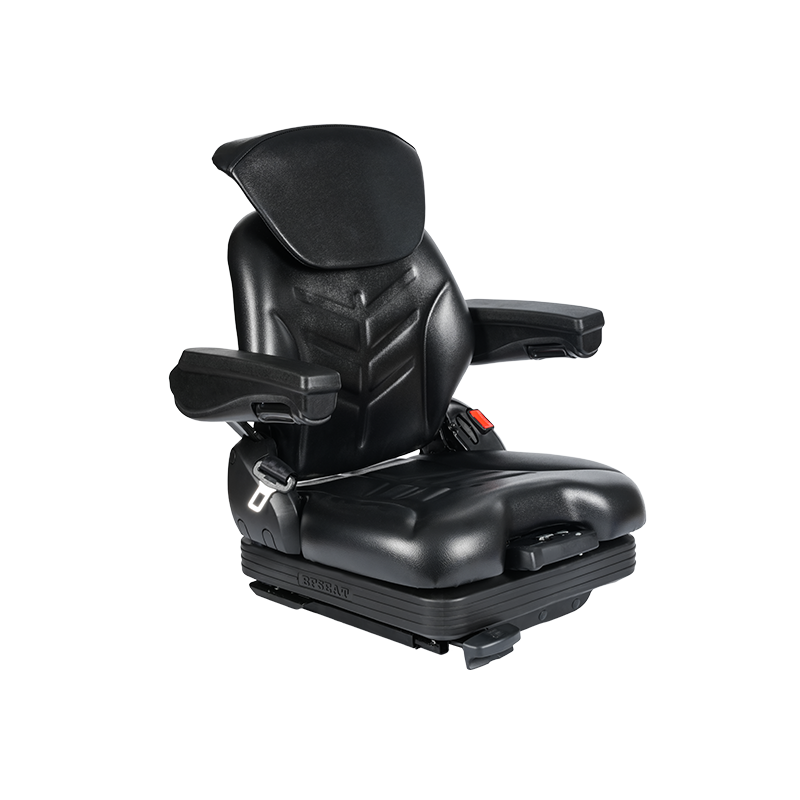 Wholesale BF16MCD EN 13490 IT1+IT2 & ISO 7096 Dual-Certified Low-Profile MechanicBenfeng Auto Seat Co., Ltd — China wholesale OEM/ODM BF16MCD EN 13490 IT1+IT2 & ISO 7096 Dual-Certified Low-Profile Mechanical Suspension ...View Product →
Construction and Heavy Equipment
In excavators, truck cranes, and loaders, the operator is exposed to stronger jolts and higher levels of vibration. The seat must offer a wide cushion, sturdy backrest, and suspension that can absorb impacts without consuming too much cabin space. A durable suspension seat made for excavators, such as the BF21 construction seat, is an example of a product tuned for this environment: it adds damping while keeping the installation practical and the interface simple for the operator.
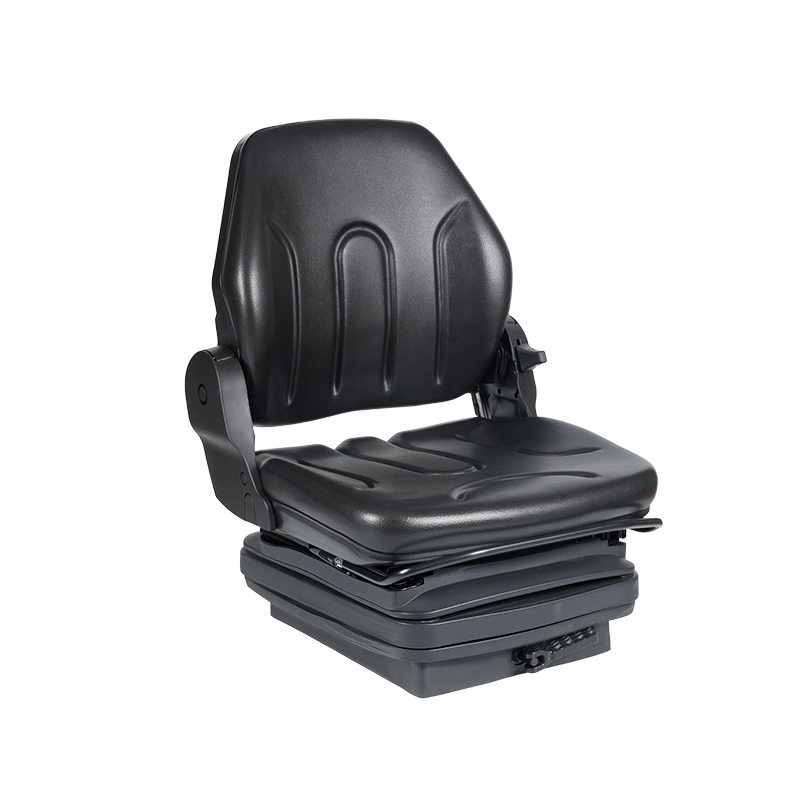 Wholesale BF21 Comfortable Durable Suspension Construction Seat for Excavator wiBenfeng Auto Seat Co., Ltd — China wholesale OEM/ODM BF21 Comfortable Durable Suspension Construction Seat for Excavator with CE Mark Sup...View Product →
Agriculture and Other Industrial Vehicles
Agricultural machines add another set of variables: long hours, uneven terrain, and a wide range of operator body sizes. A tractor seat with adjustable suspension and CE certification helps reduce fatigue during planting or hauling cycles. The BF16 ergonomic suspension seat for tractors reflects this approach, with a shape and support system designed for continuous seated work. Similar logic applies to airport ground support vehicles, platform trucks, and sweepers, where compact size and cleanable vinyl are often as important as cushion contour.
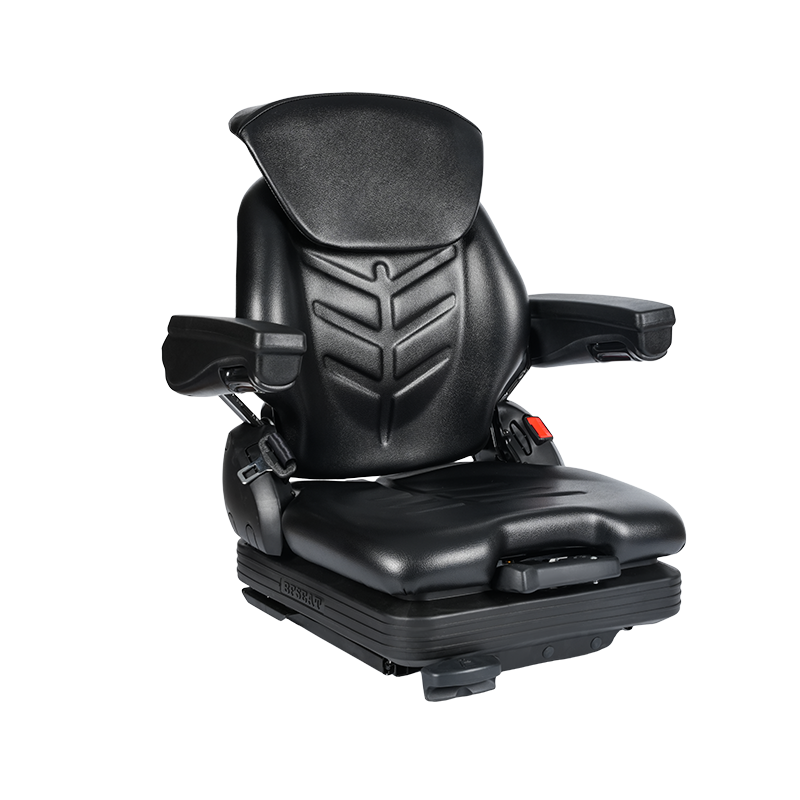 Wholesale BF16 Premium Ergonomic Suspension Agricultural Seat for Tractors with Benfeng Auto Seat Co., Ltd — China wholesale OEM/ODM BF16 Premium Ergonomic Suspension Agricultural Seat for Tractors with CE ISO 9001 Su...View Product →
How to Choose an Ergonomic Industrial Seat
Rather than relying on photos and descriptions, build the selection around a few measurable criteria.
- Measure the mounting space. Confirm the seat footprint, slide travel, and whether a low-profile design or foldable backrest is needed to avoid interference with the operator compartment.
- Define the operator weight range. Suspension seats need to be adjusted to the operator's mass. A wider adjustability range gives the fleet more flexibility.
- Match the vibration environment. If the machine is used on rough ground or is an internal combustion forklift, choose a seat tested to EN 13490 or ISO 7096 rather than a simple fixed seat.
- Check connectivity and safety features. Seat belts, retractable belts, and OPS (Operator Presence Switch)es affect both operator safety and compatibility with machine safety systems.
- Consider replacement and maintenance. Universal fit seats save time when replacing an OEM part, but only if the mounting pattern and seat dimensions match the original.
These points can be applied to a new machine program or to a seat replacement program. It is also worth reading how industrial vehicle seats can affect productivity and operator health before finalizing a specification.
Why the Seat Manufacturer’s Engineering Depth Matters
Ergonomic seating is only as reliable as the manufacturing process behind it. The best cushion design will fail quickly if the frame is poorly welded, the foam is inconsistent, or the suspension parts are not tested. A manufacturer that produces its own metal frames, foam, and assemblies has more control over the final seat quality.
In the industrial seat segment, participating in standard development and publishing test results are stronger signals than marketing language. A seat maker with a 14,000 square meter facility, an annual capacity of 200,000 seats, and certified quality systems is more likely to meet the needs of OEMs and replacement buyers than a small assembler. This is especially true for buyers who need stable delivery and traceability across large fleets. To understand how these principles apply in practice, review the key ergonomic design principles for forklift seats before making a final sourcing decision.
When your operators spend hours on a machine, the seat is part of your safety and productivity program. Choosing an ergonomic industrial seat with good foam, effective suspension, verified standards, and a manufacturer that can support you beyond the initial quote will reduce downtime and make the working day easier for the people who operate the equipment.
-
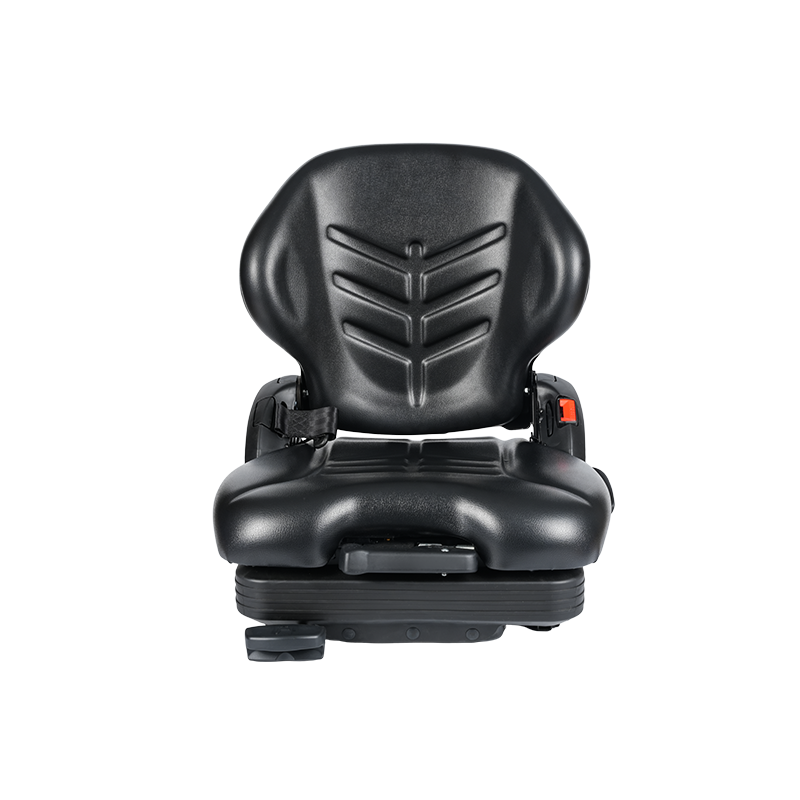
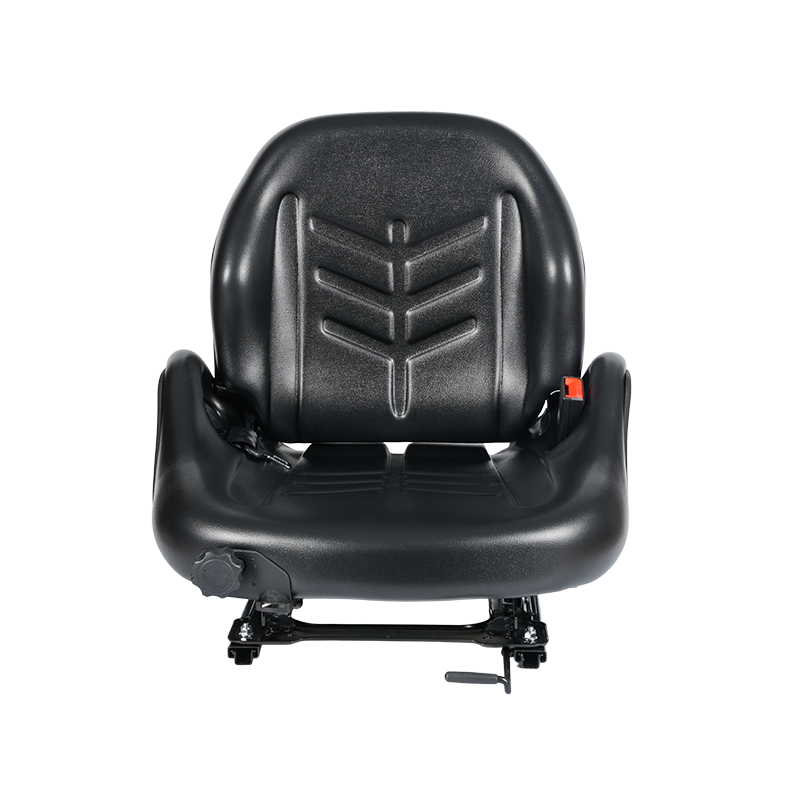
BF17 Ergonomically Advanced High-Comfort Forklift Seat with Back Support EN 13490 Certified for Optimal Operator Well-being
-
-
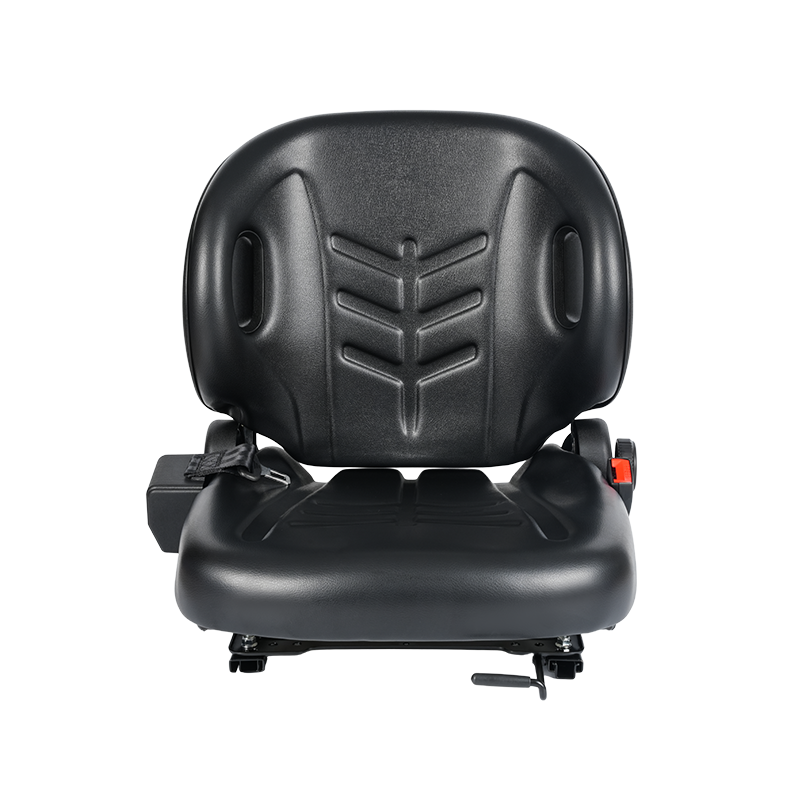
BF8-2ABCD Comfortable Safety Economical Forklift Seat for Internal combustion forklifts with Seat Belt
Copyright @ Hangzhou Benfeng Auto Seat Co., Ltd. All rights reserved Privacy OEM/ODM Ergonomic Industrial Seats Manufacturers
浙ICP备20022099号