
 中文简体
 English
 Français
 Español
 عربى
-

(86)-0571-82550327
-

info@bfseats.com
-




Air Ride Tractor Seats: Suspension Specs, Vibration Limits and Retrofit Tips
Content
- 1 What an air ride tractor seat actually contains
- 2 Air ride versus mechanical suspension on a working tractor
- 3 The vibration numbers that decide whether air is justified
- 4 Five checks before an air ride seat is ordered
- 5 Keeping an air seat alive in dust, chaff and cold
- 6 Retrofitting an air ride seat into an existing tractor
A tractor pulling a heavy cultivator pushes vibration into the cab floor mostly between 1 Hz and 6 Hz, and the seated human body is most sensitive to vertical vibration between 4 Hz and 6 Hz. An air ride seat is the component that sits between those two facts.
Most buyers arrive at this subject after a specific complaint: an operator finishing a ten-hour shift with lower-back pain, or a fleet manager replacing failed seats every second season. Both problems are solved with measurements and specifications rather than adjectives, and every relevant measurement is already defined in public standards.
What an air ride tractor seat actually contains
An air ride tractor seat is a suspension seat whose primary spring is a compressed-air bellows instead of a steel coil: a 12 V or 24 V compressor charges the bellows, a height-control valve holds the cushion at a fixed level as the operator's weight changes, and a hydraulic damper controls rebound.
Five parts decide whether the finished seat feels planted or bouncy, and each one fails in a different way:
- Air spring bellows. Carries the operator's weight and sets ride height. A slow leak shows up as a seat that sinks overnight and needs a few seconds of pump-up every morning.
- Height-control valve. Reacts to load changes within a few millimetres. Dust inside the valve produces a seat that hunts up and down while the tractor is moving.
- Compressor and filter. Agricultural seats normally run on 12 V or 24 V and need clean, dry air. A clogged intake filter is the most frequent cause of a seat that will not hold height.
- Hydraulic damper. Converts spring energy into heat. A damper with 2,000 hours of field work behind it is usually well past its best.
- Fore-aft isolator and end-stop buffers. Limit horizontal shuffle and prevent metal-to-metal contact when the suspension reaches full travel on a headland turn.
Seat transmissibility is the ratio between vibration measured on the seat cushion and vibration measured on the cab floor at the same frequency. A value below 1.0 means the seat is filtering vibration; a value above 1.0 means the seat is amplifying it.
A well-designed air seat holds transmissibility below 1.0 across the 2 Hz to 6 Hz band, which is why the air spring's natural frequency is tuned low, typically near 1.5 Hz. The common failure is not the bellows but the damper: once damping falls away, transmissibility climbs above 1.0 and the seat starts adding to the very problem it was purchased to solve. For a plain-language walkthrough of the spring-and-damper relationship, this explanation of how a suspension seat works is a useful starting point.
Air ride versus mechanical suspension on a working tractor
Air suspension is the right answer above roughly 500 engine hours a year on uneven ground, and a mechanical suspension seat is the right answer below that figure. Below the threshold, the comfort gain is real but modest, while the service exposure created by a compressor, valve and airline is constant.
| Seat criterion | Air suspension | Mechanical suspension |
| Primary spring | Air bellows, adjusted by pressure | Steel coil or torsion bar |
| Typical natural frequency | Near 1.5 Hz | 2 Hz to 3 Hz |
| Air and power supply | Regulated air plus 12 V or 24 V circuit | None |
| Weight adjustment | Continuous, by pressure | Stepped, by preload lever |
| Service items | Bellows, valve, filter, compressor, damper | Damper, bushes, slide rails |
| Behaviour in heavy dust | Valve and filter clog, height control drifts | Slides wear, damping fades gradually |
| Best duty cycle | 800 to 2,000+ hours a year | Under 500 hours a year |
- The tractor runs more than 800 hours a year on ploughed or rutted ground.
- Operators range widely in weight, so a continuous adjustment band matters.
- The machine is new and the air supply can be designed in from the start.
- The machine works seasonally and sits idle for months at a time.
- Operators rotate constantly and nobody will service a filter on schedule.
- Retrofit space under the steering wheel is already tight.
Where an air system cannot be justified, a mechanical platform still does the basic job. The BF16 agricultural seat for tractors combines a mechanical suspension with a CE-marked build, an adjustable backrest and a durable cover, which suits mixed fleets that need one seat specification across several machines.
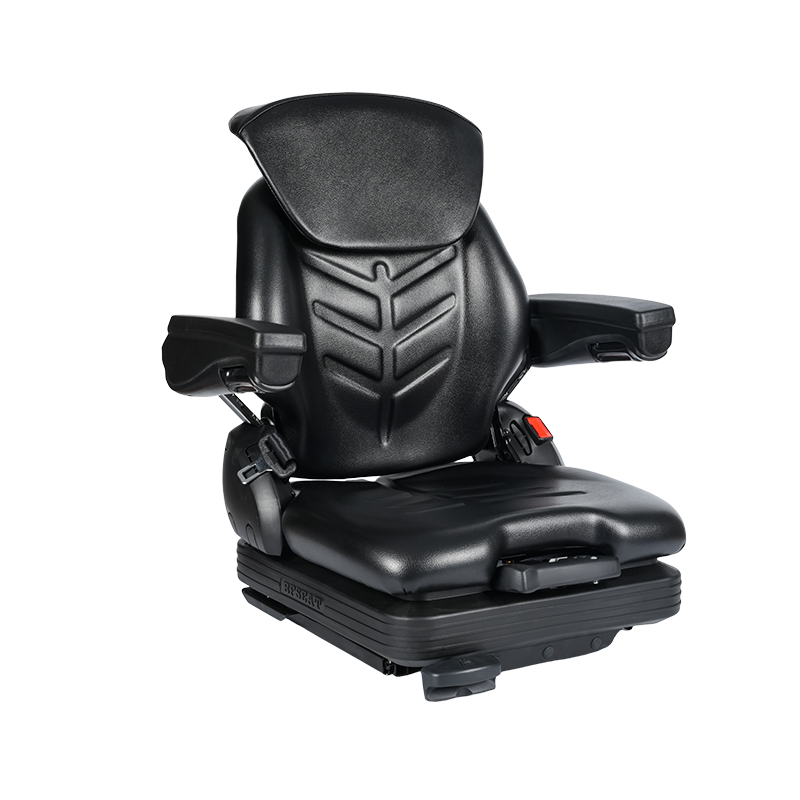 BF16 Mechanical Suspension Agricultural Tractor SeatMechanical-suspension seat for tractors with adjustable backrest, CE build and durable cover, suited to mixed fleets needing one specification.View Product →
The vibration numbers that decide whether air is justified
EU Directive 2002/44/EC sets a daily exposure action value of 0.5 m/s² A(8) and an exposure limit value of 1.15 m/s² A(8) for whole-body vibration, and those two figures, not a seat's marketing description, decide whether an air ride seat is required.
ISO 2631-1 provides the second half of the picture: it converts measured vibration into comfort reactions, so a fleet engineer can tell the difference between a seat that is merely firm and a seat that is exposing operators to a reportable risk.
A(8) is an eight-hour energy equivalent, which means a 12-hour harvest day is reweighted rather than simply averaged. Two hard hours on a headland can dominate the daily figure, and that is why seat selection for a high-hour machine should be based on the worst part of the duty cycle, not the average. The link between seat behaviour and operator fatigue is covered in more depth in this note on suspension and spinal protection.
Five checks before an air ride seat is ordered
Ordering an air seat is a measurement exercise, and the five checks below catch the mistakes that only surface after delivery.
ISO 5353 defines the seat index point, the reference used to position steering column, pedals and armrests. If a replacement seat raises or lowers that point, the operator's leg angle and reach change with it.
Check clearance to the rear window and the steering wheel through the whole suspension stroke, not just at rest. An air seat that bottoms out against a cab panel transmits shock directly into the frame.
Most air seats accept a regulated supply in the 4 bar to 8 bar range and draw from a fused 12 V or 24 V circuit. Add a serviceable filter and moisture trap at the same time as the seat.
The adjustment range must cover the lightest and heaviest people who will actually sit in the machine. A seat set for a 100 kg operator will feel rigid to a 60 kg driver.
EN 13490 applies to industrial truck operator seats and classifies them by vibration category, while ISO 7096 governs laboratory evaluation of earthmoving seat vibration in EM1 to EM8 categories. Ask for the test report, not just a logo.
A seat can pass every laboratory vibration test and still fail in the field, because the seat index point, not the spring, decides where the operator's hands and eyes end up.
For fleets mixing tractors, telehandlers and loaders, a shock-absorbing platform with documented testing is often the practical middle ground. The BF17 agricultural seat is specified around exactly that role, with an ergonomic backrest and ISO-referenced documentation for buyers who need one reference seat across mixed equipment.
 BF17 Shock-Absorbing Agricultural Seat for Mixed EquipmentShock-absorbing seat with ISO 7096 certification and fatigue-tested steel frame, intended as a common reference seat across mixed agricultural equipment.View Product →
Keeping an air seat alive in dust, chaff and cold
Dust destroys more agricultural air suspension seats than load does: an unfiltered intake coats the height valve, and chaff packed around the damper turns a controlled ride into a stiff one within a single season.
Hangzhou Benfeng Auto Seat Co., Ltd. builds seats for agricultural, construction and material handling machines from a 14,000 sq m plant with an annual capacity of 200,000 seat sets, and the maintenance pattern below reflects the items that fail most often on farm equipment.
- Filter and moisture trap: inspect monthly, replace at 500 hours in high-dust work.
- Bellows: check for surface cracks and abrasion at every 250-hour service.
- Damper: replace when rebound is uncontrolled, typically between 2,000 and 3,000 hours.
- Slide rails: grease at 250-hour intervals, since grit accelerates wear quickly.
- Air line routing: keep lines clear of the exhaust manifold and sharp frame edges.
Cold weather deserves its own note. Air springs stiffen below freezing, so allow the compressor a short warm-up before the first field pass, and never force a frozen height valve by hand. A seat that repeats a small fault every morning usually has moisture in the system rather than a failed valve.
Retrofitting an air ride seat into an existing tractor
Successful retrofits come down to three measurements: bolt pattern, installed height under the steering wheel, and available air supply. Everything else is preference.
- Bolt pattern. Record the spacing and hole diameter of the original mounting plate before ordering, and check whether an adapter plate is needed.
- Installed height. Compare the new seat at mid-travel with the old one, because an air seat sits higher when unloaded.
- Air supply. A small dedicated compressor with a filter is usually simpler than tapping an existing circuit with unknown pressure regulation.
High-hour harvesting machines follow the same rules with a heavier brief: long shifts, elevated dust and a seat that has to survive a compressed season. The BF53 agricultural seat for combine harvesters is built for that pattern, with a heavy-duty adjustable frame and a suspension package aimed at sustained daily use.
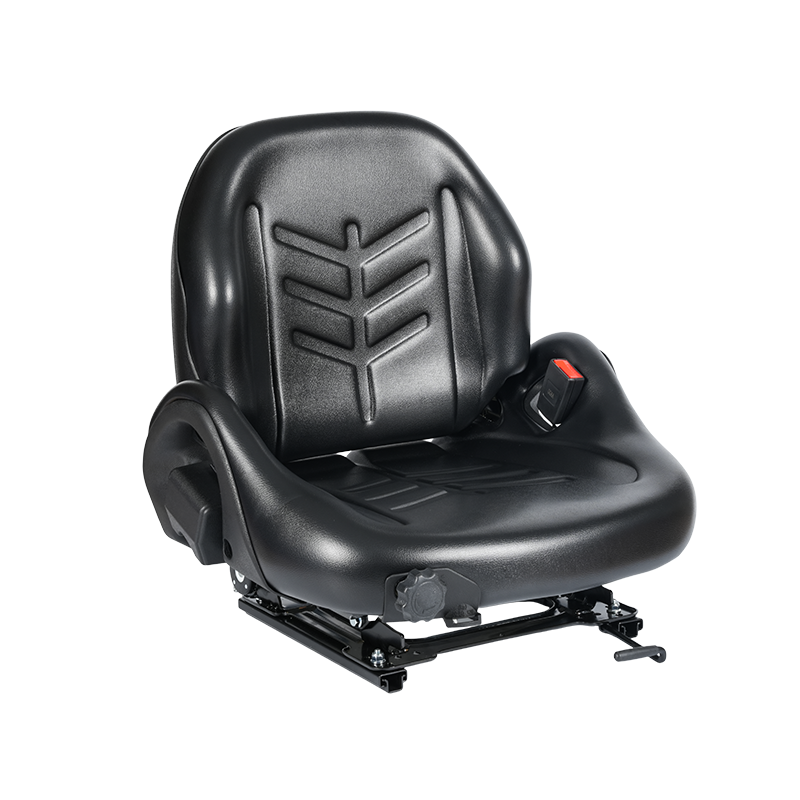 BF5-3 Heavy-Duty Seat for Combine HarvestersHeavy-duty adjustable seat with 40 mm damping stroke and 45–120 kg weight-adaptive suspension, designed for continuous combine harvester operation.View Product →
The four questions below come up in almost every specification meeting, and each has a short, checkable answer.
Do air ride seats fit any tractor?
No. Fit depends on three variables: bolt pattern, installed height at the seat index point defined by ISO 5353, and available air supply. A seat that bolts down correctly but changes the steering wheel reach by more than a few centimetres will be rejected by operators regardless of ride quality.
How much air pressure does an air ride tractor seat need?
Most air suspension seats accept a regulated supply between 4 bar and 8 bar and run a 12 V or 24 V compressor. Always fit a filter and moisture trap upstream of the height valve, because contaminated air is the leading cause of height-control failure in field conditions.
How long does an air suspension seat last?
With scheduled service, the bellows commonly last 5,000 hours or more, while the damper is the wear item and should be judged from about 2,000 hours. In dusty harvesting work, expect damper replacement inside two seasons.
Is an air seat worth it below 500 engine hours a year?
Usually not. Below roughly 500 hours a year the comfort benefit over a mechanical suspension is limited, while the added compressor, valve and airline service burden stays constant. A mechanically suspended seat with a good damper is the more economical choice at that duty cycle.
-
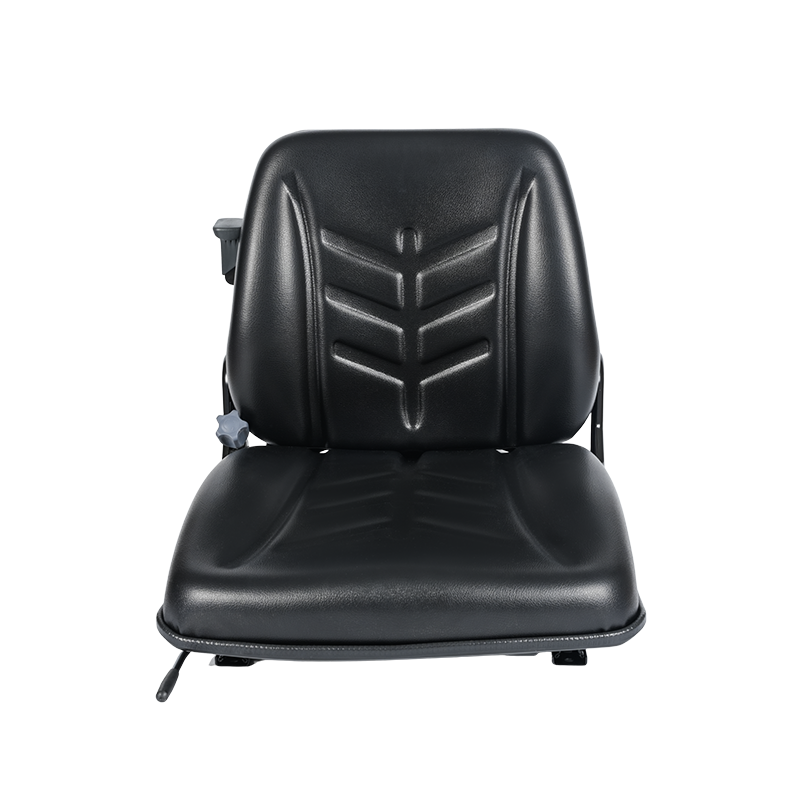
BF8-4 Reliable Semi-Suspension Seat for Airport Tow Tractors with Mechanical Suspension & 15° Backrest
-
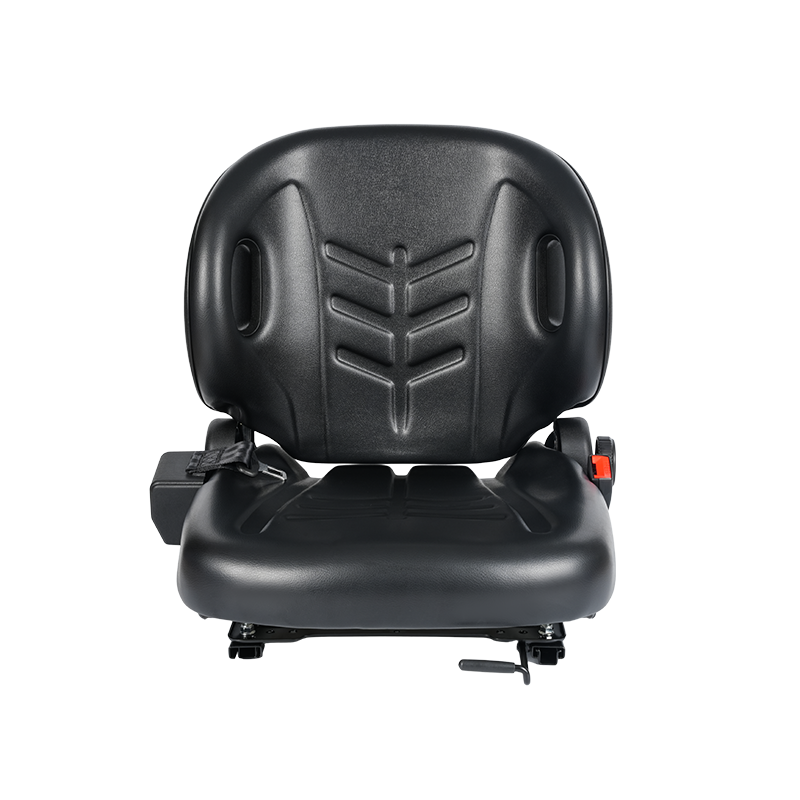
BF2-2 Universal Fit Flatbed Seat for Airport Tractors with 60° Recline, Retractable Seatbelt & Doc Box
Copyright @ Hangzhou Benfeng Auto Seat Co., Ltd. All rights reserved Privacy OEM/ODM Ergonomic Industrial Seats Manufacturers
浙ICP备20022099号