
 中文简体
中文简体 English
 Français
 Español
 عربى
عربى-

(86)-0571-82550327
-

info@bfseats.com
-




AGV Automatic Guided Forklift Seats: Selection, Safety Logic and Fleet Spec Guide
Content
- 1 What Automatic Guided Forklift Seats Do When the Cab Is Empty
- 2 Manual Override Mode: Where AGV Forklift Seat Comfort Still Pays Off
- 3 AGV Forklift Seat Checklist: Five Items to Verify Before You Sign a Fleet Order
- 4 Where AGV Seat Wear Actually Comes From, and Which Materials Resist It
- 5 Standardize One Seat Platform Across Your AGV and Manual Fleet
- 6 AGV Forklift Seat Questions, Answered
An AGV forklift can run a ten-hour shift with its seat empty for most of the route, then hand control to a person for dock work, load checks, or exception handling. That operating pattern is exactly why sourcing AGV automatic guided forklift seats differs from buying ordinary forklift seats: you are not just purchasing cushion and suspension, you are purchasing a control-system component that happens to carry a cushion. Hangzhou Benfeng Auto Seat Co., Ltd., the industrial seat manufacturer that co-drafted China's JB/T 13693-2019 machinery industry standard for industrial vehicle operator seats, builds its BF series around this dual role. The sections below explain what the seat does in each mode, what to verify before a fleet order, and where the wear actually comes from.
What Automatic Guided Forklift Seats Do When the Cab Is Empty
When nobody is aboard, the seat's most important job is to prove it: the operator presence switch wired into the seat base is the signal that lets the vehicle controller run the truck autonomously.
On a conventional forklift, the seat switch is a simple deadman interlock. On an automated guided vehicle it becomes the handshake between human and robot. The controller releases the truck for driverless travel only when the seat reports unoccupied, and it expects that signal to stay stable while the chassis pitches, brakes, and crosses floor joints with nobody aboard to dampen the motion. A seat that returns a chattering signal generates fault codes, stoppages, and service calls that look like robot failures but are seat failures.
An AGV automatic guided forklift seat is the operator station of a self-navigating forklift, engineered to act as a safety input (occupancy sensing, belt status, stable mounting) while still delivering the vibration isolation and adjustability that ISO 7096 and EN 13490 demand from any industrial truck seat.
In practice the seat serves two masters at once, and each mode grades it differently:
Autonomous mode
- Occupancy switch must report unoccupied reliably through vibration and chassis flex
- Signal stability outweighs cushion softness in the specification
- Belt and switch states feed the controller safety chain continuously
Manual override
- Full ergonomic workstation: suspension, weight adjustment, lumbar support
- Judged against the same standards as any warehouse forklift cab
- Mode handover must be instant, with no tools or fault resets
Because mode changes happen several times per hour in mixed operations, the switch, its wiring, and the mounting interface carry more engineering weight than any padding choice.
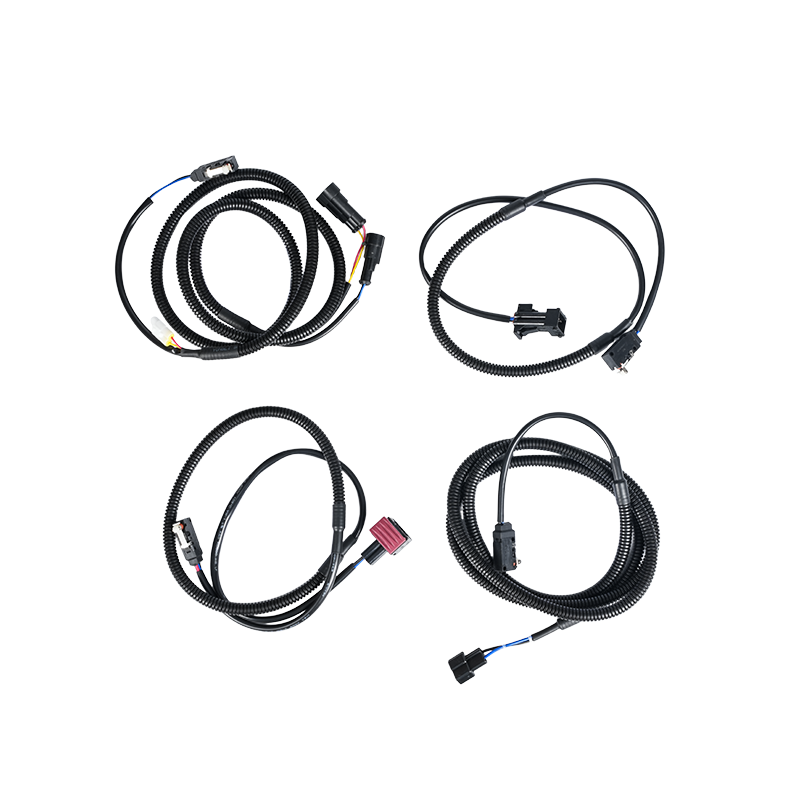 OPS Micro Switch for Construction Machinery Driver SeatsThis seat sensor detects driver presence and feeds start interlocks and safety warnings. Its vibration-proof, long-life design matters where mode changes rely on a stable occupied signal.View Product →
Manual Override Mode: Where AGV Forklift Seat Comfort Still Pays Off
The moment a person takes over, the seat is judged on a measurable number: whole-body vibration exposure, and a certified mechanical suspension is the main lever that keeps it low.
Battery-electric AGVs have no engine vibration, but they still transmit shock from expansion joints, dock plates, and debris. Under ISO 2631 and the EU Physical Agents (Vibration) Directive, the action value is 0.5 m/s2 A(8) and the limit value is 1.15 m/s2. Published workplace studies place smooth-floor reach trucks near 0.4, counterbalance trucks working dock plates around 0.7, and rough-terrain machines near 1.0. Floor conditions, not motor type, decide which suspension class you should order.
Illustrative values compiled from published ISO 2631 workplace studies; EU thresholds shown for reference.
A suspension seat specified for this environment should deliver four things:
- Weight-adjustable travel covering the 5th to 95th percentile operator range
- Low-profile housing that clears compact AGV overhead guards and masts
- Damping that stays controlled when the seat runs empty at travel speed
- Mounting points that accept a retractable belt without blocking switch access
Compact AGV chassis add a packaging constraint: overhead guards and masts sit lower than on standard trucks, so a low-profile dual-certified suspension seat keeps protection without stealing headroom. For sizing details, this guide to choosing the right mechanical suspension forklift seat walks through travel, weight range, and mounting.
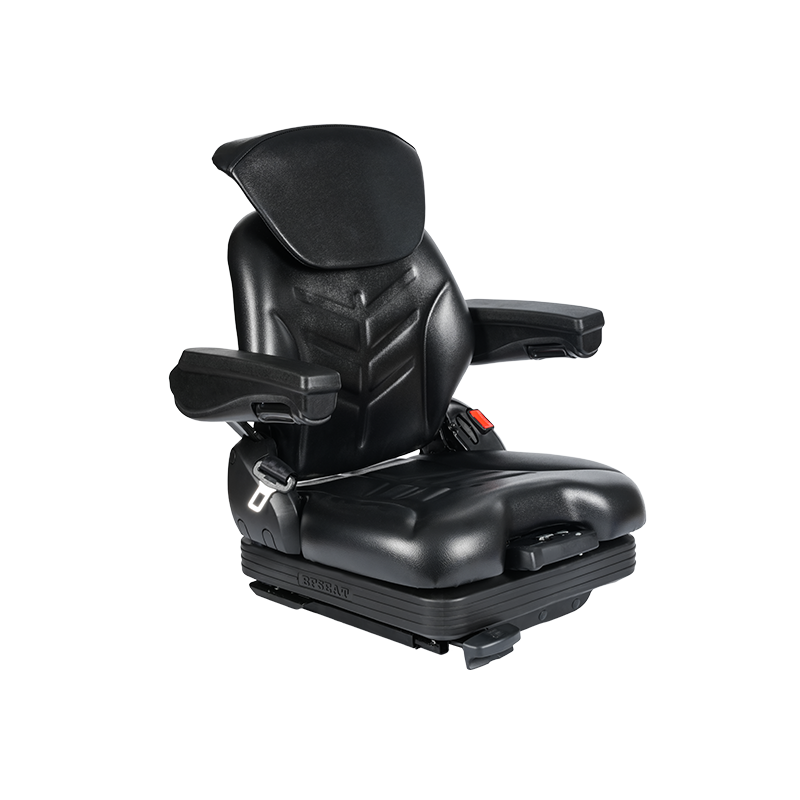 BF16M Dual-Certified Low-Profile Mechanical Suspension Forklift SeatA 510 mm cushion, 60/80 mm suspension, 45–170 kg adjustment, and ISO 7096 plus EN 13490 certifications keep whole-body vibration low in low-headroom AGV and compact truck chassis.View Product →
AGV Forklift Seat Checklist: Five Items to Verify Before You Sign a Fleet Order
Integration details, not upholstery, decide whether an AGV seat works on day one, so write the five checks below directly into the purchase specification.
- Confirm the physical interface. Bolt pattern, seat height, and clearance under low overhead guards or masts must match the chassis drawing, not a catalog photo.
- Align switch logic with the AGV controller. Normally open versus normally closed, supply voltage, and debounce behavior must match the integrator safety PLC; request the truth table in writing.
- Pick suspension for the floor, not the brochure. Smooth slab needs moderate travel; dock and yard duty justifies full mechanical suspension with weight adjustment.
- Choose covers for the cleaning regime. Wipe-clean PVC or vinyl for frequent washdown; single-mold polyurethane where abrasion and point loads dominate.
- Demand the certification file. CE marking, EN 13490 IT1/IT2 strength results, and ISO 7096 vibration class data should ship with the seat, not as promises.
Field note: the most common AGV seat retrofit failure is not comfort. It is a seat switch whose signal bounce reads as an occupied cab and silently blocks autonomous mode.
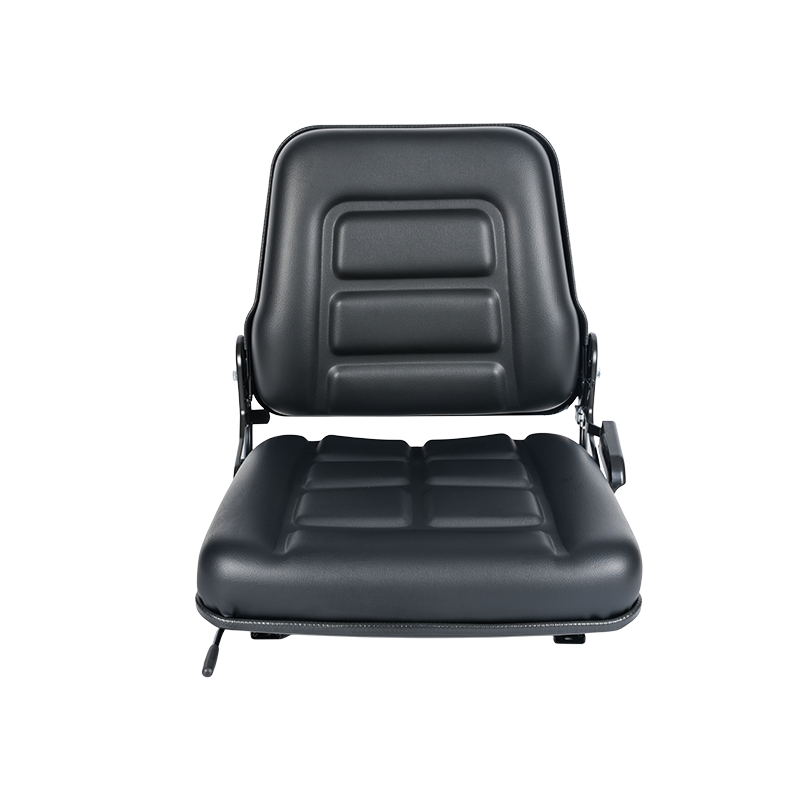
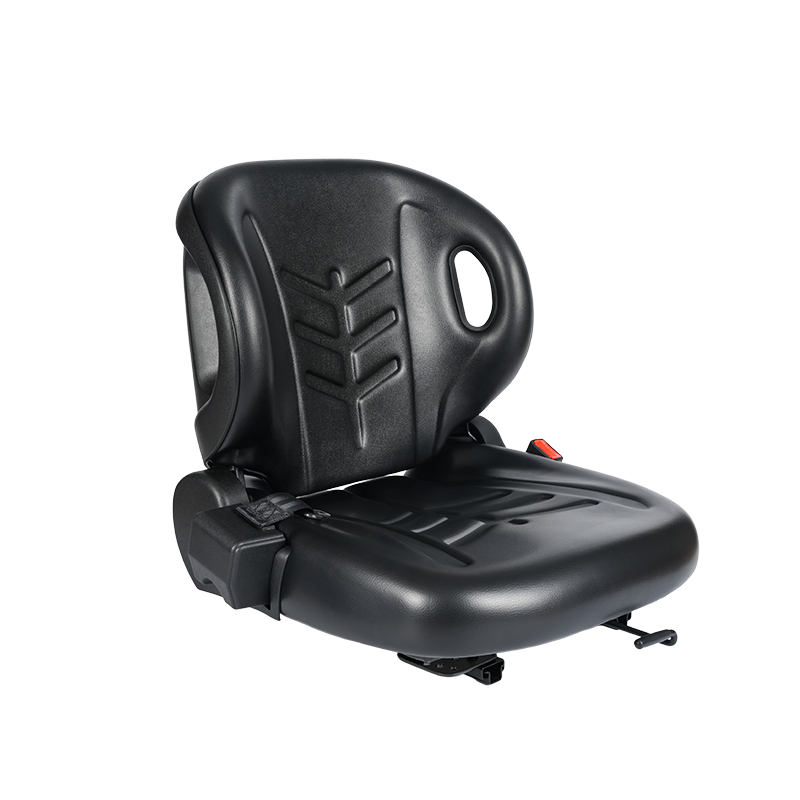 BF2-1 AGV-Compatible Smart Forklift Seat with Optional OPS (Operator Presence Switch)Built for automated forklifts, it offers 75 mm rail adjustment, a retractable belt, universal mounting, durable black PVC, and an optional switch that avoids signal-bounce failures in autonomous mode.View Product →
Where AGV Seat Wear Actually Comes From, and Which Materials Resist It
Most AGV seat wear is driven by cleaning chemistry, floor-level dust, and unmanned running hours, which is why PVC and vinyl covers and single-mold polyurethane pans dominate serious specifications.
High-density PVC resists washdown chemicals and wipes clean in seconds, which matters when a shared fleet is cleaned between shifts. Single-mold polyurethane removes stitched seams entirely, so there is no thread line to burst under shift-change abuse, and the material holds its shape under the point loads of tool belts and clipboards. The table below maps each wear source to the design answer worth requesting from the supplier.
| Wear source | What it does to the seat | Design answer to request |
| Washdown chemicals | Crack stiff covers and fade color | HD PVC or wipe-clean vinyl with sealed seams |
| Floor-level dust | Grit works into slide rails and adjusters | Sealed slide rail and shrouded adjusters |
| Empty-hours vibration | Loosens fasteners while the truck runs unmanned | Lock-nut hardware and damped mounting pads |
| Shift-change abuse | Point loads split stitched seams | Single-mold polyurethane pan with no stitching |
| Dock-door exposure | UV and moisture age covers parked near openings | UV-stabilized vinyl formulation |
Match the cover to the cleaning regime rather than to the brochure photo, and the seat will outlast the first battery pack installed beneath it.
Standardize One Seat Platform Across Your AGV and Manual Fleet
Fleets that standardize on a single seat platform across AGV and manually driven trucks carry less spare-part inventory, train technicians once, and resolve seat-related faults faster.
A platform approach means one BF core adjusted through cover material, suspension hardware, and safety options, so an AGV forklift, a counterbalance truck, and a reach truck can share the same switch, rail, and belt hardware. Hangzhou Benfeng Auto Seat Co., Ltd. produces roughly 200,000 seats per year on a 14,000 square meter integrated site covering foaming, stamping, welding, assembly, and in-house testing, a scale that keeps replacement units and accessories available for both OEM programs and the aftermarket. A practical starting point is to compare platform options in the full forklift seat line-up, then narrow by certification and switch logic.
A fleet standardized on one seat platform stocks one belt, one switch, and one slide rail as spares, instead of a different variant for every truck generation.
AGV Forklift Seat Questions, Answered
Do AGV forklifts still need operator seats if they drive themselves?
Yes. Manual override for exceptions, load verification, and yard work keeps a human in the loop, and a compliant seat is required whenever the truck is certified to carry an operator. The seat also remains part of the safety chain through its presence switch even when empty.
What does an operator presence switch do on an automated forklift?
It reports to the vehicle controller whether anyone is seated. An unoccupied signal is a precondition for driverless travel; when someone sits down, that change of state, together with belt engagement, authorizes manual control.
Which certifications should AGV automatic guided forklift seats carry?
At minimum CE marking, seat strength results per EN 13490, and vibration performance per ISO 7096, with the relevant classes documented in a certificate file the supplier can hand over with each batch.
Can a standard forklift seat be retrofitted onto an AGV forklift?
Often yes, but only after the switch logic, connector, and mounting pattern are matched to the AGV controller. A seat that is comfortable yet electrically incompatible will block autonomous mode instead of improving the truck.
-
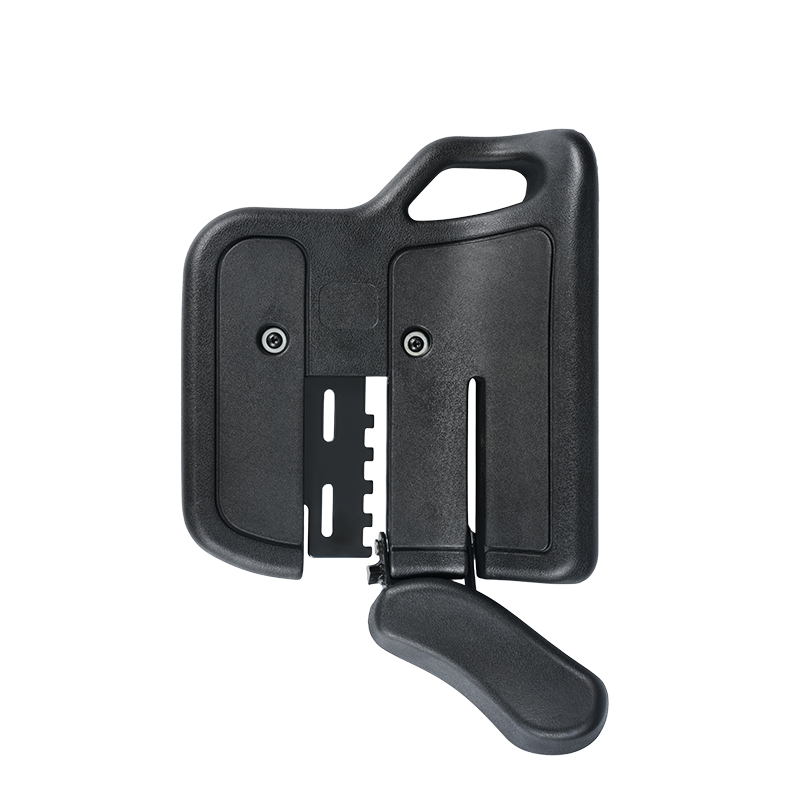
BF3 Single-Mold Polyurethane Eco-Friendly Seat with Vehicle-Contoured Design | Cost-Efficient Abrasion-Resistant Version for Stand-On Reach Forklifts
-
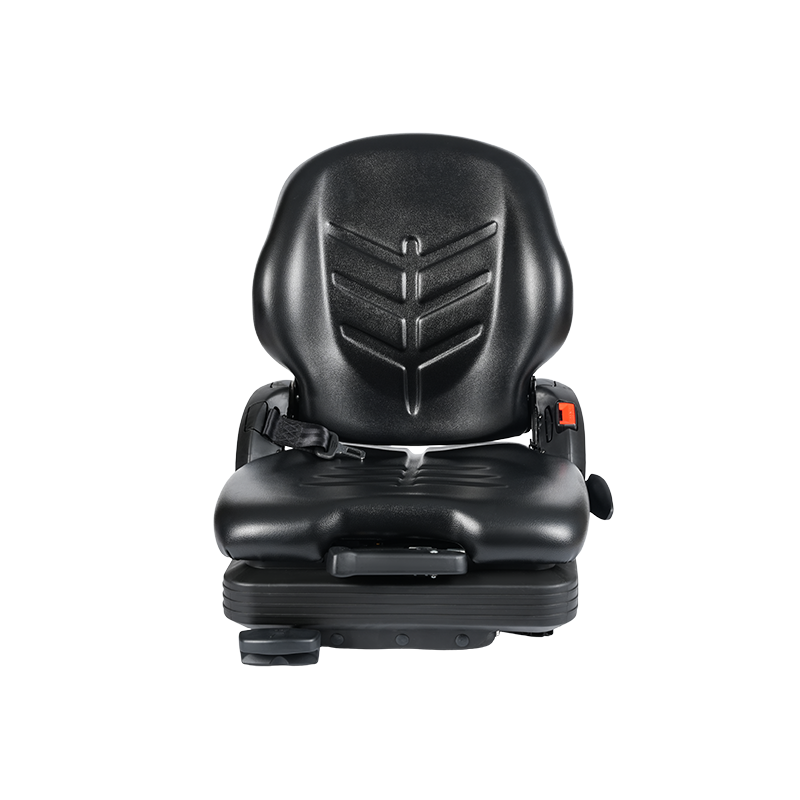
BF16 Low-Profile Vinyl Replacement Mechanical Suspension Seat for Material Handling Forklift Equipment - Black with EN 13490 IT1+IT2
-
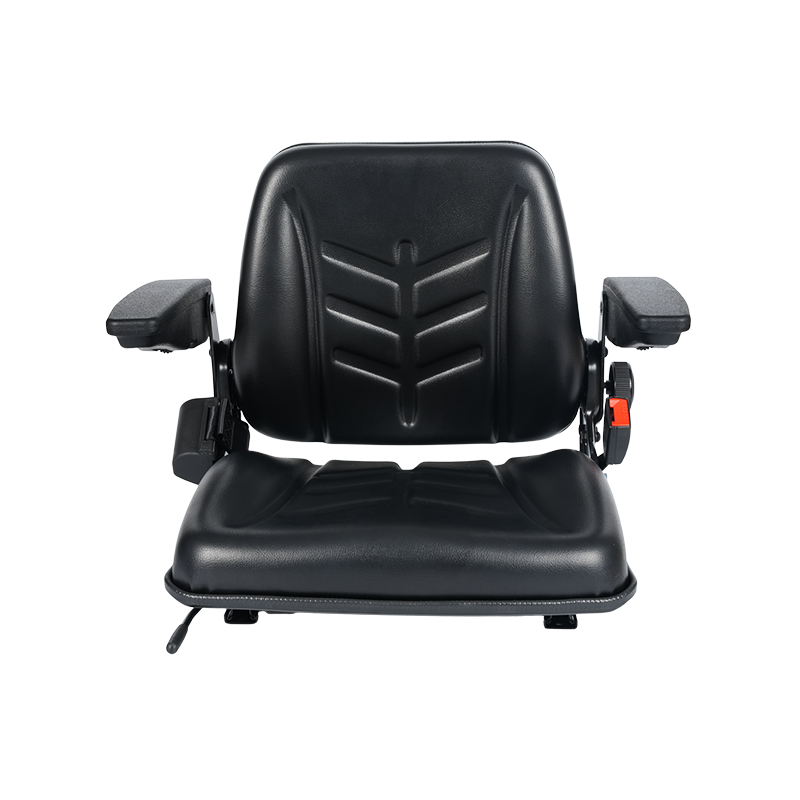
BF8-2ABCD Comfortable Safety Economical Forklift Seat for Internal combustion forklifts with Seat Belt
-
Copyright @ Hangzhou Benfeng Auto Seat Co., Ltd. All rights reserved Privacy OEM/ODM Ergonomic Industrial Seats Manufacturers
浙ICP备20022099号