
 中文简体
中文简体 English
 Français
 Español
 عربى
عربى-

(86)-0571-82550327
-

info@bfseats.com
-




What Should You Know About Construction Equipment Seats?
Content
- 1 Why Seat Engineering Matters in Heavy Equipment
- 2 Core Components of Construction Machinery Seats
- 3 Suspension System Types Compared
- 4 Ergonomic Design for Operator Performance
- 5 Construction Equipment Seats Weight Adjustment: How It Works
- 6 Materials and Durability
- 7 Replacement Seats for Construction Machinery: Sourcing Criteria
- 8 B2B Procurement Checklist
- 9 Frequently Asked Questions
- 10 References
Operator seating in heavy machinery is not a comfort accessory. It is a safety-critical, productivity-affecting component that directly influences operator health, machine control precision, and long-term workforce retention. Construction equipment seats must absorb continuous whole-body vibration, support extended shift durations, and survive harsh outdoor environments — all while meeting international ergonomic and safety standards. For procurement managers, fleet operators, and OEM suppliers, a clear understanding of seat engineering is essential for making defensible sourcing decisions.
Why Seat Engineering Matters in Heavy Equipment
Operators of excavators, wheel loaders, bulldozers, and motor graders typically sit for 8 to 12 hours per shift. During this time, they are exposed to whole-body vibration (WBV) transmitted through the chassis and seat. Prolonged WBV exposure is directly linked to lumbar spine disorders, fatigue, and reduced reaction time. The engineering quality of construction machinery seats determines how much vibration reaches the operator's body and how effectively the seat compensates for postural strain.
Vibration Exposure and ISO 2631 Standards
ISO 2631-1 defines the method for measuring and evaluating human exposure to whole-body vibration. The standard establishes health guidance caution zones beginning at a daily vibration exposure value A(8) of 0.5 m/s2. European Directive 2002/44/EC sets an action value of 0.5 m/s2 and an exposure limit value of 1.15 m/s2 for an 8-hour working day. A seat's vibration transmissibility is quantified by its seat effective amplitude transmissibility (SEAT) value. A SEAT value below 1.0 means the seat attenuates vibration relative to the floor input. High-quality suspension seats for heavy machinery typically achieve SEAT values between 0.6 and 0.85 in the 1–10 Hz frequency range most relevant to spinal loading.
Core Components of Construction Machinery Seats
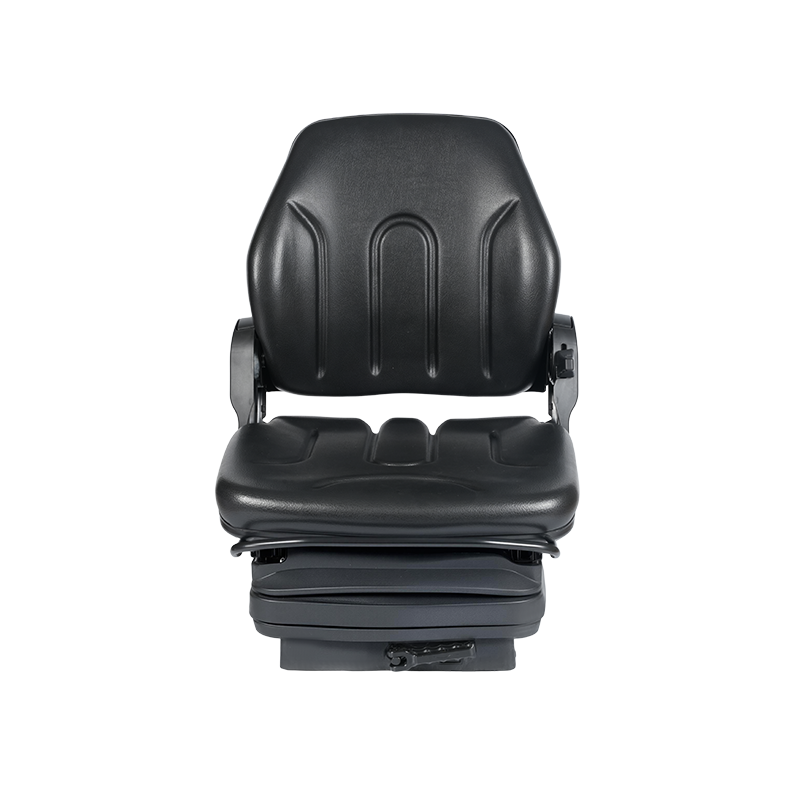
A fully specified construction machinery seat integrates multiple functional subsystems. Each subsystem contributes to operator protection, adjustability, and durability. The major components include:
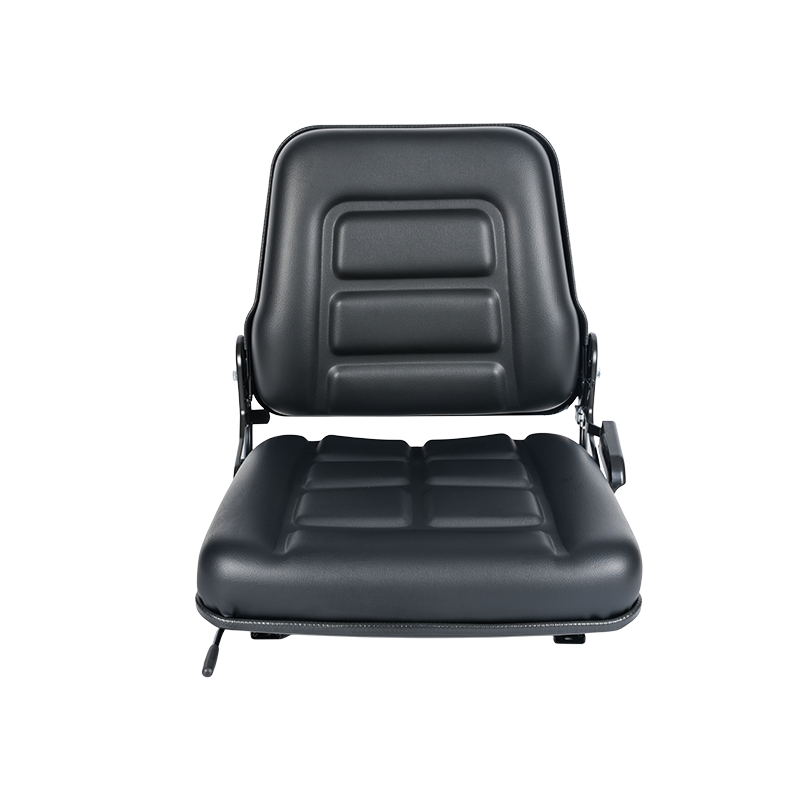
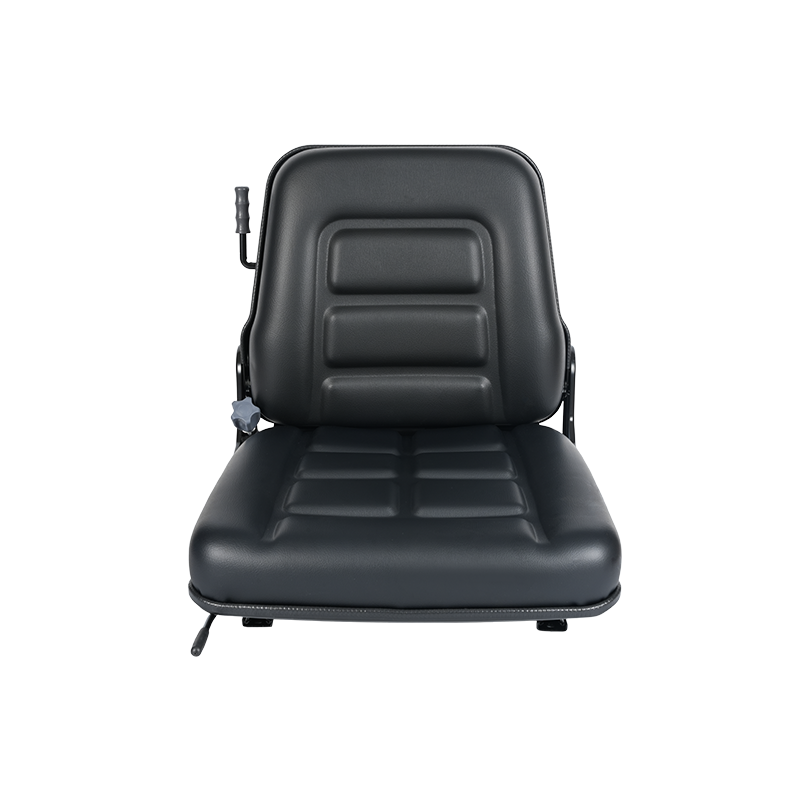
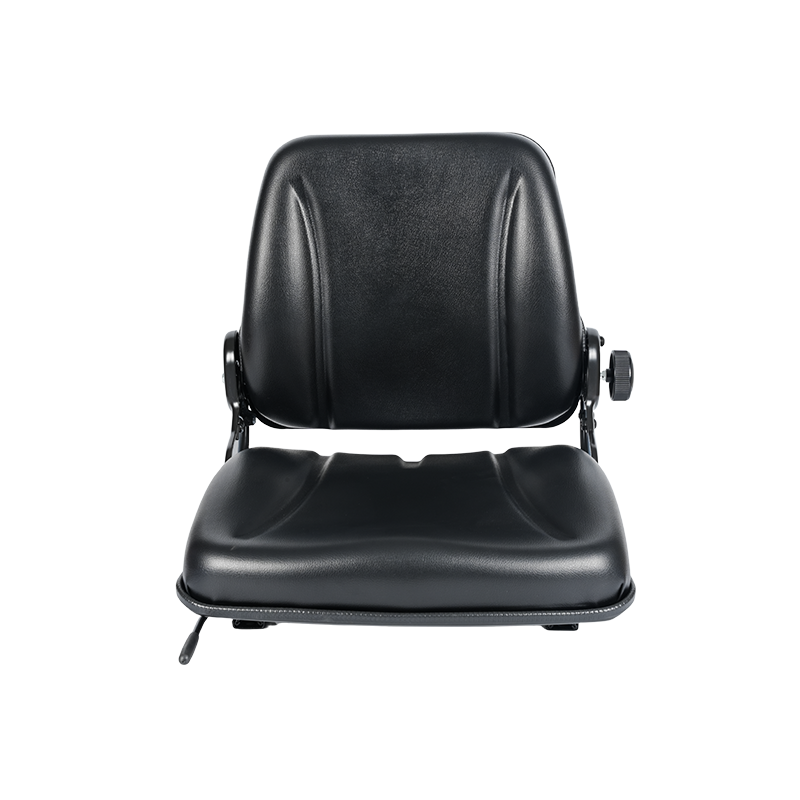
- Suspension mechanism: The primary vibration isolation system. Mechanical scissor, air, or hybrid systems isolate the seat pan from floor-level vibration. Stroke length typically ranges from 80 mm to 120 mm.
- Seat pan and backrest foam: High-density polyurethane foam (density 45–60 kg/m3) provides initial comfort and pressure distribution. Foam grade determines long-term fatigue resistance.
- Cover material: Vinyl, fabric, or leather coverings are selected based on climate, hygiene requirements, and abrasion resistance. Vinyl is standard for outdoor and wet environments.
- Fore-aft slide adjustment: Allows the operator to optimise reach to controls. Standard travel range is 150 mm to 200 mm with locking increments of 25 mm.
- Height adjustment: Mechanical or pneumatic height setting accommodates operators of varying stature. Typical range is 60 mm to 100 mm of vertical travel.
- Lumbar support: Adjustable lumbar systems, either mechanical or pneumatic, maintain the natural lordotic curve of the lumbar spine during extended operation.
- Armrests: Fixed, folding, or adjustable armrests reduce shoulder and neck loading during control operation. Armrest height and angle adjustability are critical in excavator cabins.
- Seat belt and mounting plate: Integrated retractable lap belt or 3-point harness meets ISO 6683 and ROPS/FOPS cab requirements for rollover protection systems.
Suspension System Types Compared
The suspension system is the most performance-critical component in any heavy equipment seat. Different suspension technologies offer distinct tradeoffs between cost, adjustability, vibration isolation range, and maintenance requirements. The following table compares the three main suspension types used in construction equipment seats with suspension system configurations.
Construction Equipment Seats with Suspension System
| Suspension Type | Vibration Isolation (SEAT Value) | Adjustment Method | Stroke Length | Maintenance | Relative Cost |
|---|---|---|---|---|---|
| Mechanical scissor | 0.75–0.90 | Manual spring tension knob | 80–100 mm | Low (no air supply needed) | Low |
| Air (pneumatic) | 0.60–0.80 | Automatic or manual air valve | 100–120 mm | Medium (requires clean air supply) | Medium–High |
| Hybrid (mechanical + air) | 0.60–0.78 | Combined spring and air control | 100–120 mm | Medium | High |
Ergonomic Design for Operator Performance
Ergonomic engineering in heavy equipment seating goes beyond adjustability ranges. It addresses the interaction between the operator's body geometry, the control layout of the specific machine, and the postural demands of the work task. Poor ergonomic design leads to musculoskeletal disorders, operator fatigue, and reduced situational awareness — all of which increase incident risk.
Ergonomic Construction Machinery Seats for Excavators
Ergonomic construction machinery seats for excavators have specific design requirements that differ from wheel loader or bulldozer seats. Excavator operators rotate the upper body frequently and must reach joystick controls mounted on adjustable consoles attached to the seat structure. This means the seat must function as a control platform, not just a sitting surface. Key ergonomic parameters for excavator seating include:
- Seat pan angle: A slight forward tilt of 3 to 5 degrees reduces hip flexion angle and decreases lumbar compression during upper body rotation.
- Armrest-mounted console compatibility: The seat structure must provide standardised mounting points for joystick consoles, typically using 4-hole DIN or ISO bolt patterns.
- Backrest recline range: A minimum recline range of 15 to 25 degrees from vertical allows operators to adjust posture during breaks without leaving the cab.
- Lateral thigh support: Contoured seat pan side bolsters reduce sliding during machine swing cycles and improve operator stability.
Construction Equipment Seats Weight Adjustment: How It Works
Weight adjustment is essential because suspension systems are tuned to operate within a defined load range. Operating a seat outside its designed weight range reduces isolation efficiency and increases vibration transmission. Most heavy equipment seats are rated for operators between 50 kg and 130 kg, with the suspension set point adjustable to optimise isolation for the actual operator weight.
Mechanical vs Air Weight Adjustment
Construction equipment seat weight adjustment systems fall into two primary categories. Mechanical systems use a rotary knob or lever to pre-tension a coil spring. Air systems use a pressurised bladder adjusted via a valve. The table below compares both methods across the criteria most relevant to fleet procurement decisions.
| Feature | Mechanical Weight Adjustment | Air Weight Adjustment |
|---|---|---|
| Adjustment method | Manual knob/lever | Push-button or valve (uses cab air supply) |
| Precision | Incremental (5–10 kg steps) | Continuous (automatic in advanced models) |
| Dependency | None (self-contained) | Requires clean compressed air (6–8 bar) |
| Vibration isolation accuracy | Good within the rated range | Excellent (auto-adjusts to operator weight) |
| Failure mode | Spring fatigue over time | Air bladder leak or valve failure |
| Service requirement | Spring inspection every 2–3 years | Airline and bladder inspection annually |
Materials and Durability
Material selection for seat components directly determines service life under field conditions. Construction site environments expose workers to UV radiation, mud, hydraulic fluid, rain, and extreme temperatures ranging from minus 30 to plus 70 degrees Celsius in global deployment scenarios.
Waterproof Construction Equipment Seats for Outdoor Use
Waterproof construction equipment seats for outdoor use require a combination of sealed cover materials, corrosion-resistant frame components, and drainage-designed seat pan geometry. The following material specifications define a durable outdoor-rated seat:
- Cover material: PVC-coated vinyl with a minimum thickness of 0.8 mm and a Martindale abrasion resistance of at least 50,000 cycles. UV stabiliser additives prevent surface cracking after prolonged sun exposure.
- Foam core: Closed-cell polyurethane foam in the seat pan resists moisture absorption. Open-cell foam in the backrest is acceptable when covered with a moisture-barrier layer.
- Frame and base: Powder-coated steel frame with a minimum coating thickness of 60 microns provides corrosion protection in wet and saline environments. Stainless steel hardware is specified for marine or coastal applications.
- Drainage channels: Moulded drainage paths in the seat pan allow water to exit rather than pool under the operator.
Replacement Seats for Construction Machinery: Sourcing Criteria
Replacement seats for construction machinery must match the dimensional and functional envelope of the original equipment manufacturer (OEM) specification. Incorrect fitment compromises operator safety and may void the machine warranty. The following criteria should govern all replacement seat procurement:
- Mounting pattern compatibility: Verify bolt pattern dimensions (typically 4-hole patterns at 150 x 150 mm or 200 x 200 mm spacing) against the machine's seat mounting plate before ordering.
- Suspension stroke and weight range: Confirm that the replacement suspension stroke and operator weight range match the original specification to maintain vibration isolation performance.
- Armrest console interface: For excavators and telehandlers with integrated control consoles, confirm that the replacement seat accepts the existing console mounting hardware.
- Seat belt standard: Replacement seats must include a safety belt system certified to ISO 6683 or the equivalent standard required by the machine's ROPS certification.
- Dimensional envelope: Seat width, height, and depth must fit within the cab's designed clearance zones. Oversized replacements can obstruct cab entry, exit, and emergency egress paths.
B2B Procurement Checklist
For fleet managers, OEM purchasing teams, and aftermarket distributors sourcing at volume, the following items should appear in every seat specification document or request for quotation:
- ISO 7096 compliance documentation: Request test reports confirming the seat meets ISO 7096 laboratory vibration test requirements for the relevant machine class (EM1 through EM9).
- Weight adjustment range and rated operator weight: Confirm the minimum and maximum operator weight that the suspension is calibrated to handle.
- Cover material specification: Request material data sheet including abrasion resistance, UV resistance rating, and temperature operating range.
- Foam density and ILD (Indentation Load Deflection): Specify minimum foam density (45 kg/m3 for seat pan) and ILD value (typically 35–45 N for construction seat applications).
- Warranty terms: Define minimum warranty period (typically 12 to 24 months) and covered failure modes, including suspension mechanism, foam, and cover integrity.
- MOQ and lead time: Establish minimum order quantities and production lead times for both standard catalogue seats and custom-configured variants.
- Spare parts availability: Confirm availability of individual replacement components (suspension kits, foam sets, cover skins) to support fleet maintenance programs.
Frequently Asked Questions
1. What is the ISO standard for testing construction equipment seats?
ISO 7096 is the primary international standard for laboratory evaluation of whole-body vibration transmissibility in construction machinery seats. It defines nine machine input spectra (EM1 through EM9) corresponding to different machine types, such as wheel loaders, soil compactors, and crawler excavators. Each spectrum simulates the vibration profile typical of that machine class. A seat must achieve a maximum SEAT value (typically 1.0 or below, depending on class) when tested against the relevant input spectrum to be considered compliant. Buyers should request ISO 7096 test reports from seat suppliers and verify that the tested input spectrum matches the target machine type.
2. How often should construction equipment seats be replaced?
Service life depends on operating hours, operator weight, environmental conditions, and suspension type. As a general guideline, suspension mechanisms should be inspected every 2,000 operating hours and replaced when SEAT value measurements or physical inspection reveal degraded isolation performance. Foam compression set exceeding 25 per cent of original thickness is a reliable indicator that seat pan foam requires replacement. Cover materials in outdoor applications typically require replacement every 3 to 5 years due to UV degradation and abrasion. Proactive replacement of replacement seats for construction machinery before failure reduces operator injury risk and avoids unplanned downtime.
3. Can a universal seat replace an OEM-specific seat?
Universal aftermarket seats can replace OEM seats if the mounting pattern, dimensional envelope, suspension specification, and safety belt standard are all verified to match. Many aftermarket suppliers produce seats with adjustable mounting adapters that accommodate multiple bolt patterns. However, seats with integrated control consoles — common on excavators — require machine-specific console mounting interfaces that universal seats may not support. Always cross-reference the machine model, cab dimensions, and console attachment requirements before specifying a universal replacement for fleet applications.
4. What is the difference between a mechanical and an air suspension seat for construction use?
A mechanical suspension seat uses a coil spring and damper system to isolate vibration. It requires no external energy source and is well-suited to machines without a compressed air supply. An air suspension seat uses a pressurised bladder to support the operator's weight and isolate vibration. It provides more precise weight adjustment and generally achieves lower SEAT values across the operator weight range. Air systems require a clean, dry compressed air supply at 6 to 8 bar, which most modern construction machines provide through the cab's HVAC or pneumatic circuit. For fleet procurement, construction equipment seats with suspension systems in air configuration are preferred for high-hour applications where vibration exposure minimisation is the primary objective.
References
- International Organisation for Standardisation. ISO 7096: Earth-Moving Machinery — Laboratory Evaluation of Operator Seat Vibration. ISO, Geneva.
- International Organisation for Standardisation. ISO 2631-1: Mechanical Vibration and Shock — Evaluation of Human Exposure to Whole-Body Vibration, Part 1: General Requirements. ISO, Geneva.
- European Parliament and Council. Directive 2002/44/EC on the Minimum Health and Safety Requirements Regarding the Exposure of Workers to the Risks Arising from Physical Agents (Vibration). Official Journal of the European Union, 2002.
- International Organisation for Standardisation. ISO 6683: Earth-Moving Machinery — Seat Belts and Seat Belt Anchorages — Performance Requirements and Tests. ISO, Geneva.
- Griffin, M.J. Handbook of Human Vibration. Academic Press, London, 1990.
- European Agency for Safety and Health at Work. Whole-Body Vibration: Exposure of Workers in the Construction Sector. EU-OSHA, Bilbao, 2008.
Copyright @ Hangzhou Benfeng Auto Seat Co., Ltd. All rights reserved Privacy OEM/ODM Ergonomic Industrial Seats Manufacturers
浙ICP备20022099号