
 中文简体
中文简体 English
 Français
 Español
 عربى
عربى-

(86)-0571-82550327
-

info@bfseats.com
-




Universal Replacement Forklift Seat: Signs, Selection, and Replacement Guide
Content
- 1 How Important Is the Forklift Seat?
- 2 How Often to Replace Your Forklift Seat
- 3 Why Replace Your Forklift Seat?
- 4 Forklift Seat Options
- 5 Tips to Choosing a Replacement Forklift Seat
- 6 Conclusion
- 7 FAQ
- 7.1 How do I know if my forklift seat needs replacing?
- 7.2 What is the average lifespan of a forklift seat?
- 7.3 Are universal forklift seats compatible with all models?
- 7.4 What should I check before selecting a replacement forklift seat?
- 7.5 Can a worn forklift seat affect operator safety?
- 7.6 How much does forklift seat replacement typically cost?
- 7.7 How is a replacement forklift seat installed?
- 7.8 Does cover material matter for forklift seat replacement?
Forklift seats endure constant vibration, repeated entry and exit, temperature swings, and daily contact with dust, oil, and moisture. Over time, the cushioning compresses, the suspension loses responsiveness, and stitching or vinyl begins to crack. Many operations only address seat condition after an operator complains or a component fails outright. Waiting until that point is not the most efficient approach, since a degraded seat can affect posture, reaction time, and overall ride comfort well before a visible breakdown occurs. Understanding how a universal replacement forklift seat works, when it should be replaced, and how to select one that fits a given truck model helps maintenance teams plan replacements proactively rather than reactively.
A universal replacement forklift seat is a seating unit designed with adjustable mounting patterns, slide rails, and bracket configurations so that it can fit a wide range of forklift makes and models rather than a single proprietary design. Instead of sourcing a seat matched to one specific truck, maintenance teams can select a universal unit and adapt the mounting hardware to the existing frame. This approach shortens sourcing time and simplifies inventory planning for operations that run mixed fleets.
How Important Is the Forklift Seat?
The seat is one of the few points of continuous physical contact between an operator and the machine during a shift. Its condition influences three areas that are often underestimated: posture and fatigue, vibration transfer, and operator attentiveness.
Posture and Fatigue
A seat with collapsed foam or a worn backrest no longer supports the spine in a neutral position. Operators compensate by leaning forward, twisting, or shifting weight repeatedly, which increases fatigue over an eight or ten hour shift. Fatigue accumulated this way can reduce attentiveness during repetitive lifting, stacking, and maneuvering tasks.
Vibration Transfer
Forklifts operating on uneven warehouse floors, ramps, or outdoor yards generate continuous low-frequency vibration. A functioning suspension system absorbs a portion of this vibration before it reaches the operator's spine. When suspension components wear out, more vibration is transferred directly to the body, which over months and years is associated with lower back discomfort in operators who spend long hours seated.
Operator Attentiveness
Discomfort is a distraction. An operator repositioning themselves every few minutes to relieve pressure points is, for that moment, focused less on surroundings, pedestrians, and load stability. In this sense, seat condition indirectly supports situational awareness rather than being a purely comfort-related item.
How Often to Replace Your Forklift Seat
There is no single fixed interval that applies to every operation, since replacement timing depends on usage hours, environment, and seat construction quality. However, general patterns can guide planning. A seat used in a single-shift, indoor, climate-controlled warehouse will typically last longer than one used across three shifts in an outdoor yard exposed to sun, rain, and temperature swings.
| Usage Pattern | Typical Replacement Interval | Primary Wear Factor |
|---|---|---|
| Single shift, indoor, climate-controlled | 3 to 5 years | Foam compression from repeated use |
| Two shifts, mixed indoor and dock exposure | 2 to 3 years | Suspension wear and cushion flattening |
| Continuous multi-shift, outdoor or rough terrain | 1 to 2 years | UV exposure, moisture, vibration fatigue |
| Cold storage or refrigerated warehouse | 2 to 4 years | Material stiffening and cracking at low temperature |
Rather than relying on a calendar alone, many maintenance teams combine a scheduled inspection with a condition-based decision. During routine equipment checks, inspecting the seat cushion, suspension travel, backrest angle lock, and safety belt integrity alongside hydraulic and tire checks allows replacement to be planned before a failure interrupts operations.
Why Replace Your Forklift Seat?
Seat replacement is generally driven by one or more of the following conditions rather than aesthetics alone.
Physical Wear Indicators
- Visible cracking, tearing, or peeling of the seat cover material
- Foam that no longer returns to shape after the operator stands up
- Suspension that bottoms out on uneven surfaces or no longer adjusts to operator weight
- Loose, cracked, or non-functioning safety belt housing
- Squeaking, grinding, or excessive movement in the seat base or slide rails
Operational and Safety Reasons
Some forklift models use a seat switch or seat sensor that interrupts hydraulic or drive function when the operator is not seated. A seat with a worn or misaligned base can cause this switch to behave inconsistently, which affects both safety interlocks and normal operation. In these cases, replacement addresses a functional issue rather than only a comfort concern.
A Common Oversight
One consideration that is frequently overlooked is that a seat can look acceptable from the outside while the suspension or foam density underneath has already degraded. Visual inspection alone is not always sufficient; a brief seated test, checking for even suspension response and consistent backrest support, provides a more accurate picture of remaining service life than appearance does.
| Condition | Worn Seat | Replacement Seat |
|---|---|---|
| Cushion response | Flat, minimal rebound | Consistent rebound and support |
| Suspension travel | Reduced or bottomed out | Full designed travel range |
| Seat belt condition | Frayed webbing or stiff retractor | Smooth retraction, intact webbing |
| Backrest angle lock | Slips under load | Holds set angle reliably |
Forklift Seat Options
A universal replacement forklift seat is generally categorized by cover material, suspension type, and mounting configuration. Selecting among these options depends on the operating environment and the specific truck platform involved.
Cover Material
Vinyl covers are common in warehouse and industrial settings because they resist moisture, oil, and general soiling, and they clean easily with a damp cloth. Fabric covers offer a softer feel and better breathability in warm indoor environments but are less resistant to oil staining and moisture absorption. For outdoor or cold storage applications, cover material rated for a wider temperature range helps prevent cracking or stiffening.
Suspension Type
Mechanical spring suspension is the most widely used type in standard replacement seats, offering a fixed or adjustable resistance based on operator weight. Air suspension, found in higher-specification seats, adjusts more precisely to different operator weights and road conditions, providing smoother vibration absorption on rough surfaces. The tradeoff is that air suspension units typically involve more moving parts and may require more attention during maintenance.
Mounting Configuration
Universal seats typically include slide rails compatible with common industry bolt patterns, allowing the seat to be positioned forward or backward to match cab dimensions. Some models include additional mounting plates or adapter brackets to bridge differences between seat base dimensions and the existing forklift frame.
| Feature | Standard Mechanical Suspension | Air Suspension |
|---|---|---|
| Weight adjustment | Manual dial, stepped range | Continuous adjustment across a wider range |
| Vibration absorption on rough terrain | Moderate | Higher |
| Typical use case | Indoor warehouse, standard duty | Outdoor, rough terrain, extended shifts |
| Maintenance complexity | Lower | Slightly higher |
Tips to Choosing a Replacement Forklift Seat
Selecting the right replacement involves matching physical dimensions, functional requirements, and operating conditions rather than choosing based on price alone.
Measure Before Ordering
Before selecting a universal seat, measure the existing seat base width and depth, the mounting bolt pattern spacing, and the available cab height clearance. Confirming these dimensions against the replacement seat's specification sheet reduces the likelihood of fitment issues after installation.
Match the Weight Capacity
Seat suspension systems are rated for a specific operator weight range. Selecting a seat rated below the typical operator weight in a facility can shorten suspension life and reduce comfort, while a unit rated well above typical weights may not respond smoothly for lighter operators. Reviewing the rated range against the operator team's profile is a practical step during selection.
Confirm Seat Switch Compatibility
If the forklift model uses a seat safety switch, confirm that the replacement seat includes a compatible switch or that the existing switch can be transferred to the new seat base without altering its function. This detail is easy to overlook when focusing only on cushion appearance.
Installation Considerations
Installation generally involves removing the old seat's mounting bolts, transferring or adjusting slide rails to match the frame, connecting any seat switch wiring, and securing the new unit at the correct forward-backward position for operator reach to controls. Testing the seat switch function and suspension movement after installation, before returning the truck to service, helps confirm proper fitment.
Maintenance After Replacement
Routine maintenance extends the service life of a new seat. This includes wiping down covers regularly to prevent oil and dust buildup, checking slide rail bolts for looseness during scheduled inspections, and avoiding prolonged direct sun exposure where practical, since UV exposure accelerates material aging.
Industry Trends and Outlook
Material handling operations are increasingly factoring operator comfort and long-term ergonomics into equipment maintenance planning, alongside traditional priorities such as hydraulic and tire upkeep. This shift is partly driven by a broader recognition that operator wellbeing affects consistency of output over long shifts. Universal replacement seat designs are also trending toward simpler mounting adaptability, allowing a single seat design to serve a wider range of forklift models and reducing the need for multiple seat variants to be kept in inventory.
Conclusion
A forklift seat is a functional component that directly affects operator comfort, vibration exposure, and in some cases safety interlock behavior. Rather than waiting for visible failure, monitoring cushion condition, suspension response, and safety belt integrity on a regular schedule allows replacement to be planned proactively. When selecting a universal replacement forklift seat, confirming mounting dimensions, weight capacity, and seat switch compatibility helps ensure the replacement performs reliably across its intended service life.
FAQ
How do I know if my forklift seat needs replacing?
Common indicators include foam that no longer rebounds after standing up, visible cracking or tearing of the cover, suspension that bottoms out, and a safety belt that no longer retracts smoothly.
What is the average lifespan of a forklift seat?
Lifespan varies with usage intensity and environment, typically ranging from one to two years for continuous outdoor or multi-shift use up to three to five years for single-shift indoor operation.
Are universal forklift seats compatible with all models?
Universal seats are designed with adjustable slide rails and common mounting patterns to fit a broad range of models, but confirming base dimensions and bolt spacing against the specific truck is still recommended before ordering.
What should I check before selecting a replacement forklift seat?
Key checks include seat base dimensions, mounting bolt pattern, cab height clearance, operator weight range compatibility, and whether a seat safety switch needs to be transferred or matched.
Can a worn forklift seat affect operator safety?
Yes. A worn seat base can cause inconsistent behavior in seat safety switches on models that use them, and reduced suspension performance can increase fatigue that affects attentiveness during a shift.
How much does forklift seat replacement typically cost?
Cost depends on suspension type, cover material, and whether additional mounting adapters are required, with mechanical suspension units generally costing less than air suspension models.
How is a replacement forklift seat installed?
Installation typically involves removing the old seat's mounting bolts, adjusting slide rails to match the frame, connecting any seat switch wiring, positioning the seat for correct operator reach, and testing suspension and switch function before returning the forklift to service.
Does cover material matter for forklift seat replacement?
Yes. Vinyl covers generally resist moisture and oil better and are easier to clean, while fabric covers offer more breathability but less resistance to staining, which makes environment a relevant factor in material selection.
-
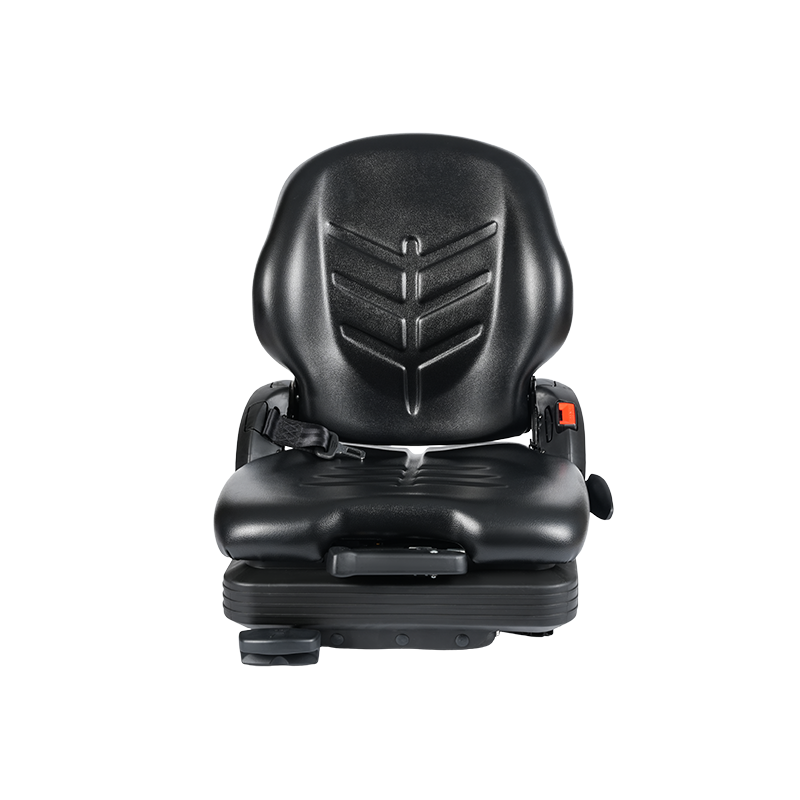
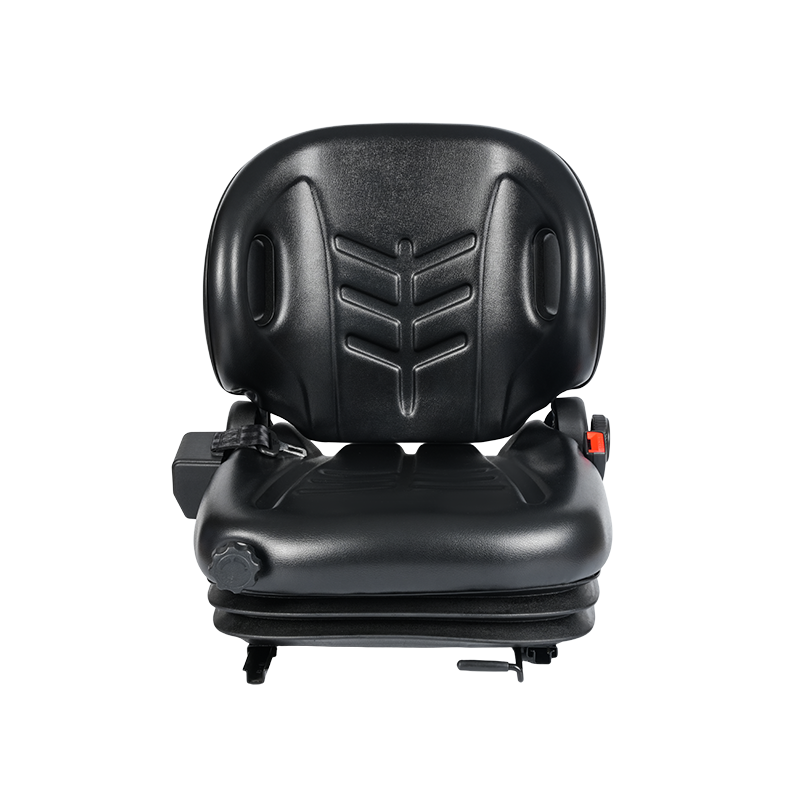
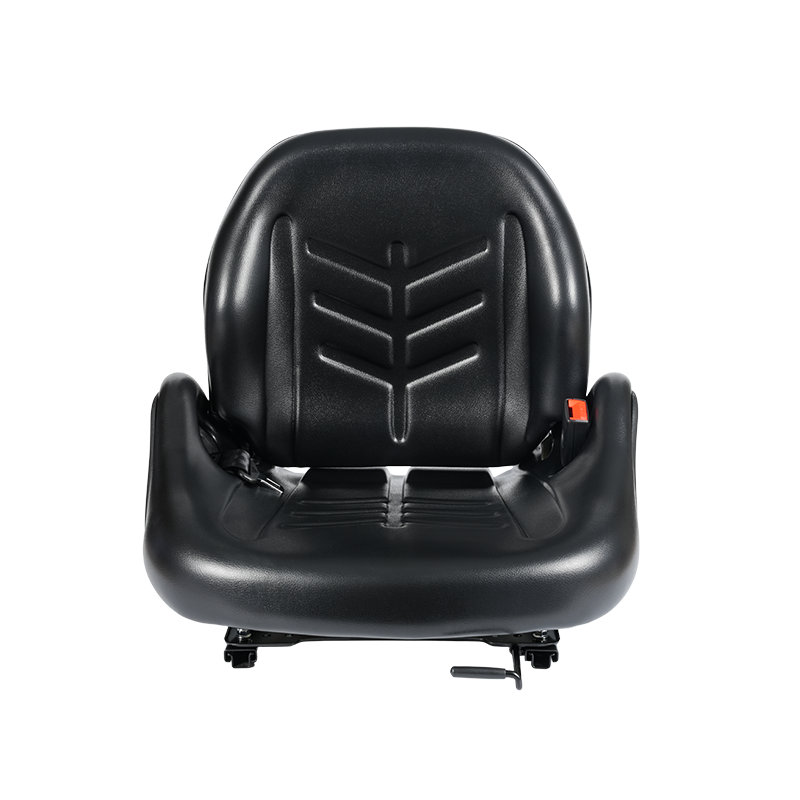
BF16 Low-Profile Vinyl Replacement Mechanical Suspension Seat for Material Handling Forklift Equipment - Black with EN 13490 IT1+IT2
-
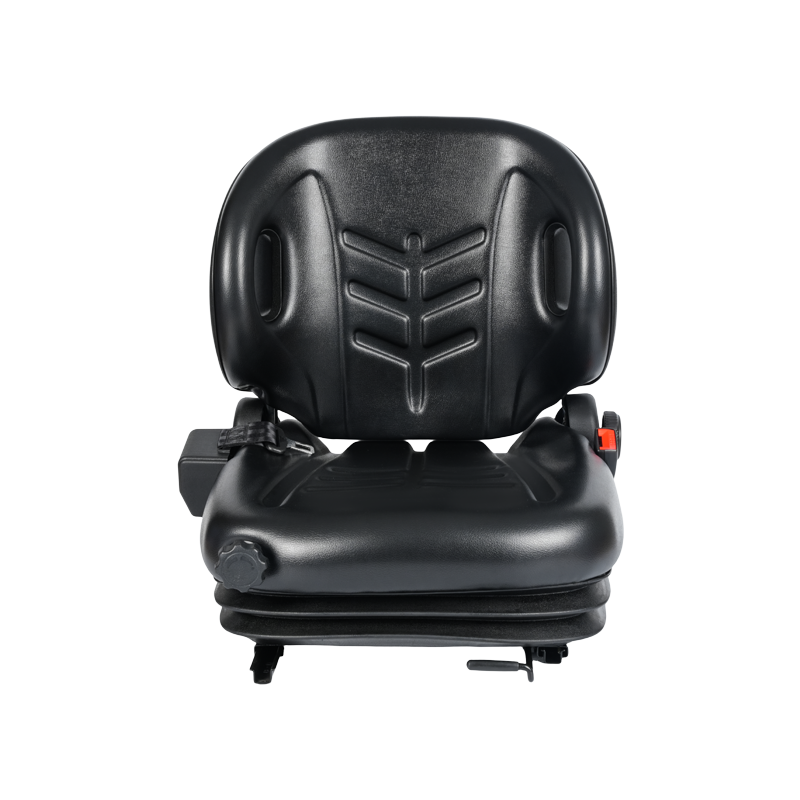
BF2-3AB EN 13490 IT1+IT2 Certified Counterbalance Forklift Seat with Mechanical Suspension OPS Switch & Universal Multi-Function Mounting System Compatible with Toyota Jungheinrich
-
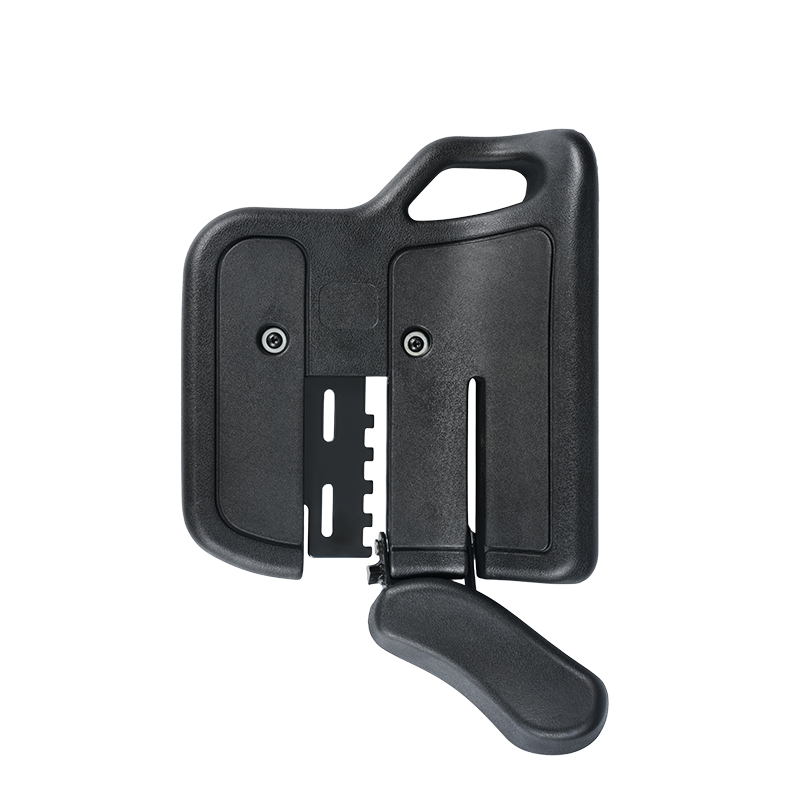
BF3 Single-Mold Polyurethane Eco-Friendly Seat with Vehicle-Contoured Design | Cost-Efficient Abrasion-Resistant Version for Stand-On Reach Forklifts
-
-
Copyright @ Hangzhou Benfeng Auto Seat Co., Ltd. All rights reserved Privacy OEM/ODM Ergonomic Industrial Seats Manufacturers
浙ICP备20022099号