
 中文简体
 English
 Français
 Español
 عربى
-

(86)-0571-82550327
-

info@bfseats.com
-




Skid Steer Seats: Fit, Bolt Patterns, Suspension and Replacement Guide
Content
- 1 What Counts as a Skid Steer Seat
- 2 Bolt Patterns and Fit Numbers for Replacement Skid Steer Seats
- 3 How Suspension Choice Changes Vibration Exposure on Skid Steer Seats
- 4 Cover Materials: Which Upholstery Survives a Loader Cab
- 5 Replacement or Repair: Five Checks Before You Order
- 6 Certifications and Supply Signals OEM Buyers Check
- 7 Frequently Asked Questions
A 1,500 kg compact loader on a demolition site wears out a vinyl seat faster than it wears out a set of tires. The cover splits along the side bolster, the damping spring sags, and the slide rail stops locking somewhere between 2,500 and 3,000 operating hours. Replacing that seat looks like a parts-counter errand until the new cushion sits 40 mm too high and the operator's helmet starts catching the ROPS crossbar. With skid steer seats, fit fails long before comfort does.
Compact loaders come from a dozen manufacturers, yet the seat interface inside the cab changes far less than the sheet metal around it. The same five questions decide whether a seat bolts in and works: mounting hole pattern, base height, damping class, switch wiring, and upholstery material.
What Counts as a Skid Steer Seat
A skid steer seat is a low-profile operator seat sized for a rigid-frame compact loader: a narrow mounting base, a backrest low enough to clear the ROPS in its lowest position, and damping tuned for short-stroke, high-frequency vibration rather than the slow pitching of a tractor.
A skid steer seat is an operator seat for a rigid-frame compact loader, normally fixed on four bolts or on slide rails, with a base footprint narrow enough to sit inside a cab under 1,000 mm wide and a backrest profile that preserves head clearance under the ROPS.
Treating it as a tractor seat is the most expensive ordering mistake. Tractor seats are wider and taller, and they are tested to a different standard: ISO 5007 covers agricultural wheeled tractor seats, while ISO 7096 covers earth-moving machinery seats and defines the EM1 to EM8 spectral classes used for loaders and excavators. Forklift seats sit under EN 13490, which applies to industrial trucks and does not describe a skid steer application at all.
| Attribute | Skid steer seat | Tractor seat | Forklift seat |
| Typical base width | Under 300 mm | 350-450 mm | 300-400 mm |
| Backrest profile | Low, ROPS limited | Tall, often with headrest | Medium, upright |
| Damping | Low-profile mechanical or semi-suspension | Mechanical or air suspension | Mechanical suspension, weight adjustable |
| Vibration standard | ISO 7096 EM classes | ISO 5007 | EN 13490 and ISO 7096 |
| Upholstery default | Black PVC or vinyl | PVC or fabric | HD PVC or vinyl |
Bolt Patterns and Fit Numbers for Replacement Skid Steer Seats
Three dimensions decide whether a replacement seat fits: the mounting hole pattern, the height from base plate to cushion, and the backrest clearance under the ROPS. Measure those three first, and most ordering errors disappear before the seat ships.
- Mounting pattern: most compact loader bases use four bolts, with fore-aft spacing commonly in the 200-300 mm range and lateral spacing around 200-240 mm. Slotted universal bases cover more than one machine, but the slots must still leave the seat centered over the base.
- Slide rails: rail-mounted seats commonly use a 25 mm hole pitch with 150-200 mm of fore-aft travel. Lose that travel and operators lose the pedal reach they had before.
- Base-to-cushion height: a suspension seat adds 40-60 mm over a rigid seat. Measure from the base plate to the underside of the ROPS before ordering.
- Operator presence switch: many loaders will not release hydraulics without a seat switch. The replacement must carry the matching switch, connector, and normally-open or normally-closed logic.
- Weight adjustment: mechanical suspension seats typically adjust across 50-130 kg. A seat set for a 60 kg operator bottoms out under a 100 kg operator, which is how springs fail early.
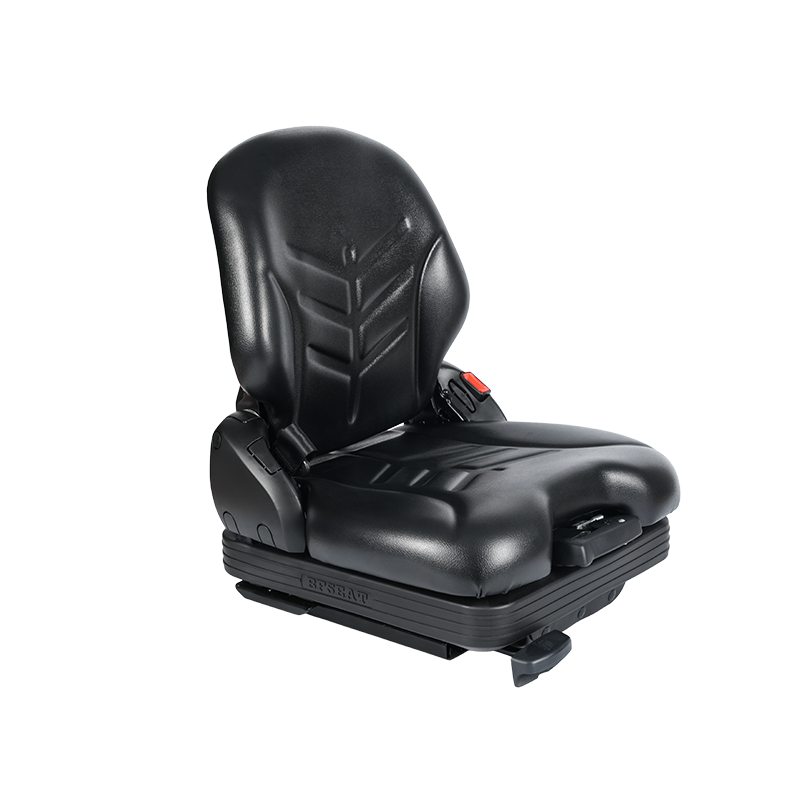 BF16M Comfortable Adjustable Durable Agricultural Seat for Loaders with PVC or FabricBased on the BF16 platform, the upgraded fabric/PVC dual-faced material boasts a 40% increase in breathability, addressing the loader's discomfort with high-temperatur...View Product →
Loader-rated seats such as the BF16M, a PVC-upholstered seat built for loaders with adjustable mounting, keep the base footprint inside that envelope while adding slide travel and a low backrest. A seat that matches the bolt pattern but stands 50 mm too tall simply trades a comfort problem for a safety problem.
How Suspension Choice Changes Vibration Exposure on Skid Steer Seats
Damping choice moves whole-body vibration more than any other seat decision: an adjustable mechanical suspension typically cuts an operator's eight-hour exposure by 30 to 45 percent compared with a rigid vinyl seat, which is usually what separates a machine that stays under the 0.5 m/s2 daily action value from one that does not.
On a rigid-frame loader, vibration arrives as high-frequency, low-amplitude input through the frame rather than the long pitching motion of an agricultural tractor. That is why the ISO 7096 EM class matters when specifying a seat: the class describes the input the seat was tested against, and a seat qualified for a smooth class will not behave the same way in a harsh one. Weight adjustment is the second lever, because a suspension set to the wrong operator weight either bottoms out or rides stiff.
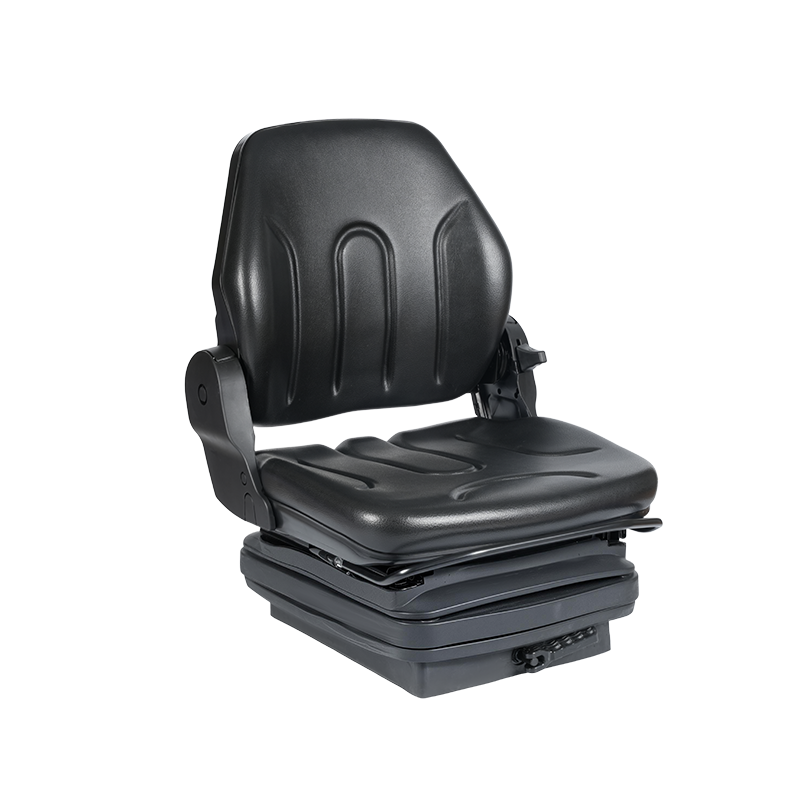 BF21 Comfortable Durable Suspension Construction Seat for Excavator with CE MarkDeveloped specifically for the high-frequency impact conditions of excavators, the 100mm suspension stroke is an industry-high record, absorbing 80% of the impact forc...View Product →
Construction-class suspension seats such as the BF21, a mechanically suspended seat with CE documentation for earth-moving applications, show the trade a buyer accepts: roughly 40 to 60 mm of added height in exchange for a measurable drop in daily vibration dose.
Cover Materials: Which Upholstery Survives a Loader Cab
Black PVC and coated vinyl remain the default for skid steer seats because they shrug off hydraulic oil, mud, and pressure washing; molded polyurethane suits OEM volume programs where weight and assembly time are the constraints.
| Material | Oil, water, mud | Abrasion | Best fit |
| HD PVC coated fabric | Excellent | High | Wet, muddy, pressure-washed duty |
| Expanded vinyl | Good | Medium to high | General loader duty, lowest cost |
| Molded polyurethane | Very good | High | OEM volume, weight-sensitive builds |
| Woven fabric | Poor | Medium | Dry, enclosed cabs only |
Seam construction decides how long a cover lasts. Double-stitched and taped seams resist wicking along the thread line, and a drainage path at the cushion edge keeps water from pooling against the foam. Cheap covers usually fail at the seam first, not in the middle of the panel.
Replacement or Repair: Five Checks Before You Order
Replace the seat when the frame, suspension, or switch has failed; re-cover it when only the upholstery is worn and the mechanism still locks and damps correctly.
- Measure the base. Record fore-aft and lateral bolt spacing plus base plate width.
- Measure the height. Base plate to cushion, plus ROPS clearance with the seat at its highest setting.
- Check the switch. Confirm operator presence switch type, connector, and control logic.
- Match the class. Identify the ISO 7096 EM class of the machine before choosing damping.
- Compare total cost. Weigh landed seat price against re-upholstery, downtime, and labor.
- The frame and rails still lock firmly
- The suspension still damps under load
- The switch and wiring test clean
- Cracks appear in the welded frame
- The spring bottoms out or seizes
- Height or bolt pattern must change
For high-turnover fleets, a low-profile replacement seat with mechanical suspension and vinyl upholstery such as the BF16 usually pays back faster than repeated re-covering, because the damping and the cover are renewed at the same time and the machine returns to work in one shift.
Certifications and Supply Signals OEM Buyers Check
For OEM purchasing, the certification file matters as much as the sample seat: ISO 9001 for the quality system, ISO 3834 for welding, ISO 7096 test reports for the seat itself, and a documented change-control process.
- ISO 7096 EM-class test reports, confirming which vibration class the seat was evaluated against.
- ISO 9001 quality management covering incoming material through final inspection.
- ISO 3834 welding certification, relevant because the seat frame is a welded structure.
- ISO 14001 and ISO 45001, increasingly requested in supplier audits for European and North American programs.
- Participation in industry standard work, which signals engineering depth rather than assembly-only supply.
Hangzhou Benfeng Auto Seat Co., Ltd., founded in 2007 and based in Hangzhou, China, is listed as a drafting unit for the Chinese machinery industry standard JB/T 13693-2019 for industrial vehicle driver seats. The company operates a 14,000 square meter plant with an annual capacity of 200,000 seats and an in-house chain that runs from frame stamping and welding through vacuum foaming to assembly and testing, which is the level of vertical integration buyers look for when a seat sits inside a machine certification file.
Practical selection criteria for earth-moving and construction seats are covered in more depth in this construction machinery seat guide.
Frequently Asked Questions
Are skid steer seats universal?
No. Slotted universal bases cover a wider range of machines, but three dimensions still have to match: hole pattern, base-to-cushion height, and backrest clearance under the ROPS. Slide travel and the operator presence switch also have to line up.
Can I fit a forklift seat in a skid steer?
Sometimes, if the base and height match. The catch is qualification: forklift seats are typically certified to EN 13490, which does not describe compact loader applications. A seat tested to the relevant ISO 7096 EM class is the safer specification.
How long should a skid steer seat last?
A vinyl OEM seat in heavy duty usually shows cover damage or suspension sag between 2,500 and 4,000 operating hours. A weight-adjusted mechanical suspension seat with HD PVC upholstery generally runs longer, because both the cover and the spring work less.
Does a suspension seat fit inside a skid steer cab?
Low-profile mechanical suspension seats do, adding roughly 40 to 60 mm of height. Air suspension is rarely practical on a skid steer, because there is no reliable air supply and the extra height eats ROPS clearance.
Fleets running mixed compact equipment can standardize on shared skid steer seats built on a common frame with different suspension and upholstery options, which cuts spare-part inventory and keeps operators on a familiar cushion when they switch machines. The rule that saves the most money stays simple: measure the base, the height, and the switch before the order goes out, not after the seat arrives on site.
-
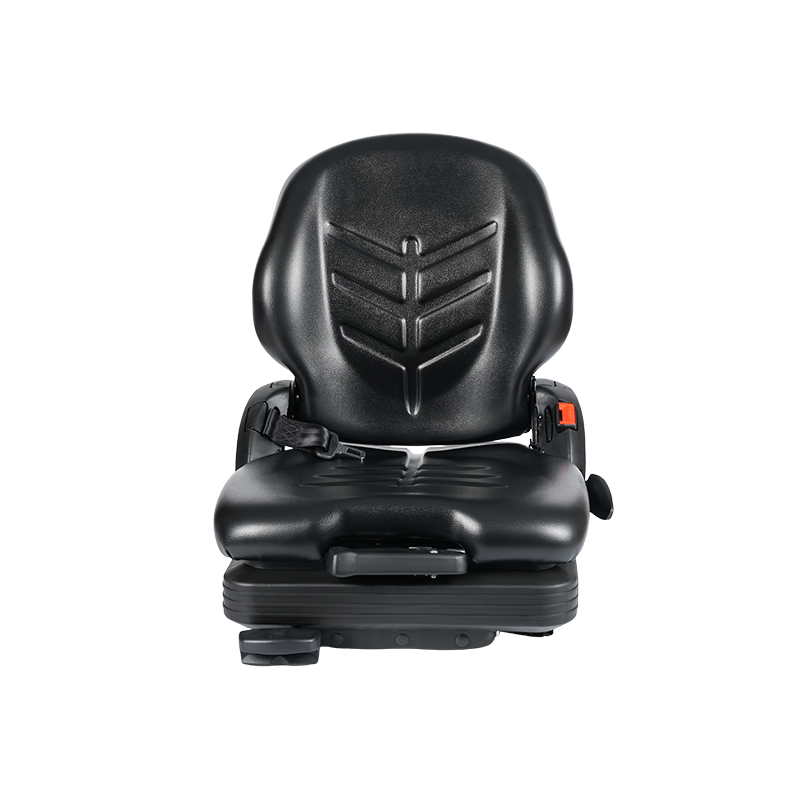
BF16 Low-Profile Vinyl Replacement Mechanical Suspension Seat for Material Handling Forklift Equipment - Black with EN 13490 IT1+IT2
-
-
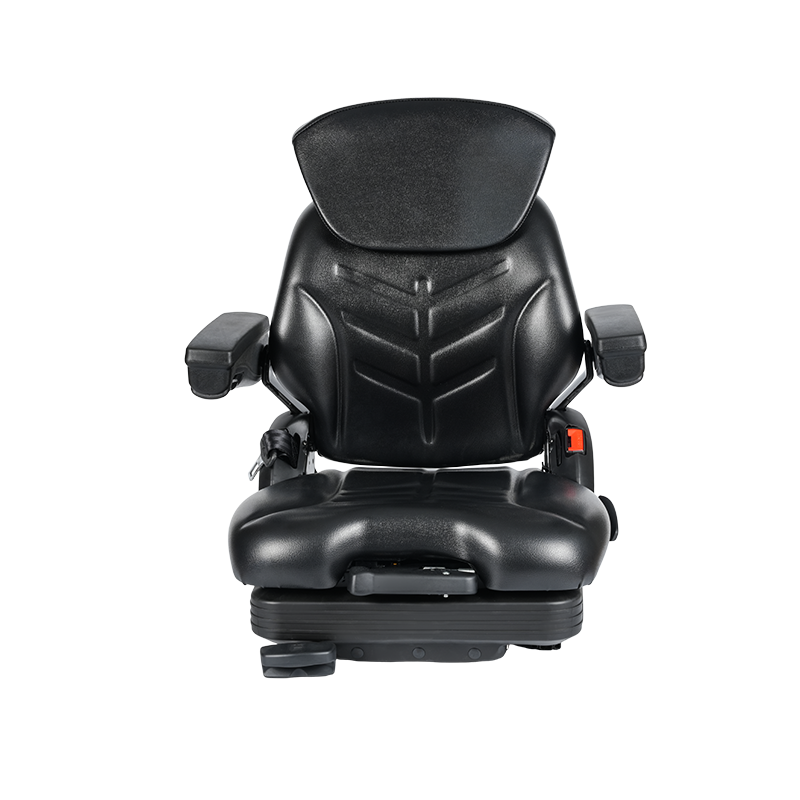
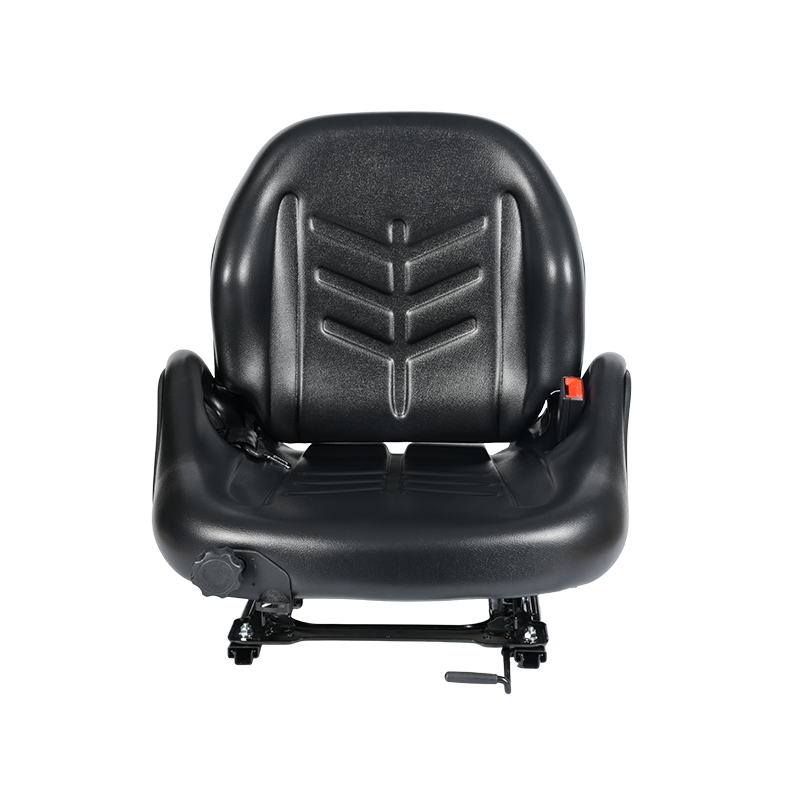
BF16MCD EN 13490 IT1+IT2 & ISO 7096 Dual-Certified Low-Profile Mechanical Suspension Seat Integrated safety belt and OPS (Operator Presence Switch)
-
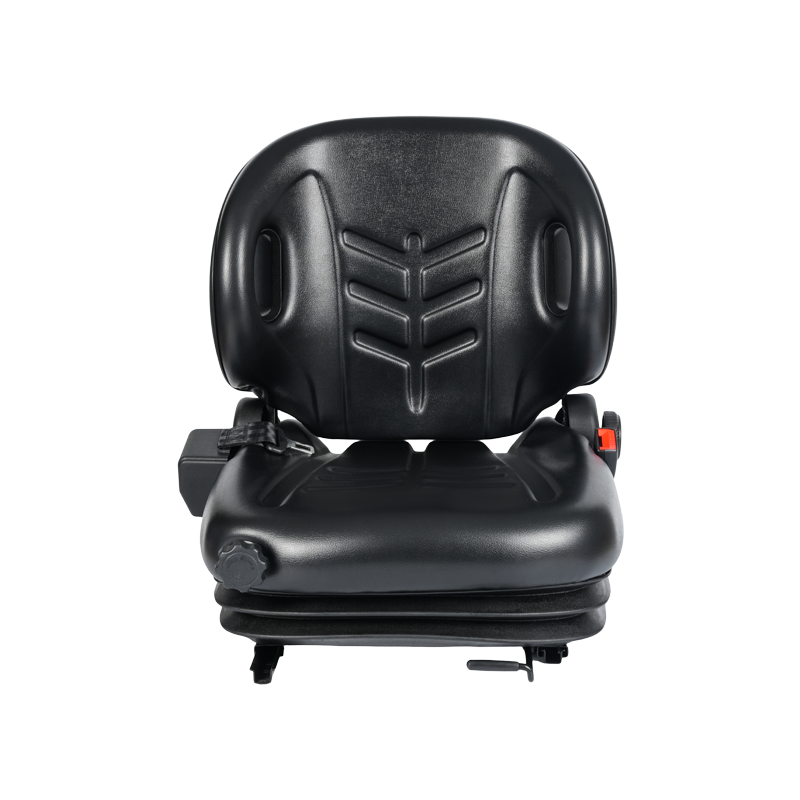
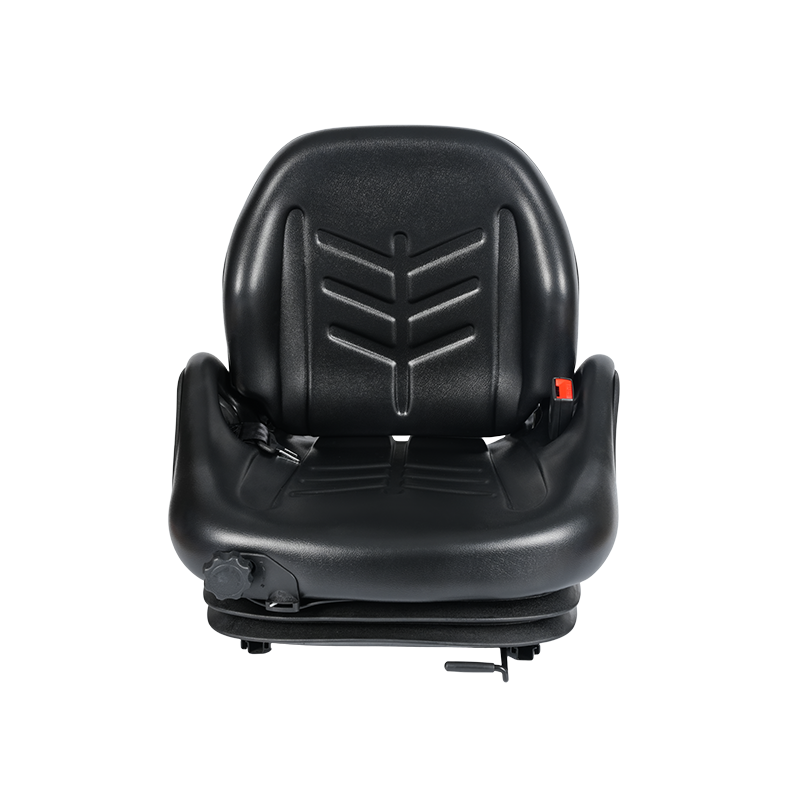
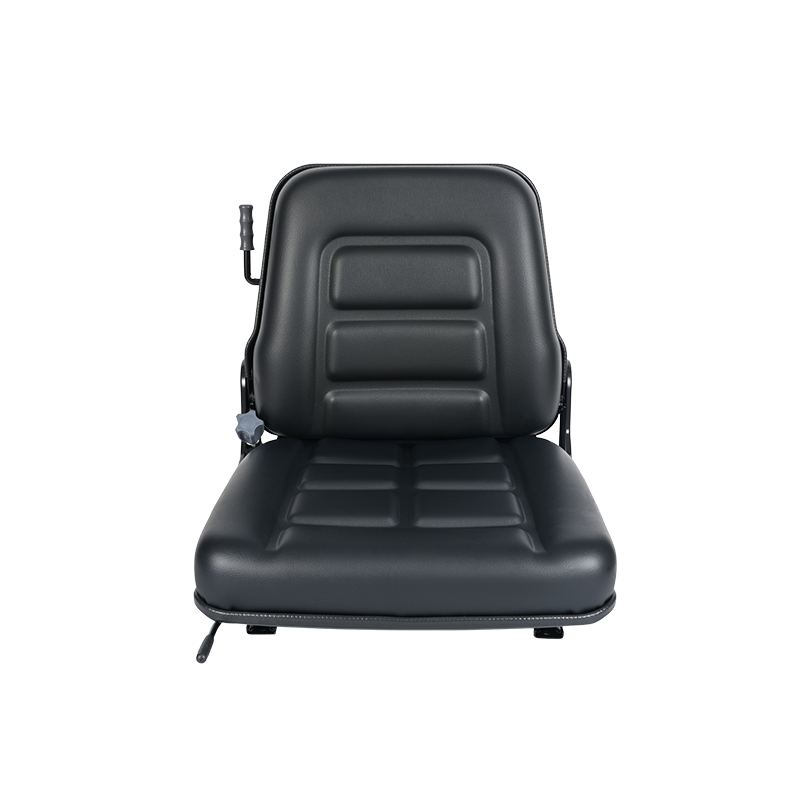
BF2-3AB EN 13490 IT1+IT2 Certified Counterbalance Forklift Seat with Mechanical Suspension OPS Switch & Universal Multi-Function Mounting System Compatible with Toyota Jungheinrich
Copyright @ Hangzhou Benfeng Auto Seat Co., Ltd. All rights reserved Privacy OEM/ODM Ergonomic Industrial Seats Manufacturers
浙ICP备20022099号