
 中文简体
中文简体 English
 Français
 Español
 عربى
عربى-

(86)-0571-82550327
-

info@bfseats.com
-




Biomechanical Ergonomics and Vibration Attenuation in Construction Machinery Seats
Content
Structural Integrity and Multi-Axis Lumbar Support Mechanisms
1. The engineering of high-end Construction Machinery Seats prioritizes the mitigation of erector spinae muscle fatigue by maintaining the natural lordotic curve of the spine during high-intensity grading tasks. 2. When evaluating how multi-axis lumbar adjustment reduces back pain in operators, technical architects analyze the localized pressure distribution across the L1-L5 vertebrae, ensuring the support bladder or mechanical plate adapts to the occupant's anthropometric profile. 3. High-performance Construction Machinery Seats utilize dual-lateral support structures to stabilize the pelvis, preventing the lateral spinal shearing forces typically encountered during 360-degree excavator rotations. 4. The impact of seat tilt adjustment on lower limb circulation is critical; by maintaining a seat pan angle of 3 to 5 degrees, the pressure on the popliteal artery is minimized, reducing the risk of long-term vascular stagnation during 12-hour shifts.
Whole-Body Vibration (WBV) Mitigation and Suspension Engineering
1. To comply with ISO 7096 vibration attenuation classes for construction seats, the suspension system must be tuned to specific spectral classes (EM1 to EM9), effectively filtering high-amplitude shocks from the machine's chassis. 2. Analyzing mechanical vs air suspension for heavy equipment seats reveals that pneumatic systems provide a lower natural frequency (typically 1.0 Hz to 1.5 Hz), which is essential for avoiding resonance with human internal organ frequencies. 3. The maximum stroke length of construction machinery seat suspension is engineered to be at least 100mm to prevent the "bottoming out" effect during high-impact loading cycles on uneven job sites. 4. Implementing heavy-duty steel frames for Construction Machinery Seats ensures high torsional rigidity, which is measured by the frame's resistance to permanent deformation when subjected to lateral G-forces during grading operations.
Material Durability and Environmental Protection Standards
1. The durability of PVC vs fabric for construction machinery upholstery is a primary factor for open-cab reliability; high-density PVC provides superior resistance to hydraulic oil, dust ingress, and solar radiation. 2. To ensure longevity, the upholstery must meet UV resistance requirements for Construction Machinery Seats, typically requiring a Xenon-arc test rating of Grade 6 or higher to prevent surface embrittlement and cracking. 3. Waterproof cold-molded foam in construction seats utilizes a closed-cell structure that maintains its tensile strength and density even when exposed to high-humidity environments or pressurized cleaning. 4. Construction Machinery Seats often integrate microswitches with an IP67 rating, ensuring that the operator presence sensing (OPS) system remains functional despite exposure to fine silica dust and extreme temperatures ranging from -30 to 70 degrees Celsius.
Biomechanical Load Performance Comparison
1. The benefits of adjustable armrests in Construction Machinery Seats are quantified by the reduction in trapezius muscle tension, which is achieved by aligning the armrest height with the joystick controller's neutral axis. 2. Advanced suspension and ergonomic metrics are summarized in the following data matrix:
| Engineering Metric | Standard Mechanical Seat | High-End Air Suspension Seat |
| Suspension Travel | 50mm - 80mm | 100mm - 120mm |
| Vibration Reduction (SEAT Factor) | < 0.9 | < 0.7 |
| Lumbar Support Type | Fixed or Single-axis | Pneumatic Multi-axis |
| Frame Material | Standard Carbon Steel | High-Tensile Alloy Steel |
Hardcore FAQ
1. Does multi-axis lumbar support really prevent long-term injury? Yes, by providing localized support to the lumbar spine, it reduces the isometric load on the erector spinae muscles, which prevents the chronic muscle micro-tears that lead to degenerative disc disease. 2. How does ISO 7096 affect my choice of seat? ISO 7096 categorizes machinery into classes based on vibration frequency. You must choose a seat verified for your specific machine class (e.g., EM3 for wheel loaders) to ensure the suspension is tuned to the correct damping rate. 3. Can air suspension seats be installed on machines without an air compressor? Yes, many Construction Machinery Seats feature an integrated 12V or 24V compressor within the seat base, requiring only a simple electrical connection to provide full pneumatic suspension. 4. What is the average lifespan of the suspension dampers? In heavy-duty environments, the hydraulic or pneumatic dampers are designed for a 5,000 to 8,000-hour lifecycle, provided the protective bellows are maintained to prevent dust ingress to the piston rod. 5. Why is the Ra surface finish of the sliding rails important? A smooth Ra surface finish (typically 0.8 micrometers) on the sliding rails ensures low-friction adjustment and prevents the "play" or rattling that can amplify low-frequency vibrations transmitted to the operator.
Technical References
1. ISO 7096: Earth-moving machinery — Laboratory evaluation of operator seat vibration. 2. ISO 6683: Earth-moving machinery — Seat belts and safety belt anchorages — Performance requirements and tests. 3. SAE J386: Operator Restraint Systems for Off-Road Work Machines.
-
-
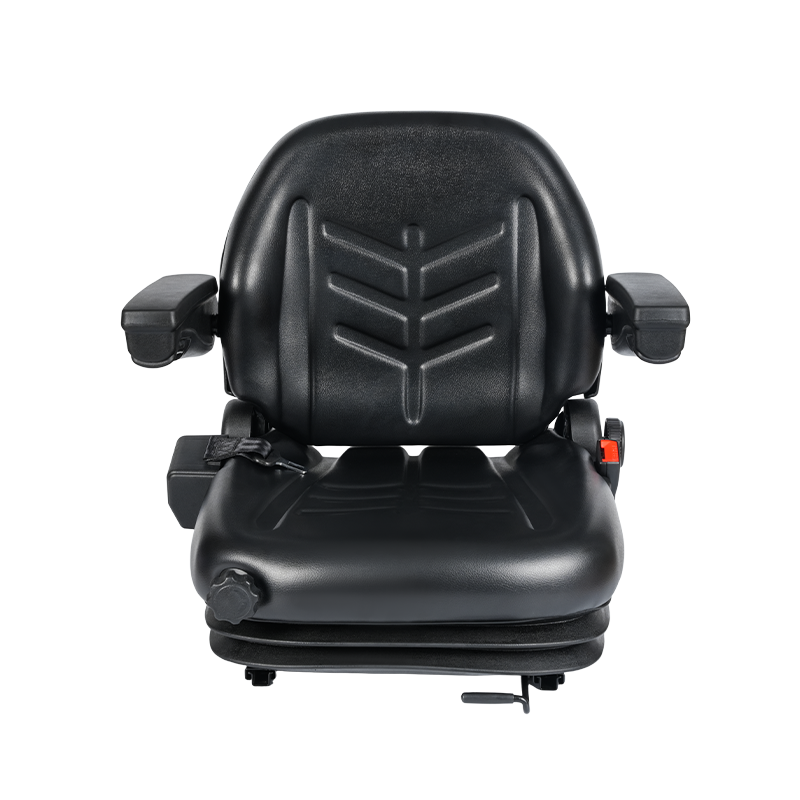
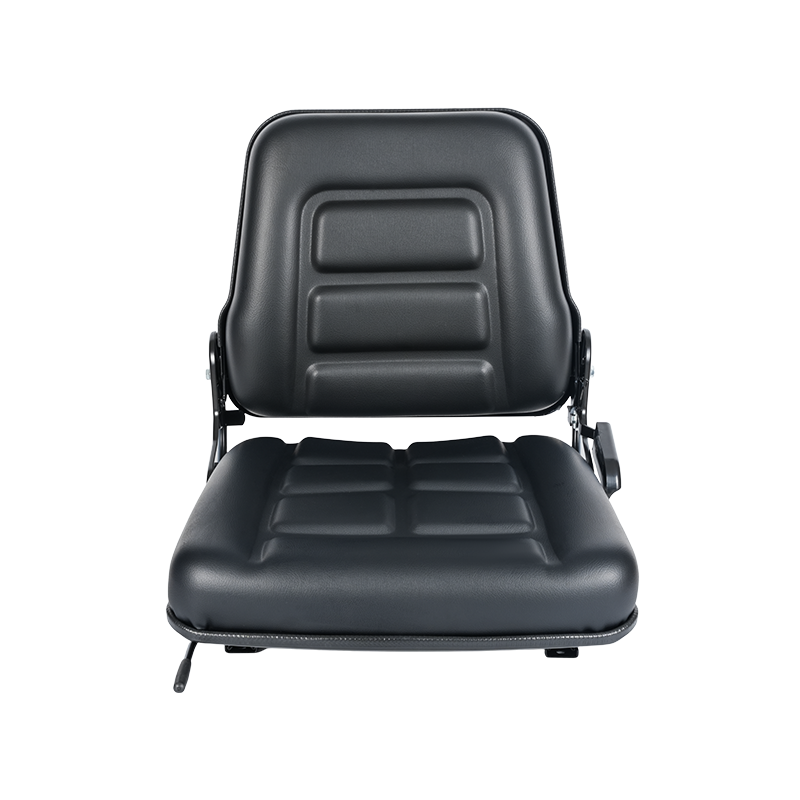
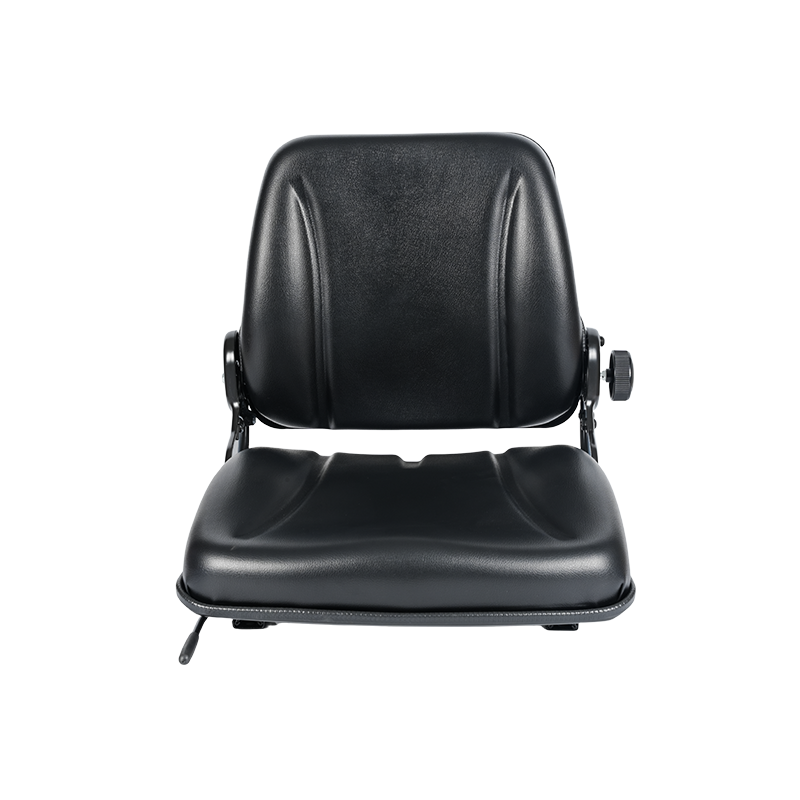
BF2-3AR Heavy-Duty Full-Suspension Construction Machinery Seat with Universal Mounting for Excavators & Loaders
Copyright @ Hangzhou Benfeng Auto Seat Co., Ltd. All rights reserved Privacy OEM/ODM Ergonomic Industrial Seats Manufacturers
浙ICP备20022099号